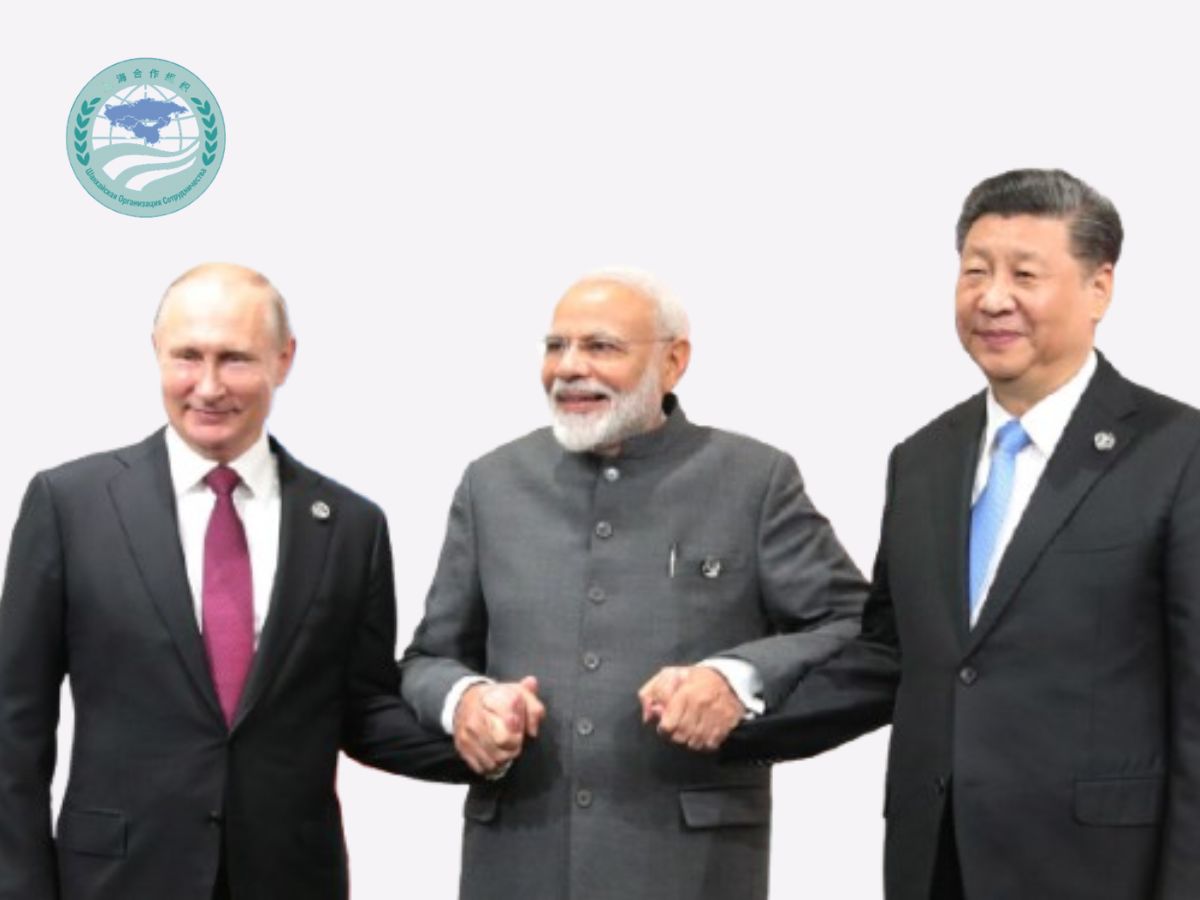

The SCO Summit 2025 unlocked in Tianjin on Sunday, bringing together over 20 leaders across the global, together with Indian Prime Minister Narendra Modi, Russian President Vladimir Putin, and Chinese President Xi Jinping.
The summit meeting, under the theme “Promoting the Shanghai Spirit: SCO in Action”, held at a critical juncture, with US President Donald Trump’s 50% tariff climb on Indian exports putting significant burden on India’s trade relations.
The summit’s discussions and negotiations are expected to focus not only on regional collaboration but also on strengthening the Russia-China-India (RCI) alliance as an offset to Western economic impact.
Strengthening the RCI Alliance: A Strategic Move Against US Tariffs
India’s growing economic pivot towards China and Russia has been determined by a need to decrease dependence on the US for trade and investments. The US tariff hike on Indian goods has led to worries over weakened export competitiveness and potential economic disparities.
Nevertheless, at the SCO Summit, India is looking to develop its ties with Russia and China to form a united economic bloc that can minimize the impact of US tariffs.
SEO Summit 2025: Impact on Indian Markets and Geopolitical Realignment
While the long-term advantages of an empowered RCI alliance continue to be seen, financial analysts assume short-term volatility in the Indian stock market due to constant geopolitical shifts. With higher risk premiums on Indian equities amidst the tariff condition, the SCO summit’s stresses on regional support could signal a path toward economic resilience in the aspect of external pressures.
Also Read: Why Urjit Patel’s New IMF Appointment Is A Big Deal For India’s Global Clout
SEO Summit 2025: Focus on Trade, Infrastructure, and Energy
The SCO Summit is not just around tariffs. Repositioning trade, protecting energy, and collaborating for infrastructure developments are also some of the strategic agendas. Also, by reducing dependence on Western led systems, the members of the SCO are intended to shape self-sufficiency, particularly in the areas of energy and digital payments.
This brings into line with the wider goal of countering US influence, while supporting economic resilience across the Eurasian bloc.
The RCI alliance, over the SCO, can foster greater support in alternative energy sources, serving member nations diversify away from US-centric energy markets. The digital payments ecosystem, being established under this initiative, would also lessen the global reliance on US-dominated financial systems, such as SWIFT, by encouraging local payment solutions using local currencies.
Empowering the RCI Alliance to Counter US Tariffs
As the SCO Summit 2025 progresses, the India-China-Russia alliance develops as a key potential counterforce to US trade policies. By establishing economic cooperation within the alliance and pushing for local currency trade, the trio of India, Russia, and China could showcase a much cohesive and strategic reply to US tariffs.
While instant impacts on trade relations may not be seen overnight, the current efforts to reinforce the RCI alliance could cover the way for a much strong and independent economic bloc in the long run.
Also Read: Trade Tensions Aren’t Just Headlines: They Could Cost India, Is Self Reliance An Answer?
Ankur Mishra is a journalist who covers an extensive range of news, from business, stock markets, IPOs to geopolitics, world affairs, international crises, and general news. With over a decade of experience in the business domain, Ankur has been associated with some of the reputed media brands. Through a sharp eye on global marketplaces along with deep insights and analysis of business strategies, Ankur brings simplicity to the complex economic matrix to decode market trends and empower people.
He is committed to entrenched data, facts, research, solutions, and a dedication to value-based journalism. He has covered trade tariff wars, international alliances, corporate policies, government initiatives, regulatory developments, along with micro- and macroeconomic shifts impacting global fiscal dynamics.