
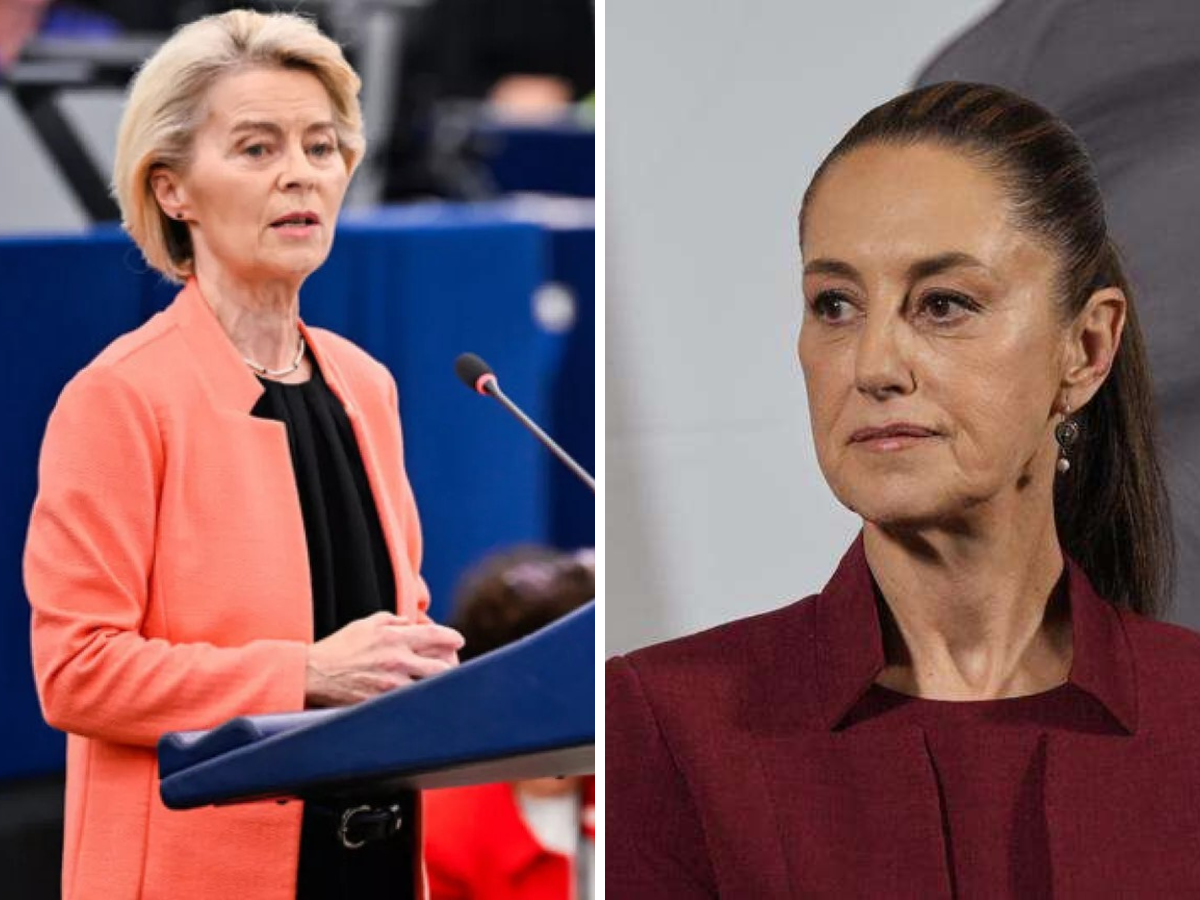

U.S. President Donald Trump on Saturday announced 30% tariffs on all imports from the European Union and Mexico. The tariffs will take effect on August 1, 2025.
In his letters addressed to the European Union and Mexico, Trump accused the EU of exploiting the U.S. with “non-reciprocal” trade policies.
He also criticized Mexico for not doing enough to stop illegal drug trafficking and migration. “Our relationship has been far from reciprocal,” he stated.
The General Public Pays: Neither Countries Nor Companies Bear the Cost
Trump mentioned concerns over trade deficits and national security, stating that the move was necessary to protect American industries and enforce fairer trade practices. But while the rhetoric targets foreign nations, it is the American people who directly face the financial burden, not the countries or companies.
How the Public Bears the Cost of Tariffs
Despite the tough talk, tariffs aren’t paid by the targeted countries. They’re paid by U.S. importers at the point of entry. According to U.S. Customs and Border Protection, importers must declare goods under the Harmonized Tariff Schedule and pay duties based on value and origin.
These costs are rarely absorbed by businesses due to shrinking profit margins. Instead, they’re passed on to consumers through higher prices.
Industries Affected by Trump’s Tariffs
The industries most affected by Trump’s tariffs include automotive, electronics, and agriculture, which heavily rely on imports from the EU and Mexico. These sectors are likely to be hit first. Increased tariffs may disrupt supply chains, raise prices, and ultimately affect American households.
The most vulnerable are ordinary citizens who end up paying the bill, whether the policy is politically motivated or not.
While Trump presents the tariffs as a step toward economic justice, it’s American businesses and consumers, not the governments, who will bear the cost. The economic reality behind these duties tells a far more complex story.
Also Read: US To Ramp Up Tariffs On EU Goods To 30% Starting August 1: EU Ready To Respond Amid Trade Tensions
Ankur Mishra is a journalist who covers an extensive range of news, from business, stock markets, IPOs to geopolitics, world affairs, international crises, and general news. With over a decade of experience in the business domain, Ankur has been associated with some of the reputed media brands. Through a sharp eye on global marketplaces along with deep insights and analysis of business strategies, Ankur brings simplicity to the complex economic matrix to decode market trends and empower people.
He is committed to entrenched data, facts, research, solutions, and a dedication to value-based journalism. He has covered trade tariff wars, international alliances, corporate policies, government initiatives, regulatory developments, along with micro- and macroeconomic shifts impacting global fiscal dynamics.




