
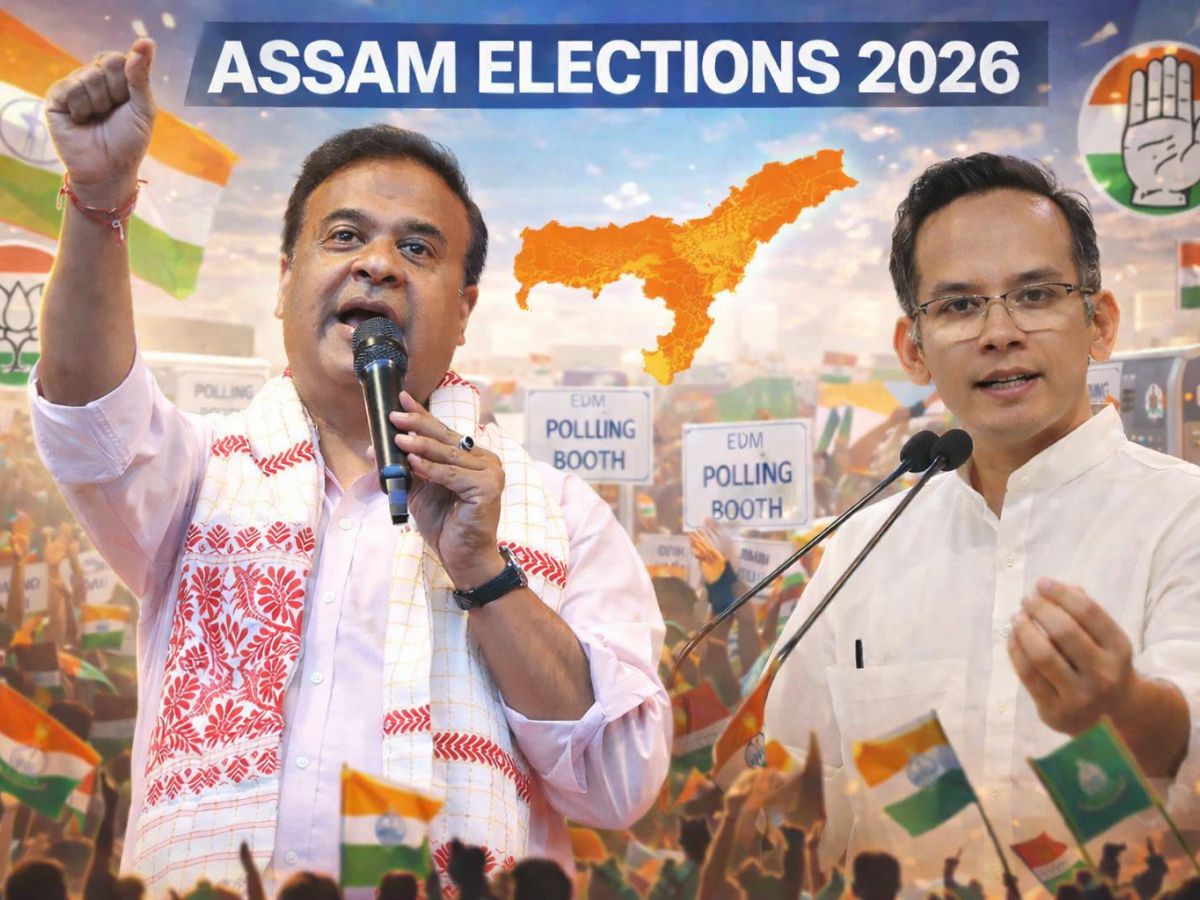

With the Assam Assembly Elections 2026 reaching closer, there seems to be some action in the political arena of Assam, with the political parties readying up to fight for constituencies that will play an important role in deciding the fate of the final results.
With the total number of seats in the Assam State Legislative Assembly being 126 and a simple majority mark of 64, the results in a handful of constituencies tend to decide the winner in most elections.
From minority communities in Lower Assam to towns and regions in Upper Assam, there is sure to be a stiff competition among them.
Here are the Key Constituencies to Watch
-
Jalukbari
-
Jorhat
-
Haflong
-
Guwahati Central
-
Silchar
-
Barpeta
-
Dhubri
- Nazira
-
Kamrup Metro
-
Kamrup Rural
-
Nagaon
-
Morigaon
-
Cachar
-
Karimganj
-
Dibrugarh
-
Tinsukia
-
Dispur
What we know about Minority Belt Politics: A crucial Factor in Lower Assam
The constituencies in Lower Assam continue to hold immense political significance due to their demographic composition. Voter behaviour in these areas has traditionally favoured Congress and its allies, particularly in regions with a high concentration of minority voters.
However, the 2026 elections may witness shifts due to changing alliances, local leadership factors, and voter consolidation. A strong showing in this belt can significantly boost a party’s overall tally, making it a critical battleground for both the opposition and the ruling alliance.
Central Assam: The Swing Region That Shapes Momentum
Central Assam has long been considered the state’s political bellwether. The diversity of communities and interests in this region often results in unpredictable outcomes, making it a crucial zone for any party aiming for a statewide victory.
Success here depends largely on the ability to build cross-community coalitions and address local issues effectively. In past elections, parties that performed well in this region often gained momentum that translated into broader electoral success across Assam.
Upper Assam: Stronghold Politics and Strategic Importance
Upper Assam remains a key region in the electoral map, particularly for the BJP, which has historically enjoyed strong support here. The presence of tea garden communities, combined with urban voter bases in several constituencies, has made this region a reliable source of seats for the ruling party.
For the BJP, retaining dominance in Upper Assam is crucial to maintaining its electoral edge. At the same time, the Congress and other parties are attempting to make inroads by focusing on local issues and candidate selection.
Urban vs Rural Divide: Shifting Voter Priorities
The contrast between urban and rural constituencies is becoming increasingly visible in Assam’s electoral politics. Urban centres, especially those around Guwahati, are witnessing a shift towards issue-based voting, with concerns like infrastructure, unemployment, and urban flooding taking centre stage.
In rural areas, however, traditional factors such as community ties, welfare schemes, and grassroots leadership continue to influence voter decisions. This divide adds another layer of complexity to the elections, making outcomes in these constituencies harder to predict.
Barak Valley: A Crucial Electoral Battleground
The Barak Valley has emerged as one of the most important regions in Assam’s political landscape. Issues related to language, identity, and citizenship continue to play a significant role in shaping voter preferences here.
Both major national parties have intensified their campaigns in the region, recognising its potential to influence the final seat tally. A strong performance in Barak Valley could prove decisive in a closely contested election.
High-voltage Contests and Leadership Battles in focus
Several of the key constituencies are witnessing high-profile contests involving prominent leaders and influential candidates. These battles go beyond local representation and are seen as indicators of broader political trends in the state.
The performance of key leaders in these constituencies will not only determine individual victories but could also set the tone for the overall election outcome.
What does Assam want?
With more than 2.5 crore people eligible to exercise their right to vote, the Assam Legislative Assembly Elections 2026 promises to be a tough battle. It will depend on regional politics, political alliances, and constituency politics that will determine the outcome of the elections. However, now that the campaign season has begun, all attention is directed toward these crucial constituencies ranging from minority-dominated constituencies to urban constituencies.
Sofia Babu Chacko is a journalist with over five years of experience reporting on Indian politics, crime, human rights, gender issues, and stories about marginalized communities. She believes journalism plays a crucial role in amplifying unheard voices and bringing attention to issues that truly matter. Sofia has contributed articles to The New Indian Express, Youth Ki Awaaz, and Maktoob Media. She is also a recipient of the 2025 Laadli Media Awards for gender sensitivity. Beyond the newsroom, she is a music enthusiast who enjoys singing. Connect with Sofia on X: https://x.com/SBCism




