
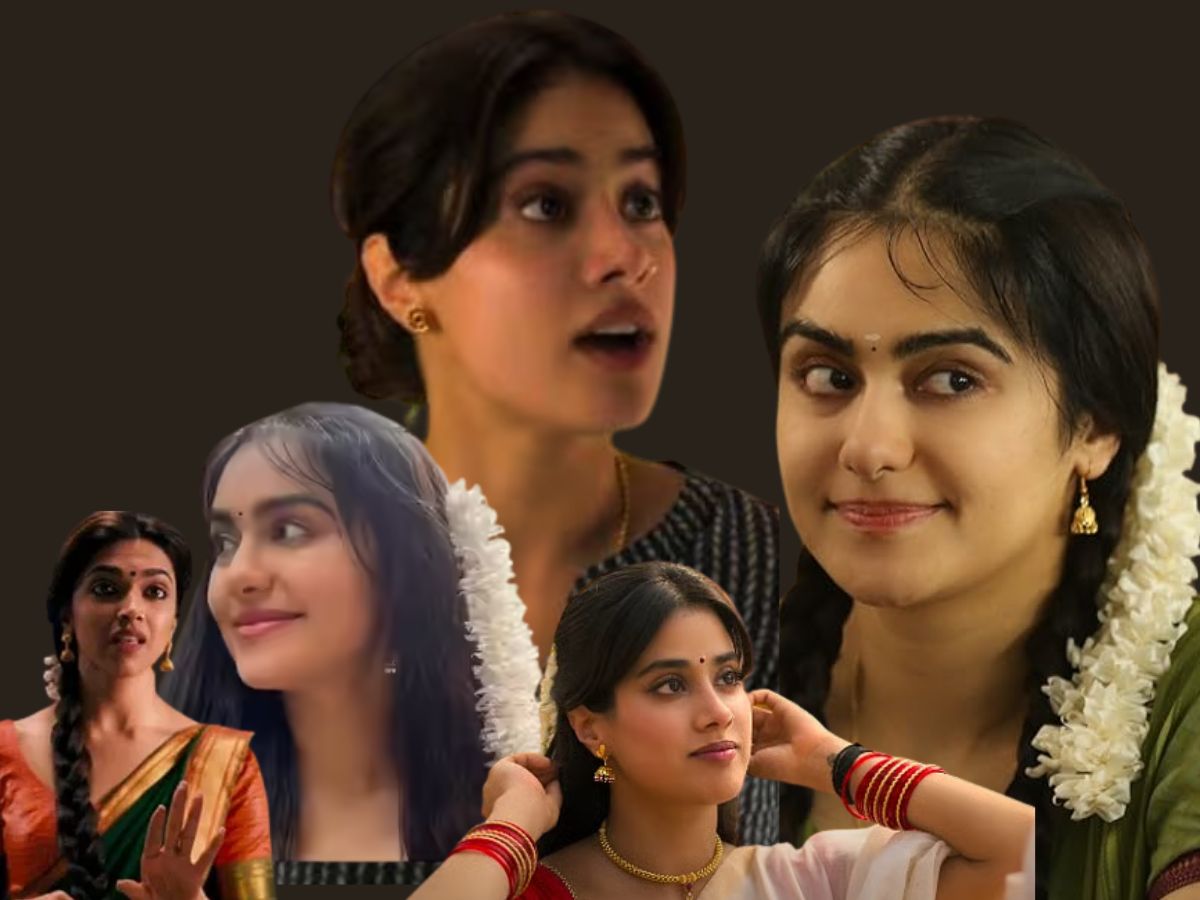

Bollywood’s ongoing misrepresentation of Malayali women is under attack again with two new examples National Award-winning The Kerala Story and Janhvi Kapoor’s upcoming movie Param Sundari. Both movies have evoked widespread anger among Malayalis, with accusations of the industry promulgating outdated and insensitive stereotypes.
In The Kerala Story, Adah Sharma’s acting out of Shalini Unnikrishnan, a Malayali girl from Thiruvananthapuram was universally mocked for her imperfect accent and unreal mannerisms. Now, Janhvi Kapoor’s character “Thekkapetta Sundari Damodaran Pillai” in Param Sundari has set another storm going. Malayalis were quick to mock that “Thekkapetta” used in common usage means “betrayed beauty,” a phrase with misogynistic suggestions that has been applied to disparaging songs and jokes.
Social media mocks Bollywood
Social media exploded less than a day after the trailer dropped, trolls and memes flooding Instagram and X. Several users surfaced the notion of Bollywood’s unending caricaturization of Malayali women, either women decked in their heavy silk sarees, jasmine flowers stuck through their hair, inanity tumbling out of mouths in any broken Hindi they could muster, and brought onto the spoils of being comedic relief. The outrage resembled the designation that came out after Deepika Padukone was criticized for her Tamil lead role in Chennai Express; boredom would be the only apt descriptor.
Talking to NewsX, some Kerala women expressed their outrage. Social worker Treesa commented that Bollywood still portrays Malayali women as if they live in the “1st century.”
I don’t mean wearing jasmine is wrong but that’s an old-fashioned activity. Girls in Kerala now wear jeans, western clothes, are trendy, and opinionated. Even in villages, the way of life has undergone a change. On festival days like Onam, we dress traditionally but that does not mean our everyday life is retrograde. Bollywood must refrain from projecting us as ignorant and stupid. We are no less aware.
Are these stereotypes intentional?
Ameya, who is a working professional, thinks Bollywood uses these stereotypes intentionally for easy publicity:
“This false representation is deliberate. Directors need publicity and controversies, so they stereotype us. The issue is that the non-Malayalis begin to think these characters are true to life, and it misinforms them. Also, Bollywood represents Kerala only via its backwaters and natural beauty, never via its people or their reality.”
Recollecting that she has also been stereotyped, Namitha said:
“At college my North Indian friends would call me ‘Madrasi’ as if the whole of the South is the same. Even on Hindi serials , South Indian women are stereotyped, always in a silk saree, hair adorned with jasmine, and speaking broken Hindi. Bollywood does not even acknowledge the Southern difference – Malayalam, Tamil, Kannada, Telugu. We actually have realistic women in our cinema even those who are resisting patriarchy and misogyny. But Bollywood wouldn’t know that and just continues making doll like, old fashioned stereotypes of us.”
For Malayalis, the frustration is more than just about accents or costumes it’s about identity. What online campaigns and memes point out is that Bollywood’s push to flatten South Indian women into stereotypes wipes out their individuality, agency, and advancement.
The backlash against The Kerala Story and Param Sundari indicate a growing impatience among young Malayalis- particularly women who have simply had enough of stereotypes. They are sending the message to Bollywood loud and clear: “Stop stereotyping us.”
Sofia Babu Chacko is a journalist with over five years of experience reporting on Indian politics, crime, human rights, gender issues, and stories about marginalized communities. She believes journalism plays a crucial role in amplifying unheard voices and bringing attention to issues that truly matter. Sofia has contributed articles to The New Indian Express, Youth Ki Awaaz, and Maktoob Media. She is also a recipient of the 2025 Laadli Media Awards for gender sensitivity. Beyond the newsroom, she is a music enthusiast who enjoys singing. Connect with Sofia on X: https://x.com/SBCism




