
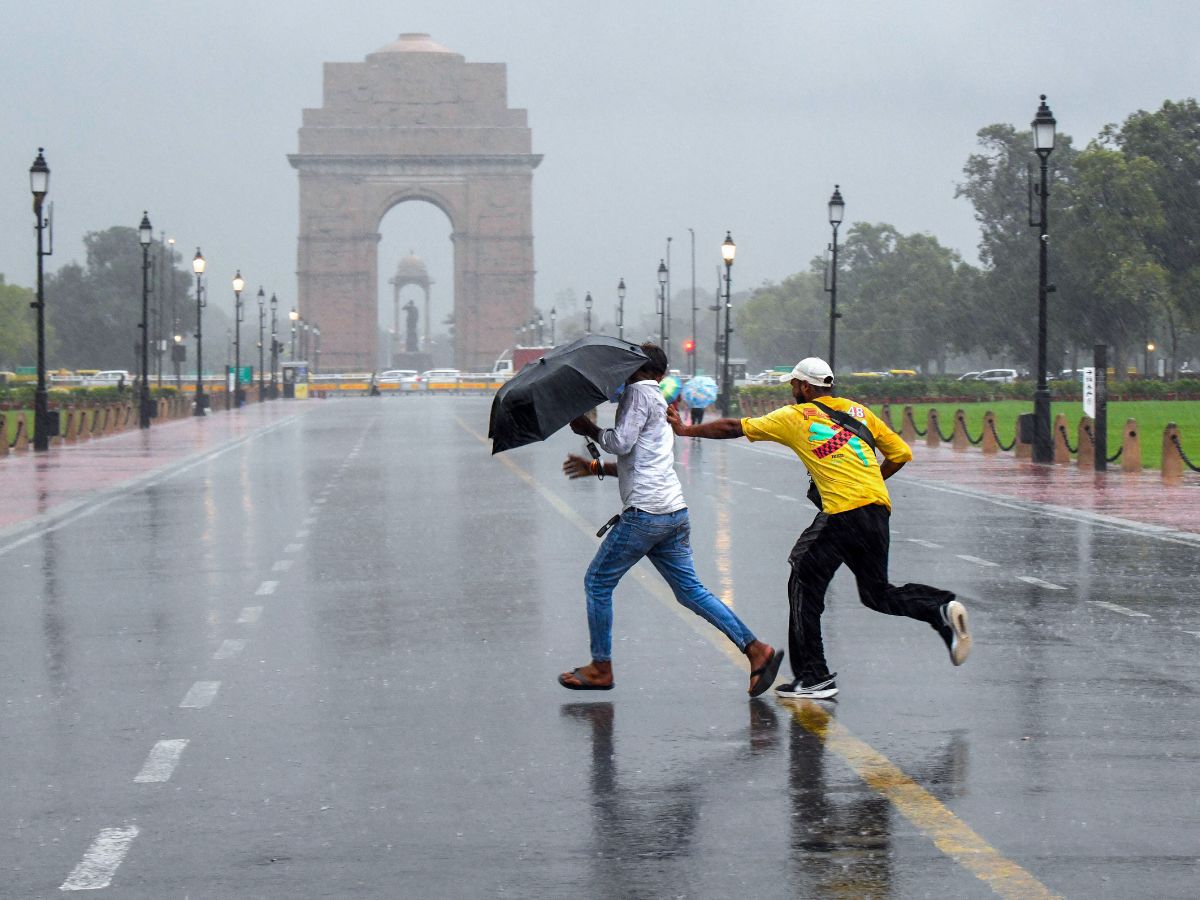

Delhi is ready to receive its first artificial rain on October 29 as the authorities are gearing up to tackle the capital’s poisonous air after Diwali through cloud seeding. Delhi Chief Minister Rekha Gupta announced this and assured that preparations for cloud seeding have been carried out successfully, with test trails already being done in the Burari area.
“Meteorological department has reported cloud formation from October 28 to 30. If everything goes well, Delhi will see its first artificial rain on October 29,” Gupta wrote in an X post.
दिल्ली में पहली बार क्लाउड सीडिंग के माध्यम से कृत्रिम वर्षा कराने की तैयारियां पूरी कर ली गई हैं। आज विशेषज्ञों द्वारा बुराड़ी क्षेत्र में इसका सफल परीक्षण किया गया है।
मौसम विभाग ने 28, 29 और 30 अक्टूबर को बादलों की उपस्थिति की संभावना जताई है। यदि परिस्थितियां अनुकूल रहीं, तो…
— Rekha Gupta (@gupta_rekha) October 23, 2025
What is Cloud Seeding?
Cloud seeding is a method of weather modification that aims to augment precipitation or snowfall by injecting small particles into clouds. The particles serve as nuclei, stimulating water vapor to condense into water droplets or ice crystals, which precipitate as rain or snow.
Cloud seeding is being conducted in Delhi with the aid of a Cessna-206H aircraft based in Meerut, technical support from IIT Kanpur. Cloud seeding flares were discharged during trial flights over locations such as Khekra, Burari, and Badli.
How Artificial Rain Works
The mechanism of cloud seeding is dependent on the existence of clouds in the atmosphere. Seeding agents include:
Silver iodide
Potassium iodide
Dry ice
Liquid propane
Salt particles
…are spread with aircraft, rockets, or ground generators. The agents assist water vapor to condense into droplets or ice crystals. Once the droplets become heavier, they fall as precipitation.
There are two primary techniques employed:
Hygroscopic Seeding – Particles of salt are emitted into warm clouds to fuse water droplets into large raindrops.
Glaciogenic Seeding – Dry ice or silver iodide is pumped into clouds that are supercooled to create ice crystals, which become liquid and precipitate as rain.
Cloud seeding is generally focused on clouds of nimbostratus altitude 500 to 6,000 metres with success rates of 60% to 70% based upon atmospheric conditions.
Why Delhi Needs Artificial Rain
Delhi’s AQI has remained in the ‘very poor’ and even ‘severe’ category for several days after Diwali, with suspended pollutants like PM2.5 and PM10 creating health hazards. Even light to moderate artificial rainfall can temporarily reduce AQI by 50 to 80 points, washing out pollutants from the air.
Nevertheless, experts warn that cloud seeding is temporary in nature and will never be able to substitute for systemic solutions to combat source pollution, such as vehicle exhausts, construction dust, burning of crops, and industrial effluents.
Hazards and Drawbacks of Cloud Seeding
Though promising, cloud seeding has risks:
Health Hazards – Prolonged exposure to silver iodide and other chemicals might lead to lung or skin problems.
Disruption of Natural Weather – Induced rain in one region may decrease rainfall in another.
Floods and Landslides – Excessive rainfall may cause flash floods or landslides in susceptible areas.
Damage to the Environment – Chemicals can build up in water and soil, affecting crops, aquatic organisms, and ecosystems.
Cloud seeding in Delhi is a technological effort to control air pollution through artificially induced rain. If it is successful, it can help give temporary relief to the city’s poisonous air, but officials emphasise that long-term strategies are required to help bring sustained air quality improvement.
Delhi is looking forward to artificial rain on October 29, hoping science could at least provide a temporary relief from the city’s pollution problem.
ALSO READ: Woman Gangraped By Five Men Who Posed As Police Informers, Three Arrested
Sofia Babu Chacko is a journalist with over five years of experience reporting on Indian politics, crime, human rights, gender issues, and stories about marginalized communities. She believes journalism plays a crucial role in amplifying unheard voices and bringing attention to issues that truly matter. Sofia has contributed articles to The New Indian Express, Youth Ki Awaaz, and Maktoob Media. She is also a recipient of the 2025 Laadli Media Awards for gender sensitivity. Beyond the newsroom, she is a music enthusiast who enjoys singing. Connect with Sofia on X: https://x.com/SBCism




