
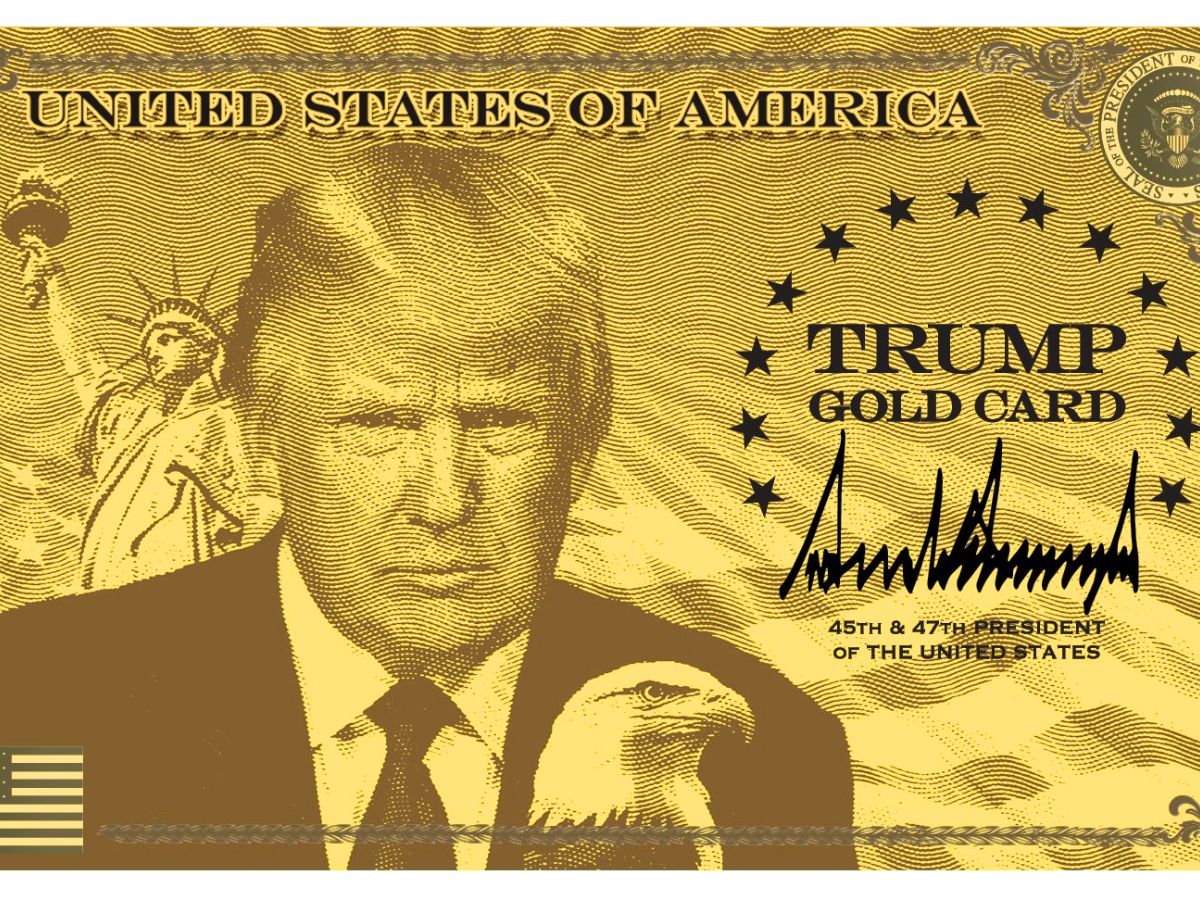

The United States has officially launched President Donald Trump’s new high-value immigration pathway the Trump Gold Card with the federal website TrumpCard.gov now live and accepting applications. The programme marks the biggest transformation of America’s investor-visa ecosystem since the EB-5 visa was introduced in 1990. Alongside the Gold Card, the administration has also teased a more elite offering, the Trump Platinum Card, which is expected to provide unprecedented tax-free privileges to ultra-wealthy applicants.
The rollout comes at a moment when Trump is simultaneously tightening immigration enforcement with strict deportation actions, while opening the doors wide for wealthy global investors and highly skilled talent. The contrasting policies reflect Trump’s “America First” strategy: hard-line immigration control on one end, and a premium, fast-tracked residency programme on the other.
What Exactly Is the Trump Gold Card?
The Trump Gold Card is a revamped, rebranded and significantly upgraded version of the EB-5 investor visa. Unlike EB-5, which required applicants to invest in job-creating commercial projects, the new programme funnels contributions directly to the US government.
Trump has repeatedly referred to it as a “direct path to citizenship for all qualified and vetted people,” signalling that the card functions as a fast-tracked residency route with fewer bureaucratic layers.
The Department of Homeland Security is working closely with @CommerceGov to facilitate the rollout of President Trump’s Gold Card program.
Under this historic initiative, qualified individuals and corporations, who contribute $1 million and $2 million respectively, will receive… pic.twitter.com/10htrjYyxx
— Secretary Kristi Noem (@Sec_Noem) December 10, 2025
Applicants must first pay a one-time $15,000 processing fee to the Department of Homeland Security. Once they clear the background check, they must make a mandatory $1 million “gift” payment to the federal government.
This contribution completes the process and unlocks the Trump Gold Card, which grants permanent residency and eventually a pathway to US citizenship. The government has not announced annual caps or eligibility quotas, making this a potentially high-volume programme.
The branding of the card has also drawn attention. The website displays a gold-coloured card featuring Trump’s image, the Statue of Liberty, the American flag and a bald eagle an aesthetic clearly designed to appeal to wealthy global aspirants who view American residency as a prestigious, high-value asset.
The Corporate Gold Card: A New Tool for Big Companies
A second version of the programme, called the Trump Corporate Gold Card, has been launched for businesses that want to bring foreign employees into the United States. Corporations must pay the same $15,000 processing fee, but the final contribution required after approval is $2 million instead of $1 million.
Companies can transfer the card from one employee to another by paying a small transfer fee, which includes the cost of a DHS background check.
Trump has argued that companies, particularly those in advanced technology, artificial intelligence, medicine and engineering, struggle to retain top global talent due to unpredictable visa policies. He has publicly claimed that Apple CEO Tim Cook repeatedly raised concerns about losing exceptional graduates from US universities because they lacked long-term visas. T
rump positioned the Corporate Gold Card as the ultimate solution, assuring business leaders that the US will no longer “push out the best students we have.”
What Is the Trump Platinum Card?
Although not yet operational, the Trump Platinum Card has already sparked global interest due to its extremely high contribution requirement and unique tax privileges.
According to the official website, the Platinum Card requires a $15,000 processing fee and a massive $5 million contribution to the US government. Once granted, cardholders may spend up to 270 days a year in the United States without being subject to US taxes on non-US income.
In practical terms, this means extremely wealthy individuals could maintain financial operations abroad while enjoying long stays in the US without becoming tax residents. The programme, however, explicitly excludes anyone who has previously been subject to US global taxation, including US citizens and resident aliens.
This positions the Platinum Card as a targeted product for wealthy foreign nationals, family office investors and global entrepreneurs seeking partial US residency without tax obligations.
How the Application Process Works
Applicants must visit TrumpCard.gov, select “Apply Now,” fill in the required information, and proceed to payment. Once the initial processing fee is paid, the Department of Homeland Security conducts an extensive background check.
If the applicant clears the vetting process, they must complete the mandatory “gift” payment of $1 million for individuals or $2 million for corporations. After this final step, the card is issued and applicants may reside in all 50 states and US territories. There is currently no last date for applying, and the government has not indicated whether the programme will run year-round or in limited phases.
Why Trump Created the New Programme
At the White House event launching the Gold Card, Trump said the United States loses “tremendous people” because of restrictive and outdated visa systems. He described the new programme as one that will attract the “best people” while simultaneously generating “billions of dollars for the US Treasury.”
His administration believes the Gold Card will give America a competitive edge in securing top global graduates, particularly those from STEM fields, who often leave for India, China or Europe when they cannot secure long-term US residency.
Commerce Secretary Howard Lutnick claimed current green card holders earn less, on average, than US citizens, and that the new programme would flip that trend by attracting high-income applicants. Trump also highlighted that investor visas already exist in many developed countries, and argued that the US must modernise its immigration models to keep pace with global competition.
What the Gold and Platinum Cards Mean for the US Economy
Economists note that the programme could have several major impacts. The most immediate effect is the creation of a new revenue pipeline for the federal government. Unlike EB-5, where investments went into private real estate or development projects, the Gold and Platinum programmes send all funds directly to the federal Treasury. This means billions in fresh capital could enter government accounts each year, depending on how many applicants sign up.
The programme also appears designed to strengthen America’s technology and innovation sectors. High-skilled foreign graduates frequently leave the US because they cannot secure visa extensions after completing their degrees.
The Gold Card provides companies a predictable way to retain such workers, reducing talent loss in critical fields such as artificial intelligence, biotechnology, data science and semiconductors.
There are concerns, however, that the removal of job-creation requirements will shift money away from American development projects and into government coffers instead.
Critics argue that the programme essentially sells citizenship to the wealthy without ensuring broader economic benefit. Supporters counter that high-net-worth applicants bring capital, networks and entrepreneurship, which indirectly create jobs and investments.
Real estate analysts also note that high-value residency programmes historically fuel property purchases, luxury investments and startup funding in the host country.
If the Platinum Card launches with its tax advantages intact, experts expect a surge of interest from global billionaires and private investors seeking tax flexibility.
A sweeping reinvention
The Trump Gold and Platinum cards represent a sweeping reinvention of America’s investment-immigration strategy. They offer wealthy applicants unprecedented access to US residency, and in the case of the Platinum Card, long stays without taxation.
The government projects billions in revenue, improved talent retention and increased global competitiveness. At the same time, the programmes raise questions about equity, accessibility and the ethics of high-priced citizenship pathways.
As applications open and global interest rises, the Trump Gold Card is set to become one of the most talked-about immigration policies of Trump’s second term and potentially one of the most economically transformative.
Sofia Babu Chacko is a journalist with over five years of experience covering Indian politics, crime, human rights, gender issues, and stories about marginalized communities. She believes that every voice matters, and journalism has a vital role to play in amplifying those voices. Sofia is committed to creating impact and shedding light on stories that truly matter. Beyond her work in the newsroom, she is also a music enthusiast who enjoys singing.




