
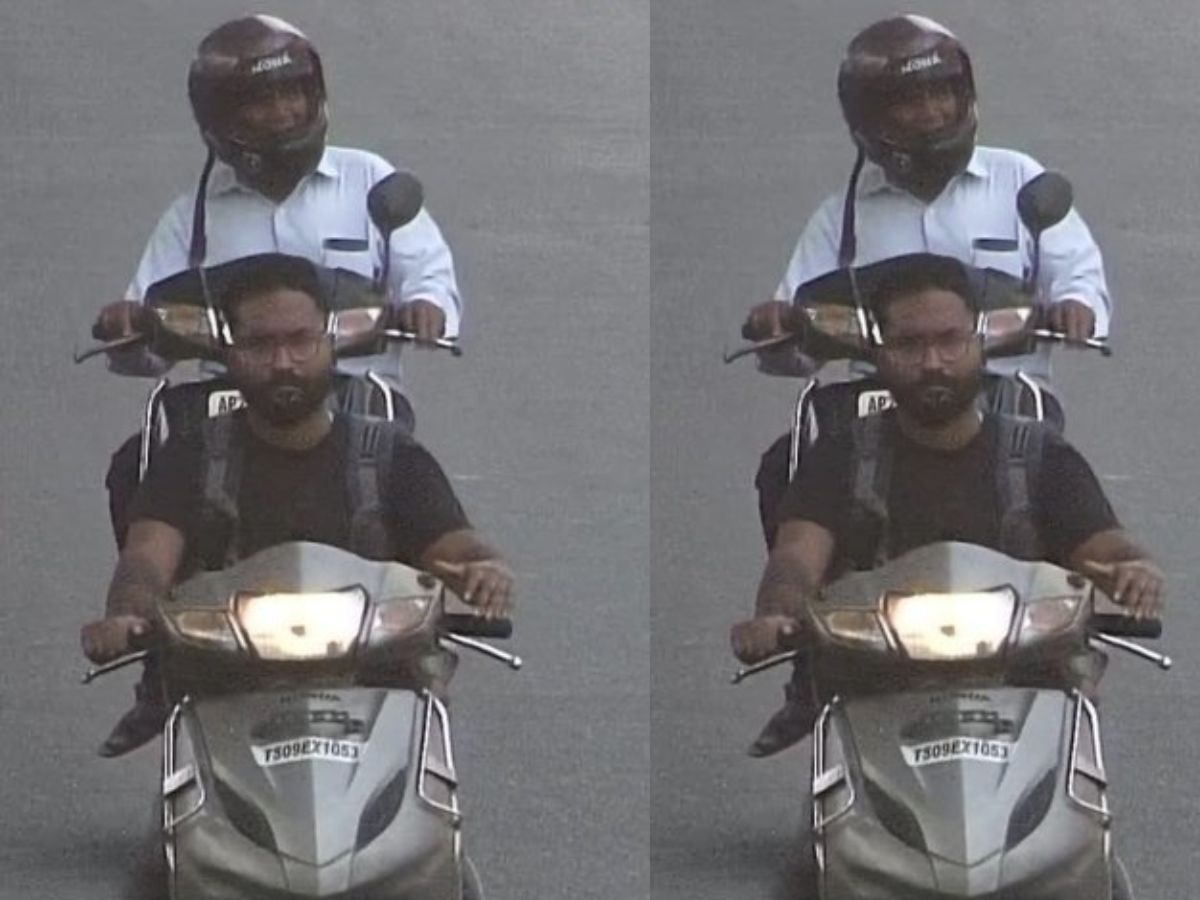

The motorcycle accident three months ago brought Faisal Rahman to a state of frustration, which he has now resolved. The police investigation at Habeeb Nagar Police Station in Hyderabad his FIR and police investigation led to dead ends which made him believe that recovery chances were non-existent.
A traffic violation notice served as the unexpected source that provided the breakthrough because digital surveillance systems now operate throughout the present era. The suspect appeared on the city automated e-challan system, which recorded him in high definition after official investigation efforts had reached a standstill. Rahman found himself in an ironic situation because receiving a fine for a stolen vehicle became a moment of winning.
The challan document included photographic proof that showed the suspect operating the stolen motorcycle, and this evidence provided investigative leads that police had failed to find during their months of work. Rahman took advantage of the situation to post his evidence on social media while tagging the Hyderabad Traffic Police.
The incident spread rapidly online, sparking a discussion about how law enforcement functions compared to automated revenue systems that assist people while revealing their operational flaws, as users mocked the theft database and traffic monitoring grid for failing to work together.
Dear @HYDTP @hydcitypolice
My vehicle was stolen 3 months ago, and an FIR has already been registered at Habeeb Nagar Police Station.
Today, I received a traffic challan for the same vehicle, and the image clearly shows the thief’s face
I kindly request you to look into this pic.twitter.com/2KaWKn1rgC
— Faisal Rahman (@rahman0528) April 7, 2026
Digital Forensics
The link between automated surveillance systems and criminal investigations exists because they connect different aspects of their work. The e-challan system operated as a concealed monitoring device which tracked both the precise location and physical characteristics of the perpetrator.
The systems aim to collect revenue and maintain traffic safety, but their extensive visual data archive enables police departments to investigate stolen property cases through existing recordings. The fact that a traffic camera could identify a thief faster than a specialized investigative unit highlights a significant gap in real-time data integration.
The traffic monitoring system would create instant alerts by connecting to the theft database, which would identify blacklisted plates through its scanning process, thus changing the system from a passive fine-collection method into a tool for active crime prevention.
Systemic Integration
The case demonstrates that urban law enforcement agencies lack effective inter-departmental coordination. The traffic department’s AI system continued processing vehicle violations as if the original owner still possessed the vehicle even after the FIR had been officially filed three months before.
The term “karma” used by witnesses functions as a criticism of an uncoordinated data system that prevents traffic police from accessing information about ongoing police investigations. A “smart” city requires complete theft record integration with automated number plate recognition (ANPR) technology to achieve proper operation.
Thieves maintain their ability to operate undetected because they receive minor traffic fines, which they pay to avoid more severe larceny charges.
A recent media graduate, Bhumi Vashisht is currently making a significant contribution as a committed content writer. She brings new ideas to the media sector and is an expert at creating strategic content and captivating tales, having working in the field from past four months.




