
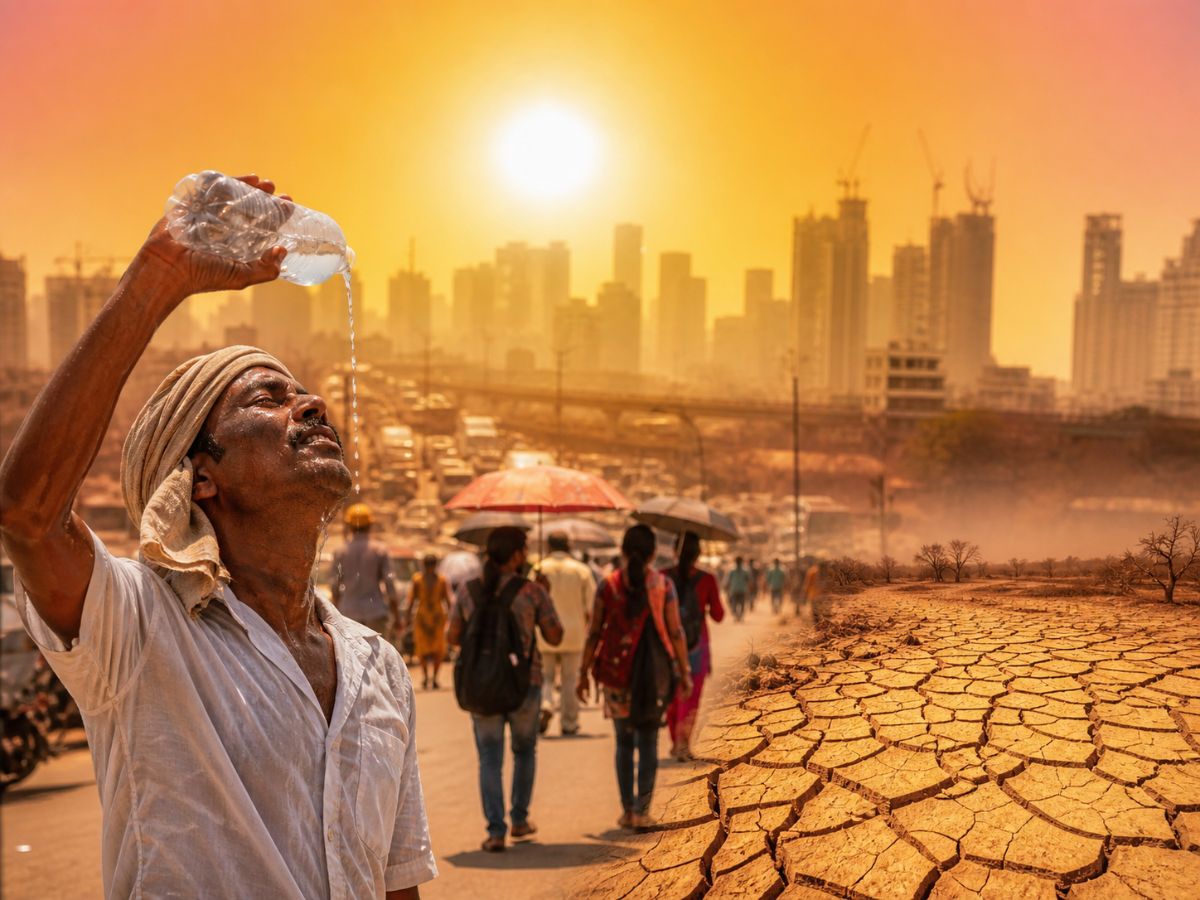

India has been having one of the worst summers ever, with many experts saying that the heat wave that hit India in 2026 is not just another seasonal occurrence but a growing problem related to global warming. Some reports state that India has some of the hottest temperatures around the world; a report on the World Health Organization website claimed, “In fact, 98 of the 100 hottest cities on earth are currently in India and experiencing very high temperatures.”
These reports raise some serious questions regarding how fast temperatures are increasing and how much of the rising temperature will impact other areas as well. There has been evidence of extreme heat occurring sooner than expected in many regions of India, and the severity of the extreme heat continues to escalate. Thus, the Indian heat wave is viewed as part of a larger climate trend, and no longer as simply an isolated weather event.
Why Is India Heatwave Becoming So Severe And Widespread Across The Country?
Following are several potential factors attributable to the extreme heat wave in India. Climate change appears to be the driving force behind the surges in temperatures throughout India; some of the other factors include the urban heat island effect in India, heat domes, and reduced or diminishing western disturbances. Additionally, there is some speculation that there could be a strong “super El Nino” present in the Pacific Ocean that may contribute to the elevated temperatures and to worsening weather conditions.
As per reports, Urban areas have a disproportionately negative impact from climate change. Because of the dense use of concrete buildings to support the urban population, cities trap a much higher amount of heat than the rural areas surrounding them. Therefore, for people living in urban areas with very few options to cool down themselves or their homes, the India Heatwave has become a very serious public health issue.
How Is India Heatwave Impacting Health, Jobs, And The Economy On The Ground?
The India Heatwave is affecting health, agriculture, and the economy. There are many reports of people suffering from heat-related illnesses or dying from heat, particularly among those most vulnerable to heat-related illness. Some of the main concerns include increased instances of dehydration, heat exhaustion, heat stroke, and long-term chronic illnesses.
In terms of economic impact, the costs due to extreme heat are enormous. As per reports, extreme heat has negatively affected outdoor productivity and has increased electricity consumption because outdoor workers are relying on cooling systems to survive. In agriculture, both crops and livestock have been placed under an enormous amount of stress, resulting in serious risks to the food system. Many experts have indicated that extreme heat is a “risk multiplier,” making existing problems like water scarcity and drought much worse.
What Is The Link Between India Heatwave And Climate Change Risks?
The India heatwave can be attributed to other environmental issues. Reports say that climate scientists indicate the excessive heat from the planet’s warming climate will increasingly cause heat waves that are greater in length, intensity, and frequency. Additionally, El Nino is a climate anomaly that is associated with longer durations of heat wave events throughout India.
The environmental impact of this situation is also concerning. The extreme heat being experienced in many areas in India is causing droughts, water shortages, and some areas are also seeing wildfires. All these negative impacts are interconnected and provide an example of how the India Heat Wave is one part of the overall climate crisis that includes all elements of the environment and natural resources.
What Can Be Done To Tackle India Heatwave And Reduce Future Risks?
Experts state that adapting to the India Heat Wave has become a requirement and will no longer be an option. Authorities have begun to identify critical actions in areas such as the development of heat action plans and early warning systems, as well as the need to develop more sustainable urban designs for future development. Other solutions include improving water resource management, increasing green space, and developing climate-resilient buildings.
Finally, the need for more comprehensive strategies to reduce greenhouse gas emissions and to build resilience against climate change has also become urgent. The India Heat Wave is clear evidence that there is an immediate need for both adaptation and mitigation strategies. Without sufficient efforts for both adaptation and mitigation, climate scientists predict that extreme heat events will continue to cause increasingly severe effects in the foreseeable future.
Khalid Qasid is a media enthusiast with a strong interest in documentary filmmaking. He holds a Master’s degree in Convergent Journalism from AJK MCRC. He has also written extensively on esports at Sportsdunia. Currently, he covers world and general news at NewsX Digital.




