
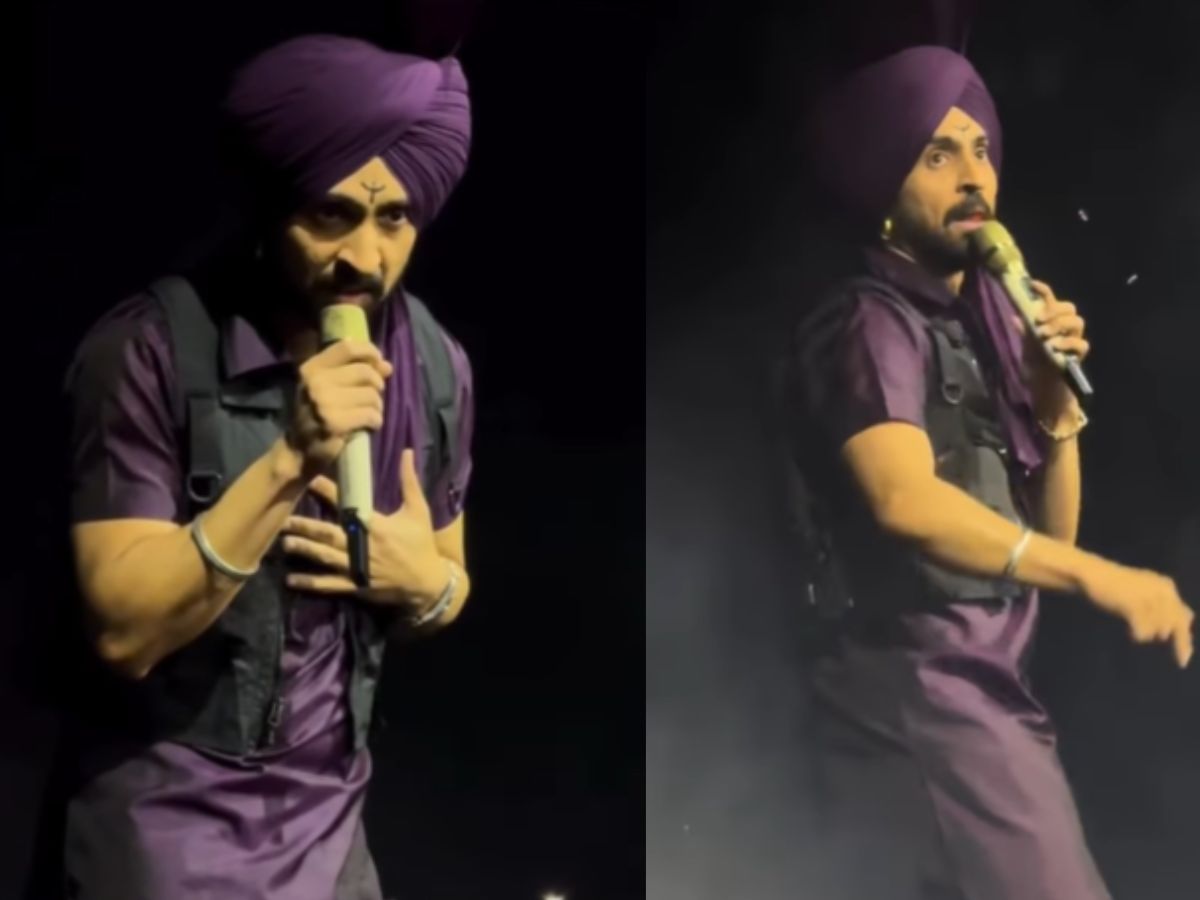

Diljit Dosanjh, who is a worldwide Punjabi superstar, became the focus of a social media controversy after he engaged in a public argument during his latest live Calgary concert. The singer-actor who typically maintains a peaceful and funny personality lost his temper when some audience members began protesting through shouting and showing flags. A video capturing the confrontation has since gone viral which shows Dosanjh facing the protesters from the stage while he declares, “Jitne jhande dikhane dikhao” (Show as many flags as you want).
The reported friction between two sides originates from their different opinions about Diljit’s recent achievements in international recognition. While many people celebrated his appearance on The Tonight Show Starring Jimmy Fallon some critics dismissed his decision because they believed he used it to promote himself while he distanced himself from Punjab’s local disasters, which included the catastrophic floods. Diljit used his onstage performance to deliver a direct response against these allegations. He explained that his worldwide presence serves Punjabi needs instead of his own personal interests. He asserted his dedication to his Punjab roots when he explained I didn’t talk about my songs. I went for the sake of Punjab. He established his strong loyalty to his roots as a permanent aspect of his identity despite his rapid rise to global recognition.
Balancing Culture and Politics on the Global Stage
Diljit faces difficulties because of his success, which makes him popular with mainstream audiences while he maintains his regional identity. The recent Surrey show demonstrates a developing pattern in which entertainment locations function as battlegrounds for competing ideological viewpoints. The protesters who showed up to demonstrate against Dosanjh brought flags that represented particular political groups because they believed he failed to address certain topics or choose the right platforms.
Punjab di Gall Karo Khalist@n di nhi🔥🔥🔥🔥🔥
During Diljit’s show, some people displayed Khalist@ni 🤡 flags, but the police removed them.
AND
Diljit’s response to the Khalish@tnis…#Diljit pic.twitter.com/mu1MLkzb3A— JYOTI सिंह DHILLON🇮🇳 (@NayaBharatHoon) May 1, 2026
Diljit Highlights Global Platforms as a Way to Share Punjabi History and Identity
Diljit maintains that his work on Jimmy Fallon shows, which included discussion about the Komagata Maru event, represents his political activism. He believes that his work in bringing Punjabi history to Western audiences who number in the millions provides better service to his home country than traditional charitable work and local community involvement.
The Resilience of Art: Defying Polarization and Reclaiming the Narrative
Dosanjh has previously used his microphone as a shield against “haters” before this current situation. His history of “befitting replies” includes a notable moment during a 2024 Indore concert where he recited Rahat Indori’s iconic ghazal, “Kisi ke baap ka Hindustan thodi hai.” The public understood his actions as a response to Bajrang Dal because they attempted to cancel his performance through their accusations of his anti-national behavior.
Diljit Dosanjh Balances Global Appeal with Firm Stand on Cultural Identity
He has expressed intimacy with poetry and direct dialogue along with his work that gives him his identity as an artist and connects him with all people while not being tied to any particular social group. Diljit has said that he would be happy to receive the love of his fans but will not be cowed by ruckus-makers in his venues. He asserts his commitment to Punjab as a personal matter he will uphold regardless of the “smoke” of controversy.
A recent media graduate, Bhumi Vashisht is currently making a significant contribution as a committed content writer. She brings new ideas to the media sector and is an expert at creating strategic content and captivating tales, having working in the field from past over 10 months.




