
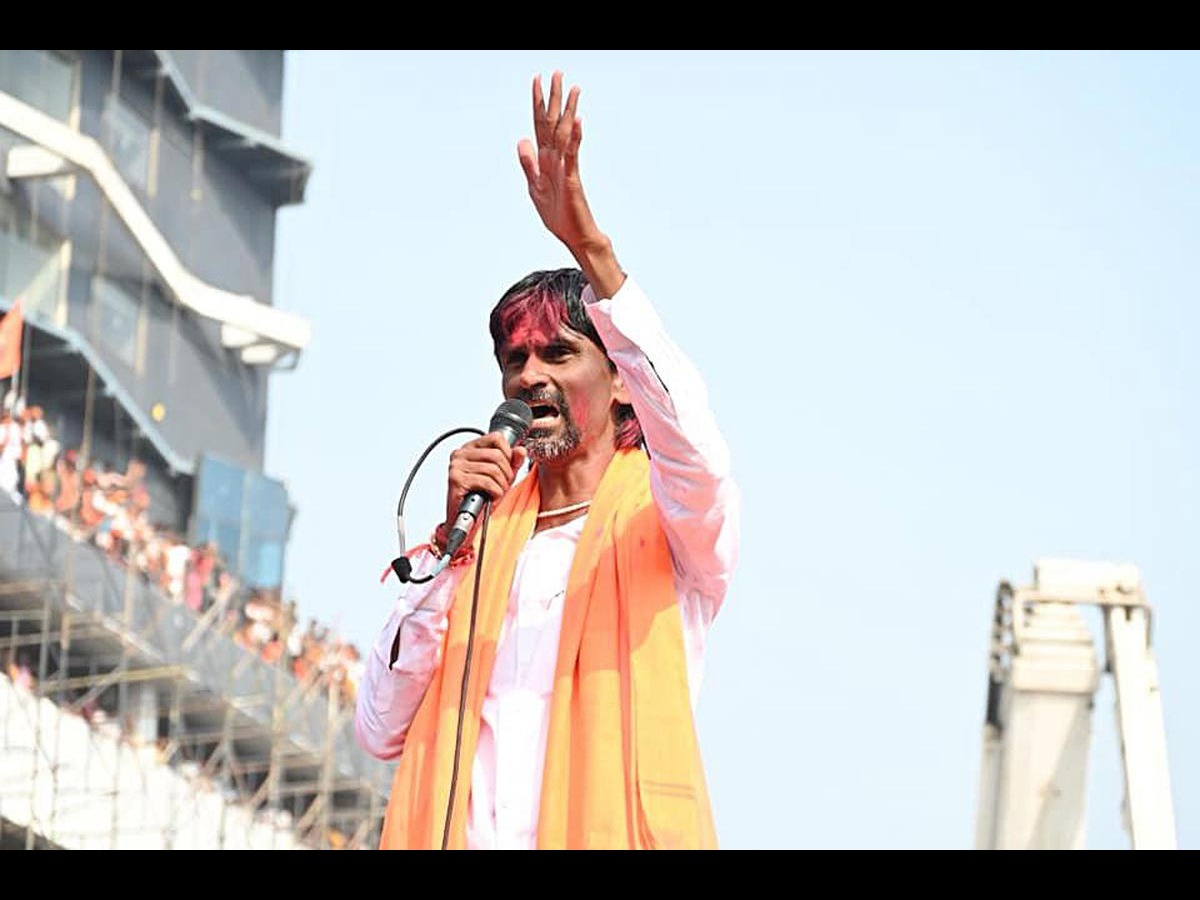

Manoj Jarange Patil, who is a popular Maratha activist has organized a high-stakes protest in Mumbai demanding for the Maratha community to be included in the OBC quota. The protest soon transformed into a political flame that spread throughout Maharashtra.
Jarange traveled from Jalna to Mumbai, passing through several cities along the way. A one-day, nonviolent protest at Azad Maidan was given conditional permission by the authorities; it was restricted to 5,000 people and was subject to strict restrictions about slogans, crowd management, and public safety and order. In order to get what he wants, Jarange plans to start an indefinite hunger strike.
In a cautious reaction, Chief Minister Devendra Fadnavis defended the strike as a democratic right if it was appropriately staged but criticized its rationale for seeking the inclusion in the 350-caste OBC quota that prevails. He reaffirmed that courts have previously established and approved a 10% quota for Marathas.
Political conflicts are escalating. Sanjay Raut of the Shiv Sena (UBT) supported Jarange’s right to protest and framed the protest as a question of Marathi identity, asking Fadnavis to adhere to his past commitments. Harshavardhan Sapkal, the head of the Maharashtra Congress, called for an immediate resolution and the support of the Assembly’s 240 members, dismissing the protest limitations as “absurd” and politically motivated. Following a conversation with Raj Thackeray, Deputy Chief Minister Eknath Shinde declined to make any public assertions, claiming confidentiality.
Concerns have risen to OBC communities as a result of the unrest; on August 30, the National OBC Federation launched a hunger strike in protest of any lowering of the current quota and in demand of the separate reservation of Marathas.
Given the controversial caste dynamics in Maharashtra, political analysts advise that the protests could have a major effect on the next elections.
Also Read: NARI 2025 Report Highlights Women’s Safety Concerns Across India




