
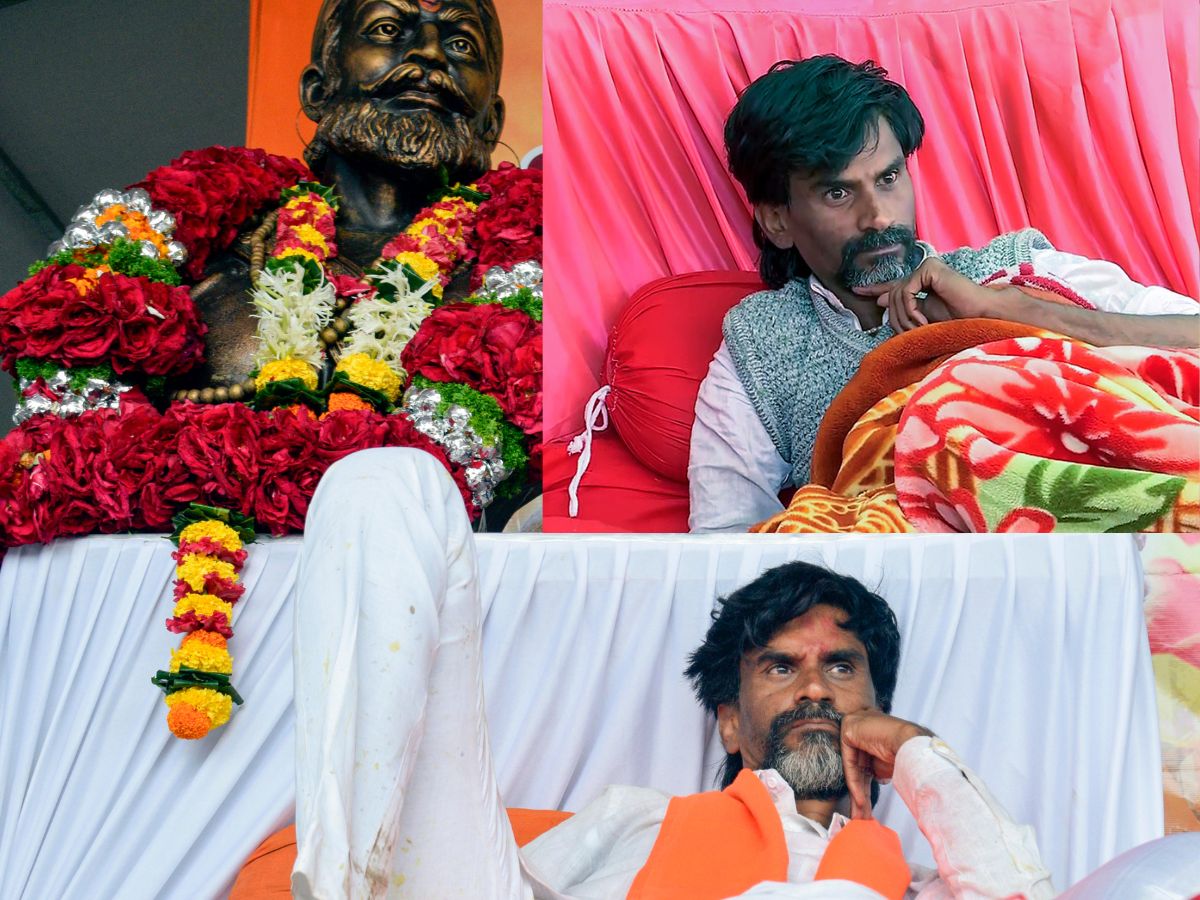

Maratha quota activist Manoj Jarange-Patil has once again intensified his agitation, demanding reservation benefits for the Maratha community under the Other Backward Class (OBC) category.
Jarange launched a hunger strike at Azad Maidan in south Mumbai on Friday to demand a 10% reservation for Marathas in higher education and also in government jobs.
The agitation has caused the BJP-ruling Mahayuti government to tread cautiously, with Maharashtra minister Chandrakant Patil saying Chief Minister Devendra Fadnavis may “look to intervene” to resolve the situation after the third-day protest.
Who is Manoj Jarange Patil?
Manoj Raosaheb of Jarange-Patil was born on August 1, 1982, in the village of Matori of Beed district in Maharashtra. He is a farmer activist and the face of the Maratha reservation movement. He is Maratha and lives at Shahagad with his wife Sumitra and their four children.
He became prominent when he courted arrest in a hunger strike in September 2023 at Jalna district’s Antarwali-Sarathi village, which escalated into a prime flashpoint of the quota agitation. He later began a protest march under the aegis of Maratha Kranti Morcha and Sakal Maratha Samaj to seek OBC recognition for Marathas in January 2024. The protest was suspended on being assured by Chief Minister Eknath Shinde of temporary eligibility for OBC benefits until a permanent resolution was achieved.
Why is Manoj Jarange-Patil Protesting?
Jarange-Patil’s main demand is that the government should give Kunbi certificates to all Marathas, thus bringing the entire community under the OBC bracket. Although the sub-caste of peasants called Kunbis are already officially classified as OBCs, Jarange contends that the vast majority of Marathas were historically registered as Kunbis in British-era documents like the Hyderabad Gazette, Bombay Gazette, Satara Gazette and Aundh Gazette.
He also insists that Kunbi certificates be given to all Marathas with Kunbi origins, their blood relations as well as relatives by marriage, thus covering the entire population of Marathas.
The Challenge Before the Government
The Maratha demands have already been tried to be accommodated by the state government. In 2023, it passed the Socially and Educationally Backward Class (SEBC) Act, providing 10% reservation to the Marathas. That, however, took Maharashtra’s overall quota to 72%, exceeding the 50% limit as laid down by the Supreme Court. The move has been contested in the Bombay High Court, making it legally challenging for the government to satisfy the demands of Jarange.
Jarange-Patil’s agitation has revived the reservation controversy and the Marathas consist of almost 28% of the population of Maharashtra, and as such, their claim of OBC separation has tremendous political implications. The state government is now faced with a quandary as it tries to incorporate the new legal limitations against the OBC socio-economic justice.
ALSO READ: Why Did Maratha Quota Row Return? Raj Thackeray Points Finger At Eknath Shinde
Sofia Babu Chacko is a journalist with over five years of experience reporting on Indian politics, crime, human rights, gender issues, and stories about marginalized communities. She believes journalism plays a crucial role in amplifying unheard voices and bringing attention to issues that truly matter. Sofia has contributed articles to The New Indian Express, Youth Ki Awaaz, and Maktoob Media. She is also a recipient of the 2025 Laadli Media Awards for gender sensitivity. Beyond the newsroom, she is a music enthusiast who enjoys singing. Connect with Sofia on X: https://x.com/SBCism




