
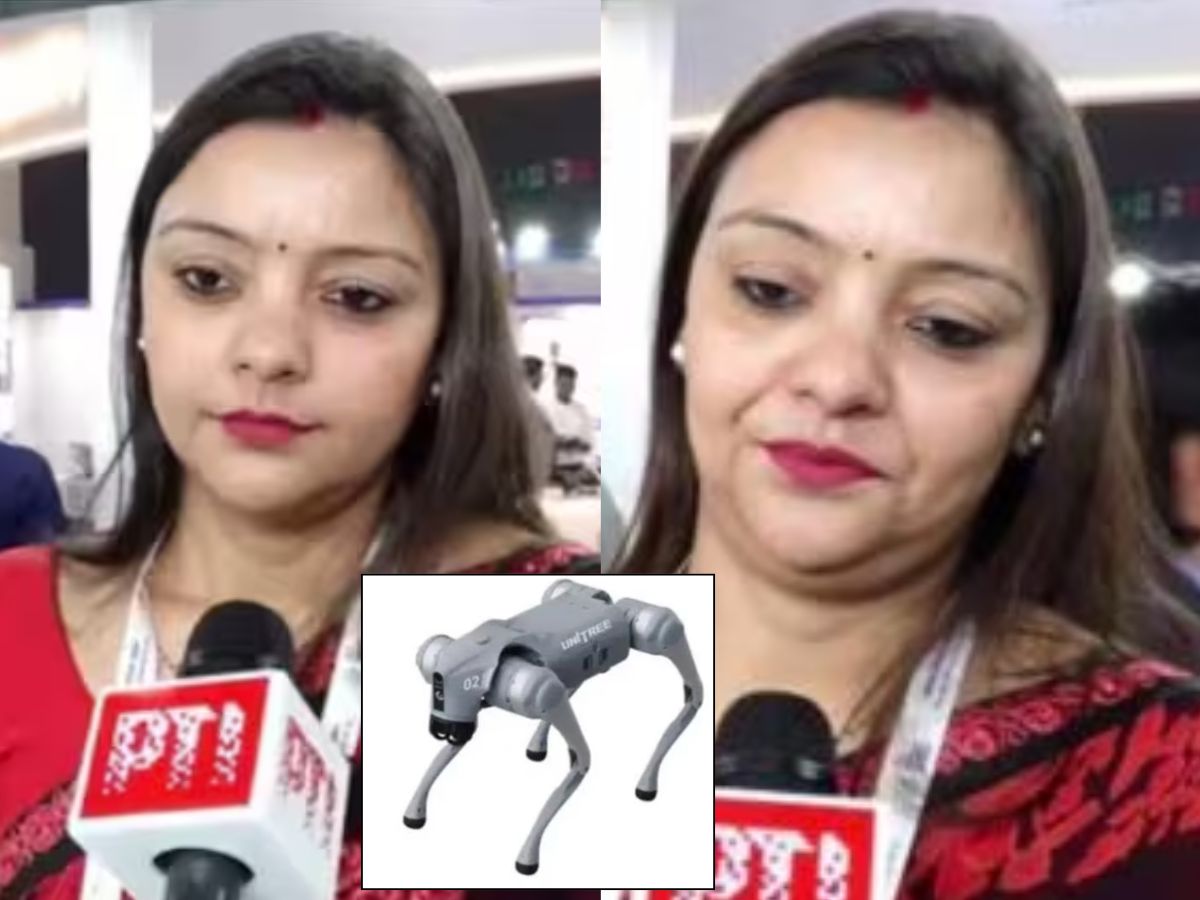

Galgotias University came under fire during the AI Impact Summit at New Delhi after a robotic dog appeared in its booth and raised questions about its origin and the assertions it made during the demonstration. The university has allegedly been requested to clear its exhibition area at Bharat Mandapam on Wednesday after it was enquired whether the RoboDog was an Indian creation. At that, Galgotias has apologized, citing the fact that the mix up happened because of a misinformed representative of the company in terms of the technical background of the device.
Where Is Neha Singh Now, Viral Galgotias University Professor Who Grabbed Attention At AI Summit 2026 Delhi Over Her China-Made ‘Robodog’ Comments?
There are no reports of Neha Singh about where is she now, The university explained the episode by the fact that the professor is so enthusiastic about being on camera, and recognizes that false impressions were formed at the time of demonstration. The viral professor, Neha Singh later explained that it was not in her intention to state that the RoboDog came into existence in India. In an interview with PTI, Singh explained she is a faculty member in the School of Management in the area of Communications and that she had been misquoted. She also took the blame of not having been clear in her wording and she said that her explanation might not have been very accurate as it was said in a hurry and with enthusiasm. Singh emphasized that the incident must not eclipse the student-created AI applications which also featured in the display in the summit by the university.
Neha Singh Viral Galgotias University Professor
Based on her career history, Singh was recruited to Galgotias University in November 2023, having previously been employed in Sharda University as an Assistant Professor and previously as a mentor of Verbal Ability at Career Launcher. She has also been identified with GITAM and is MBA trained with a Degree of B.Com at the University of Allahabad. To solve the issue of the robot dog being taken away, Singh responded by telling that it has since been returned to the university laboratories where it will be used academically and in research areas as the students learn more about its design and develop more projects.




