
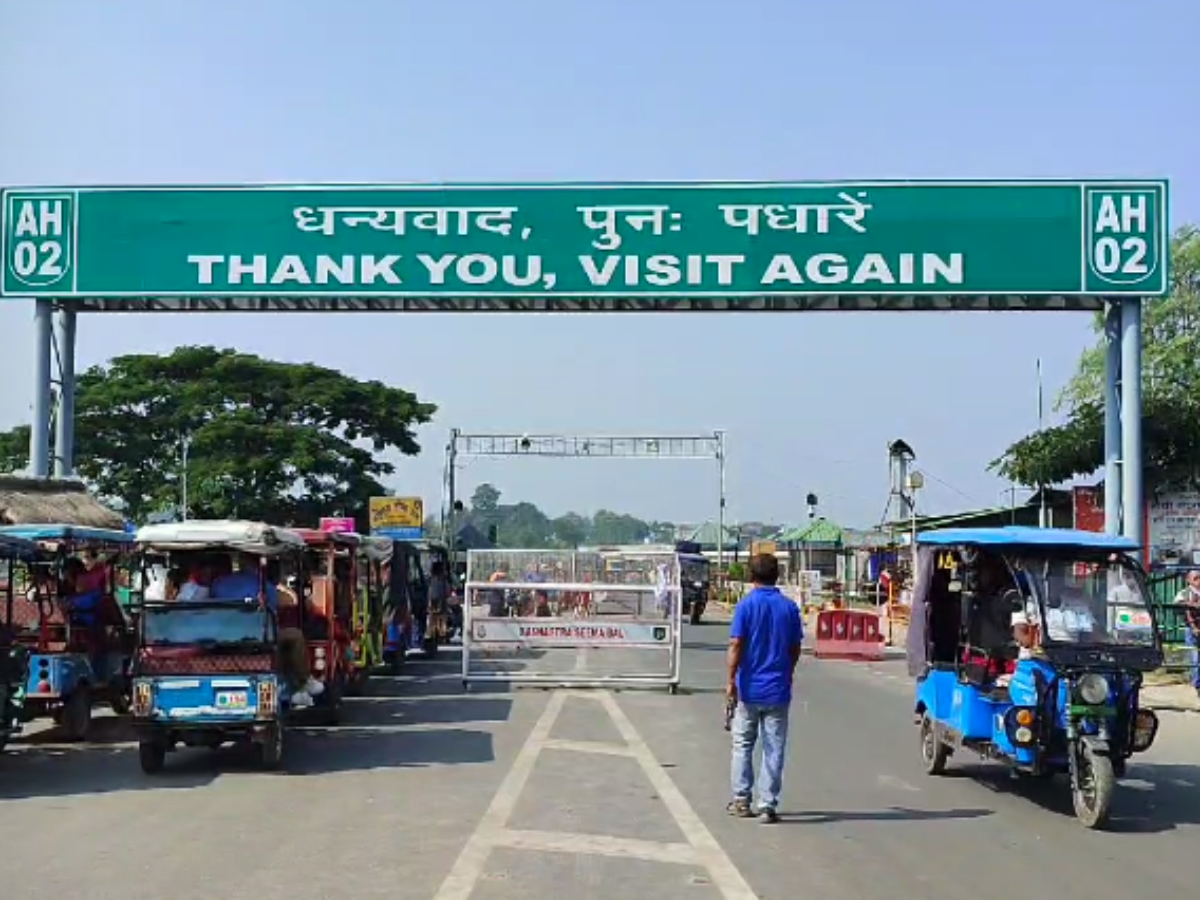

As the neighbouring countru – Nepal is under boil, the Ministry of External Affairs (MEA) has issued a travel advisory for the Indians in Nepal. Those already in Nepal have been urged to stay indoors, avoid public gatherings, and follow instructions from local authorities and the Indian Embassy in Kathmandu.
The protests, led by youth under the “Gen Z” banner, erupted after a temporary social media ban and allegations of corruption. At least 19 people have died in the unrest, forcing Prime Minister KP Sharma Oli to resign.
Indian – Nepal Border Security Stepped Up
The 1,751-km-long unfenced India-Nepal border has been placed on high alert. The Sashastra Seema Bal (SSB) has intensified patrols and increased checking of every traveller. Local “Operation Kavach” committees have been tasked with monitoring cross-border movements. In West Bengal’s Darjeeling district, a police post has been set up at Panitanki near the India-Nepal border.
-
DG & IG of North Bengal Police, Rajesh Kumar Yadav, confirmed that Indian forces have increased deployment and intelligence operations.
-
He said violent incidents had been reported from the Nepal side, while the Indian side remains peaceful.
-
Immigration and Customs offices across the border in Nepal have been attacked, leading to a halt in cross-border movement.
Markets and Travel Plans Hit Hard
The unrest has severely disrupted daily life in India’s border districts, where strong family and trade ties exist with Nepal.
-
In Bahraich’s Rupaidiha town, markets that usually attract Nepali shoppers are now empty. Locals said marriages and family ties across the border have deepened the worry.
-
The social media ban in Nepal had temporarily cut off communication with relatives, though services like WhatsApp and Facebook were later restored.
-
In Maharajganj’s Sonauli, bus operators reported heavy losses as border closures forced passengers to cancel trips. Many travel agencies redirected customers to Ayodhya and Varanasi instead of Nepal.
-
In Gorakhpur and Maharajganj, tourism and medical travel collapsed. Families who regularly visited Nepal for treatment or leisure cancelled plans, affecting hotels and tour operators.
-
In Lakhimpur Kheri, markets wore a deserted look due to fewer arrivals from Nepal. Locals said they avoided visiting Dhangarhi after violent protests there.
Voices From the Ground
Local accounts highlight the impact:
-
Dr. Uma Shankar Vaishya, chairman of Rupaidiha Nagar Panchayat, said: “Our markets thrive on Nepali buyers, but now they are silent. Families on both sides are deeply anxious.”
-
A trader from Nepalgunj said: “Schools are closed, markets shut, and Indian vehicles are not being allowed in. The situation is tense.”
-
A bus conductor at Sonauli depot said buses now take over an hour to fill instead of 10 minutes.
-
Tour operator Sandeep Jaiswal confirmed dozens of Nepal tours had been cancelled.
While unrest gripped several border districts, Pilibhit remained largely peaceful. Locals there reported that their relatives living in Mahendranagar and Dhangarhi were safe and businesses continued normally. Subhash Dewal, a resident, said: “Our relatives hold Nepali citizenship and report that business is running as usual.”
Political Unrest in Nepal
The youth-led protests have shaken Nepal’s leadership. Demonstrators stormed the parliament building, set it on fire, and targeted homes of top leaders. Prime Minister KP Sharma Oli resigned under pressure, while the government lifted the social media ban after intense public outrage.
-
Protesters accused leaders of corruption and negligence.
-
Parliament and Supreme Court buildings were set ablaze.
-
The protests have been marked by slogans such as “KP Chor, Desh Chhod” (KP thief, leave the country).
The protests in Nepal have caused disruptions across India’s border districts, affecting trade, travel, and family ties. With both Indian and Nepali authorities maintaining high alert, locals remain uncertain about how long the crisis will continue. Residents fear prolonged unrest could cause long-term damage to commerce and livelihoods on both sides of the border.
Must Read: Border Districts On High Alert In Bihar Amid Violent Protest In Nepal
Swastika Sruti is a Senior Sub Editor at NewsX Digital with 5 years of experience shaping stories that matter. She loves tracking politics- national and global trends, and never misses a chance to dig deeper into policies and developments. Passionate about what’s happening around us, she brings sharp insight and clarity to every piece she works on. When not curating news, she’s busy exploring what’s next in the world of public interest. You can reach her at [swastika.newsx@gmail.com]




