
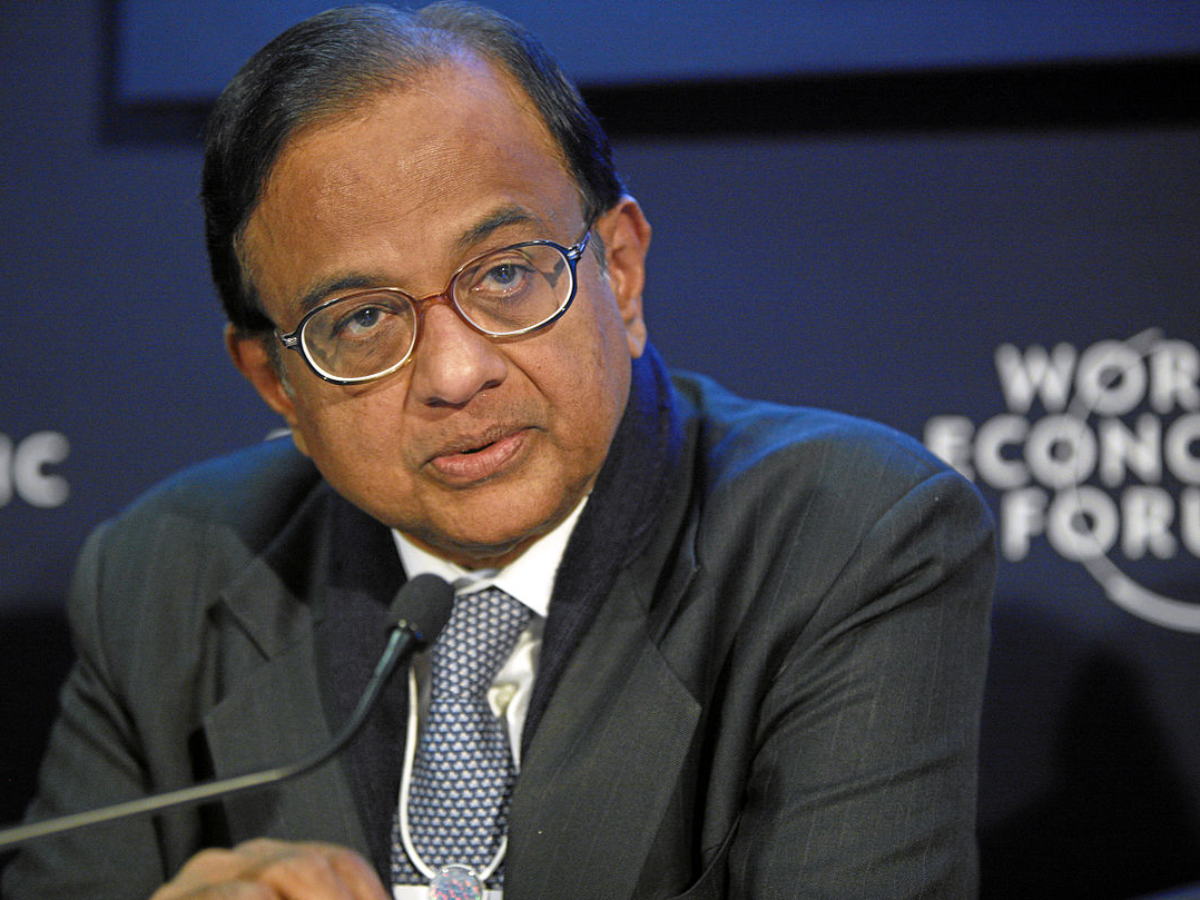

Former Union Minister P Chidambaram admitted on Tuesday that the UPA government chose not to retaliate against Pakistan after the 26/11 Mumbai terror attacks because of international pressure. He explained that the United States and the Ministry of External Affairs strongly advised against military action.
Chidambaram, who took over as Home Minister days after the attacks, said the thought of retribution crossed his mind but the government finally decided against it. The coordinated terror strikes in Mumbai killed 175 people and shook the entire nation.
“World Told Us Not to Start War,” Says Chidambaram
In an interview with a news channel, P Chidambaram revealed that global leaders urged India to avoid war after the 26/11 terror attacks. He recalled that then US Secretary of State Condoleezza Rice visited Delhi within days of the tragedy and requested the government to remain calm. Chidambaram said he told her that the final decision lay with the government. He admitted that he considered military retaliation but the matter was discussed with the Prime Minister and others before rejecting the option.
The Congress leader further stated that he spoke to Prime Minister Manmohan Singh and senior officials about possible retaliation. He confirmed that the Prime Minister also considered the issue during the attack itself. According to Chidambaram, the Ministry of External Affairs and Indian Foreign Service officials played a key role in shaping the government’s stand. Their recommendation was that India should not respond militarily. The final decision, he said, was to avoid escalating the conflict and to rely on diplomatic measures instead of immediate action.
BJP Criticises Chidambaram’s Statement
The BJP reacted sharply to P Chidambaram’s remarks, calling the admission “too little, too late.” Union Minister Pralhad Joshi said the statement confirmed that foreign powers influenced India’s response to the attacks.
BJP spokesperson Shehzad Poonawala alleged that Chidambaram was hesitant to take charge as Home Minister during the crisis. He further claimed that while Chidambaram wanted military action, others prevailed against it. Poonawala also questioned whether Congress leader Sonia Gandhi or Prime Minister Manmohan Singh blocked the move under pressure from Condoleezza Rice and the US administration.
The 26/11 Mumbai Terror Attacks Explained
On November 26, 2008, ten terrorists from Pakistan-based Lashkar-e-Taiba carried out a series of attacks in Mumbai. The terrorists targeted the Chhatrapati Shivaji Maharaj Terminus, the Taj Mahal Palace Hotel, Oberoi Trident, Leopold Cafe, Cama Hospital, and Nariman House.
The attacks continued for three days, leaving 175 people dead and hundreds injured. Mumbai Police later captured Ajmal Kasab, one of the attackers, who became the face of the deadly operation. Kasab was tried in court and executed in 2012. The 26/11 attacks remain one of the darkest chapters in India’s history.
Swastika Sruti is a Senior Sub Editor at NewsX Digital with 5 years of experience shaping stories that matter. She loves tracking politics- national and global trends, and never misses a chance to dig deeper into policies and developments. Passionate about what’s happening around us, she brings sharp insight and clarity to every piece she works on. When not curating news, she’s busy exploring what’s next in the world of public interest. You can reach her at [swastika.newsx@gmail.com]




