
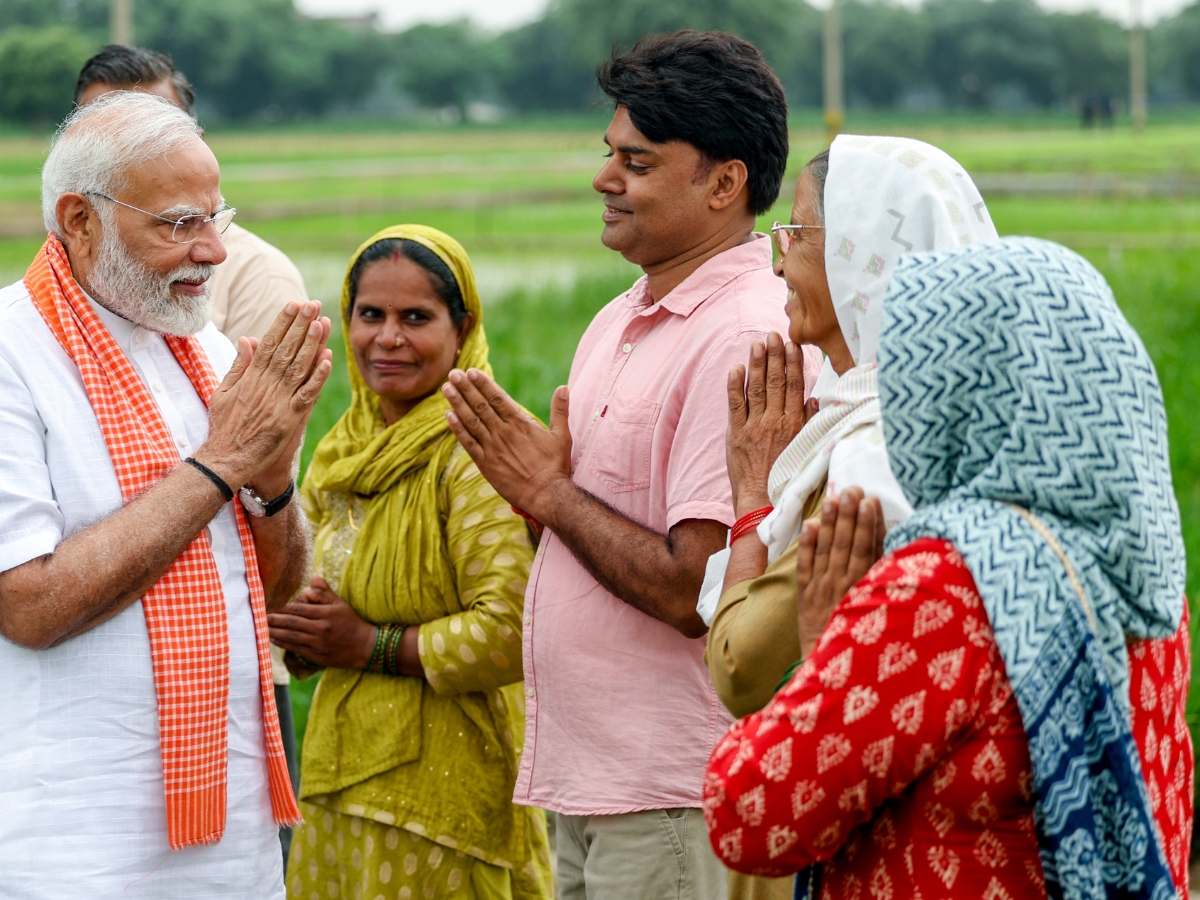

For the third consecutive term, the people of India elected Narendra Modi as the Prime Minister of the country. PM Modi received a resounding mandate, which would not have been possible without the support of millions of farmers in the country.
PM Modi, over the last decade, has introduced several reforms in the agricultural sector, benefiting the farmers of the country.
PM Modi, in his speeches, has repeatedly acknowledged the contribution of the community in the journey of the country. He has always strived for the empowerment of farmers and called for India to become a global leader in agriculture.
Farmers have always been the backbone of the Indian economy, with agriculture contributing around 17% to the country’s Gross Domestic Product. Millions of livelihoods across the country depend on agriculture. They toil day and night to ensure the food security of the country.
India’s agricultural production grew from 265.05 million tonnes in 2014–15 to an estimated 347.44 million tonnes in 2024–25.
Here are the 11 ways PM Modi has revolutionized the lives of farmers in the country over the last 11 years:
- Under PM Modi, the budget allocations for the Department of Agriculture and Farmers’ Welfare have risen from Rs 27,663 crore in 2013–14 to Rs 1,37,664.35 crore in 2024–25. This is nearly a fivefold increase in just 11 years.
- Between 2014–15 and 2024–25, he government increased procurement of 14 Kharif crops stood at 7,871 LMT, compared to 4,679 LMT in the previous decade (2004–05 to 2013–14).
- Similarly, MSP of most of the food grains increased multifold. For example, MSP for wheat rose from Rs 1,400 per quintal in 2013–14 to Rs 2,425 per quintal in 2024–25. Wheat growers received Rs 6.04 lakh crore in MSP payments between 2014 and 2024, far exceeding the Rs 2.2 lakh crore disbursed during 2004–2014.
- PM-Kisan Samman Nidhi was launched in February 2019. It provides Rs 6,000 annually to a farmer in three equal instalments. the amount is disbursed directly into Aadhaar-linked bank accounts via Direct Benefit Transfer (DBT).
- Similarly, the Kisan Credit Card (KCC) scheme gives affordable credit to farmers for short- and long-term cultivation, post-harvest needs, and consumption. By simplifying access to loans for both agriculture and allied activities, the scheme bolsters financial stability in rural areas.
- Pradhan Mantri Fasal Bima Yojana (PMFBY) was introduced in 2016. It provides comprehensive crop insurance covering non-preventable natural risks from pre-sowing to post-harvest. The scheme is based on the principle of “One Nation, One Crop, One Premium.” It protects farmers from losses due to natural calamities, pests, and diseases. It also encourages the farmers to adopt modern practices of agriculture.
- Soil Health Cards were introduced in 2014. The cards offer crucial data on nutrient levels and recommendations for balanced fertiliser use. This scheme helps to improve soil fertility and supports sustainable farming.
- Agriculture Infrastructure Fund (AIF), which was launched in 2020–21 with an outlay of Rs 1 lakh crore, supports farm-gate storage, logistics, and processing infrastructure. Under this scheme, new cold storage units, warehouses, and grading centers will be built till 2032–33.
- The Modi government launched the National Agriculture Market (e-NAM) in April 2016. The platform electronically connects APMCs across India. It helps farmers to discover prices, make payments, and access market information countrywide.
- PM Modi introduced the Namo Drone Didi scheme to help women-led Self-Help Groups. Under the scheme, women are provided with drones to use in farming. These drones are used to spray fertilisers and pesticides.
- The Ethanol Blended Petrol (EBP) Program indirectly helps farmers while the main mission is to promote eco-friendly fuel. Sugarcane farmers have been the primary beneficiaries of the scheme. With India looking for 20% ethanol blending, farmers will witness an increase in income going ahead.
Must Read: From 2014 To 2025: Here’s How PM Modi Celebrated His Birthday, Check What’s Special This Year
Zubair Amin is a Senior Journalist at NewsX with over seven years of experience in reporting and editorial work. He has written for leading national and international publications, including Foreign Policy Magazine, Al Jazeera, The Economic Times, The Indian Express, The Wire, Article 14, Mongabay, News9, among others. His primary focus is on international affairs, with a strong interest in US politics and policy. He also writes on West Asia, Indian polity, and constitutional issues. Zubair tweets at zubaiyr.amin




