
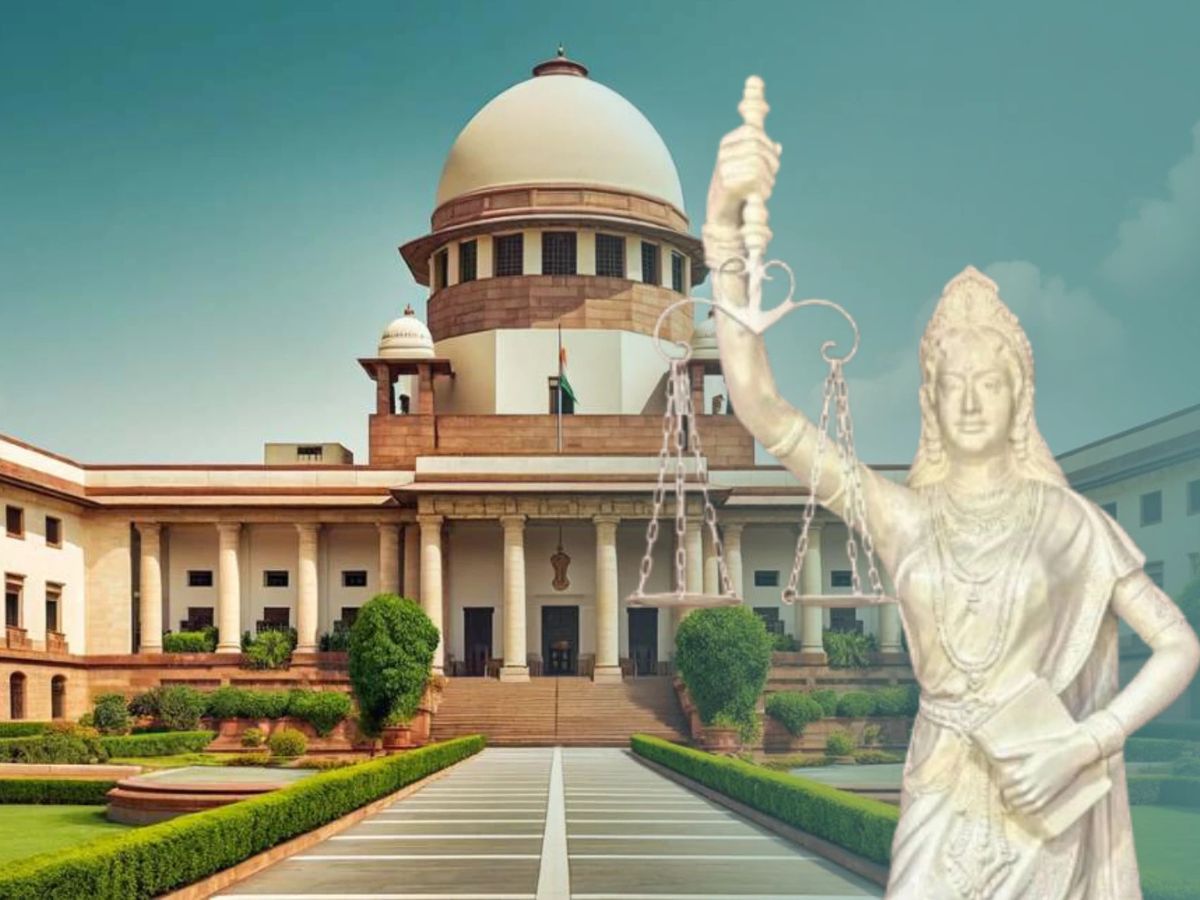

The Supreme Court on Friday directed the Bihar Chief Electoral Officer to implead 12 recognised political parties and ordered them to file affidavits detailing what steps they have taken to assist voters affected during the ongoing Special Intensive Revision (SIR) of electoral rolls.
Representatives of these parties must be present in court on September 8 with their affidavits.
The order came after the Election Commission of India (ECI) accused opposition parties of non-cooperation, alleging that while they created ‘hue and cry’ outside over voter deletions, they failed to extend any meaningful assistance through their Booth Level Agents (BLAs).
Senior advocate Rakesh Dwivedi, appearing for the ECI, told the Bench that despite several opportunities, political parties have not filed an objected.
Justice Surya Kant, observed: ‘If political parties were more responsible and discharged their duties, things would have been much better. Why are they silent? Why is there such a distance between political workers and local people?’
The Court also stressed that voters today are more conscious than political parties themselves.
The ECI’s status report noted that draft rolls already include all who submitted enumeration forms, with reasons for deletions displayed by BLOs and signed by BLAs.
Also Read: Supreme Court Expresses Surprise Over Parties’ Inaction Over Correction In Electoral Rolls In Bihar
Ankur Mishra is a journalist who covers an extensive range of news, from business, stock markets, IPOs to geopolitics, world affairs, international crises, and general news. With over a decade of experience in the business domain, Ankur has been associated with some of the reputed media brands. Through a sharp eye on global marketplaces along with deep insights and analysis of business strategies, Ankur brings simplicity to the complex economic matrix to decode market trends and empower people.
He is committed to entrenched data, facts, research, solutions, and a dedication to value-based journalism. He has covered trade tariff wars, international alliances, corporate policies, government initiatives, regulatory developments, along with micro- and macroeconomic shifts impacting global fiscal dynamics.




