
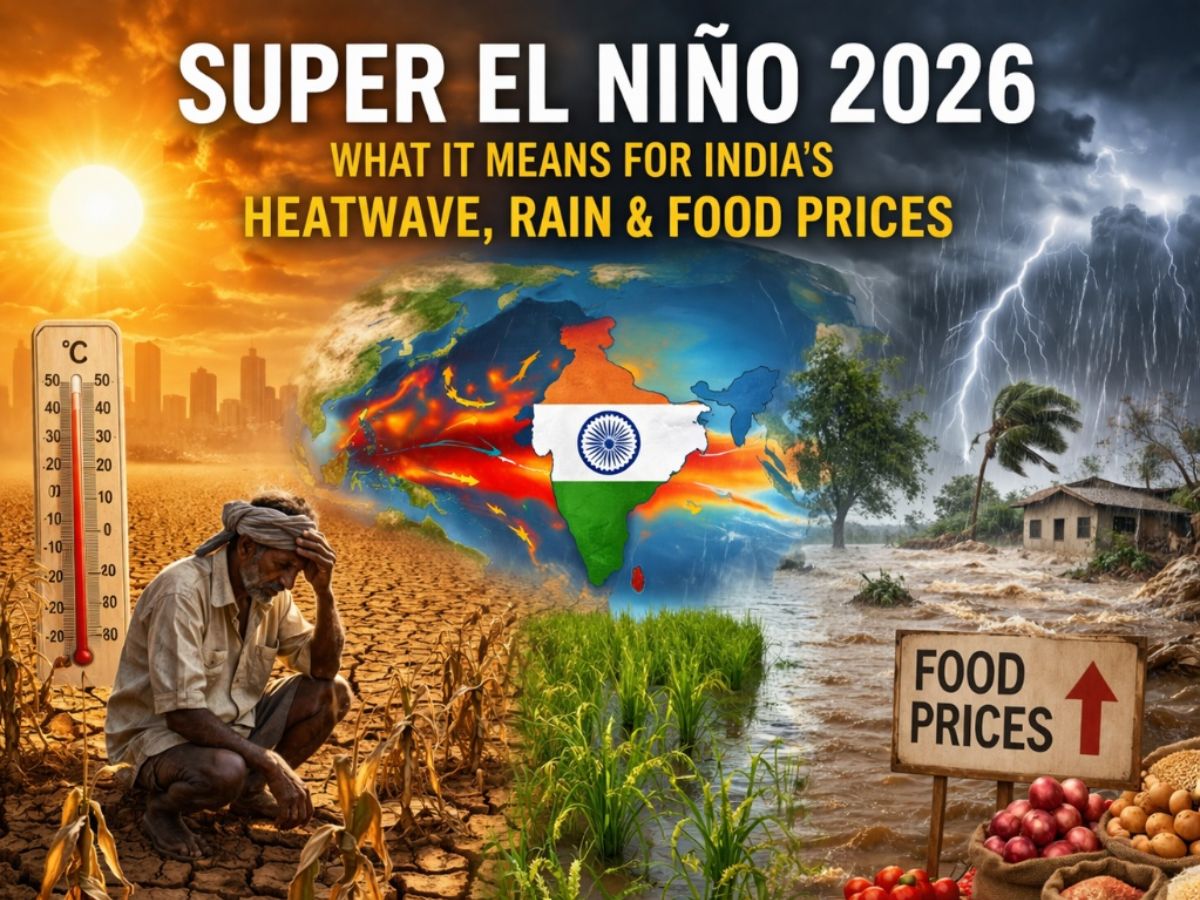

Super El Nino is a serious concern for India’s weather and climate for 2026. The potential affects of Super El Nino would include worsening of heat, disruptions to rainfall patterns and negative impacts to agriculture both the production of food and the price of food.
Reports say that this warning comes at a time when India is currently experiencing extreme heats, erratic weather (which means they’re experiencing rising temperatures, sudden rainfalls and storms/hail affecting their crops) therefore, if Super El Nino does develop there will be an increased amount of uncertainty for farmers.
What Is El Nino?
El Nino is a climate pattern that is associated with the warming of the sea surface temperatures in the Pacific Ocean. The warming of the ocean produces a change in global climate patterns which also includes India with the most obvious effect being weakening of the monsoon over India and increases in temperature.
To put it simply, an El Nino event can cause the reduction of rainfall and increased temperatures in India. However, if there is a Super El Nino then we would see more extreme impacts such as droughts, floods and extreme summer heat across regions.
How Super El Nino 2026 Could Affect India
According to reports, there is a great chance for a potential strong El Nino to form during 2026, and could have an impact on the monsoon in India. Some of the early forecasts are indicating that the rainfall will be below normal, especially in the later part of the monsoon season.
Not having a strong monsoon season will hurt water supply, crop production, and rural income. The country of India depends heavily on the monsoon rains for agricultural production, so even a small amount of rainfall shortage will have a very large effect on agriculture and the country’s economy.
Will India Face Extreme Heat, Floods or Drought?
Experts believe that India will be affected by a variety of extreme weather conditions rather than being hit by one. Heatwaves are becoming much more common, and scientists predict that there will be above-average temperatures, as well as many more heatwave events, than normal during 2026.
In addition, rainfall may be experienced in an unpredictable/erratic manner. Different areas may be impacted by drought due to weak monsoon rains; however, other areas may experience sudden storms with heavy rains and flooding. This odd pattern makes it very difficult to try to predict and manage risk from different types of weather events.
How It Could Affect Farmers & Agriculture
Farmers are at risk of suffering the most from these types of extremes. When temperatures are very high, there are storms, water, or hail there is a risk that crops will fail at very critical periods like flowering. For Instance, right now there is a huge risk to the whole mango crop due to serious weather and farmers will incur severe losses if they produce none of the mango crop.
Historic data shows us that this could happen. In 2023 due to the untimely stormy rain events mango farmers had a loss of around 20% production. Experts warn us that we are increasingly likely to see this type of activity where loss of crop production leads to a food shortage and higher food prices.
Why Scientists Are Concerned About 2026
Climate extremes are more frequent and longer in duration. Climate climate change combined with a very strong El Nino will tip the scale to even greater extremes and make weather events different and will increase probability of longer than average dry periods without rain.
Experts suggest that the next few months will be vital in order to determine the impact of the El Nino development. If El Nino develops into super event, it will have a profound impact not just on weather, but food security, water availability and ultimately it will put a strain on India’s economy.
Khalid Qasid is a media enthusiast with a strong interest in documentary filmmaking. He holds a Master’s degree in Convergent Journalism from AJK MCRC. He has also written extensively on esports at Sportsdunia. Currently, he covers world and general news at NewsX Digital.




