

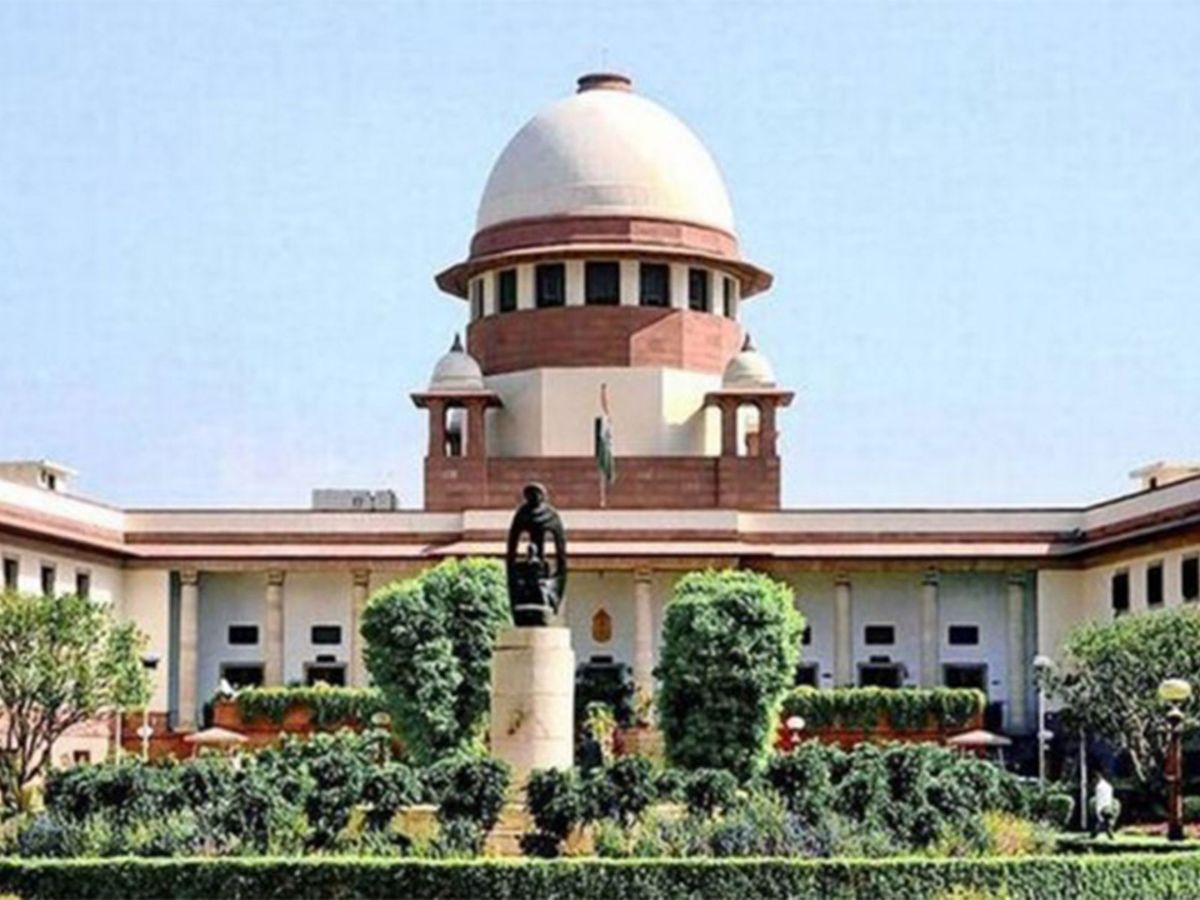
The Supreme Court on Thursday delivered a significant judgment recognising the economic and social value of homemakers, describing them as “nation builders” and crucial contributors to the country’s overall progress. In a case linked to the death of a woman in a road accident on November 25, 2001, the Supreme Court substantially increased the compensation payable to her family from Rs 8.43 lakh to Rs 62.78 lakh. The ruling also established that homemakers should be assigned a notional monthly income of Rs 30,000 while calculating compensation in motor accident claim cases.
As per reports, the verdict was handed down by a bench consisting of Justices Sanjay Karol and N K Singh. The woman’s legal heirs were awarded compensation of Rs 2.42 lakh by Motor Accidents Claims Tribunal in December 2023. Thereafter, the Punjab and Haryana High Court increased the compensation to Rs 8.43 lakh, with an interest of 7.5 per cent from the filing of the claim petition in December 2024. Being dissatisfied with the compensation, the legal heirs went to the Supreme Court for further enhancement of the compensation amount.
Homemakers are the foundation of families and the nation, says top court
Explaining the broader importance of unpaid household work, the bench said homemakers play a vital role not only within families but also in society at large. The Supreme Court observed that their contribution extends far beyond the walls of the home.
“When the efforts of the homemaker towards the husband and children are taken on the whole, it cannot be disputed that although her labour, be emotional or physical, is within the four walls of the home, its impact is much wider. In enabling the direct contribution today of their husbands and tomorrow of their children, they are the building blocks for the nation’s road to holistic progress,” the bench said, as per reports.
Writing the judgment, Justice Karol further noted that the loss caused by the death of a homemaker affects many more people than just her immediate family. He said the grief and practical challenges extend to parents, in-laws and others who rely on her care, support and companionship.
Court highlights emotional and practical loss beyond financial calculations
“It also directly impacts the women’s own parents, who have been deprived of the love and company of their child, who have lost the support and comfort of this person and are left alone with this boundless grief. Still further, the loss is acutely felt by her in-laws, who are more often than not members of the same household and therefore dependent on the love, labour and dedication of this person for food or medicines, for doctor’s visits, or even for the regular company over a morning tea. Strict arithmetic calculation does not lend its services to any of these scenarios,” Justice Karol said, according to reports.
To address this reality, the Supreme Court directed that in cases involving the death of a homemaker, Motor Accident Claims Tribunals, High Courts and the Supreme Court should award an additional lump-sum amount of Rs 30,000 under the category of “loss of domestic care”. The court said this amount is meant to compensate for the disadvantages faced by homemakers when compensation calculations rely on conservative notional income estimates.
Recognition for unpaid work that often remains invisible
As per reports, the bench clarified that Rs 30,000 would serve as a “stand-in” or basic minimum monthly income for homemakers who do not earn in conventional monetary terms. It also stated that if a homemaker is part of the workforce, compensation for loss of domestic care should be added separately to proven income.
The Supreme Court also criticised the tendency to treat homemakers as financially dependent despite their central role in running households. “It is ironic to describe a homemaker as dependent on earning members when, in reality, the household’s functioning depends substantially on the homemaker. The earning members are, in fact, solely dependent on the homemaker, but alas, this reality does not receive the acknowledgement it deserves. Efforts have been made across fields to some success, but undeniably, the road is still long.”
The court further pointed out that routine household duties such as cooking, cleaning and caregiving help support the paid workforce and contribute to economic productivity. However, these contributions are rarely reflected in traditional economic measures such as Gross Domestic Product (GDP), creating what the Supreme Court described as a one-sided assessment of value and work.
Also Read: Didi Stood With Me’: Why Shatrughan Sinha Is Standing Firm With Mamata Banerjee Despite TMC Turmoil
Khalid Qasid is a media enthusiast with a strong interest in documentary filmmaking. He holds a Master’s degree in Convergent Journalism from AJK MCRC. He has also written extensively on esports at Sportsdunia. Currently, he covers world and general news at NewsX Digital.





