

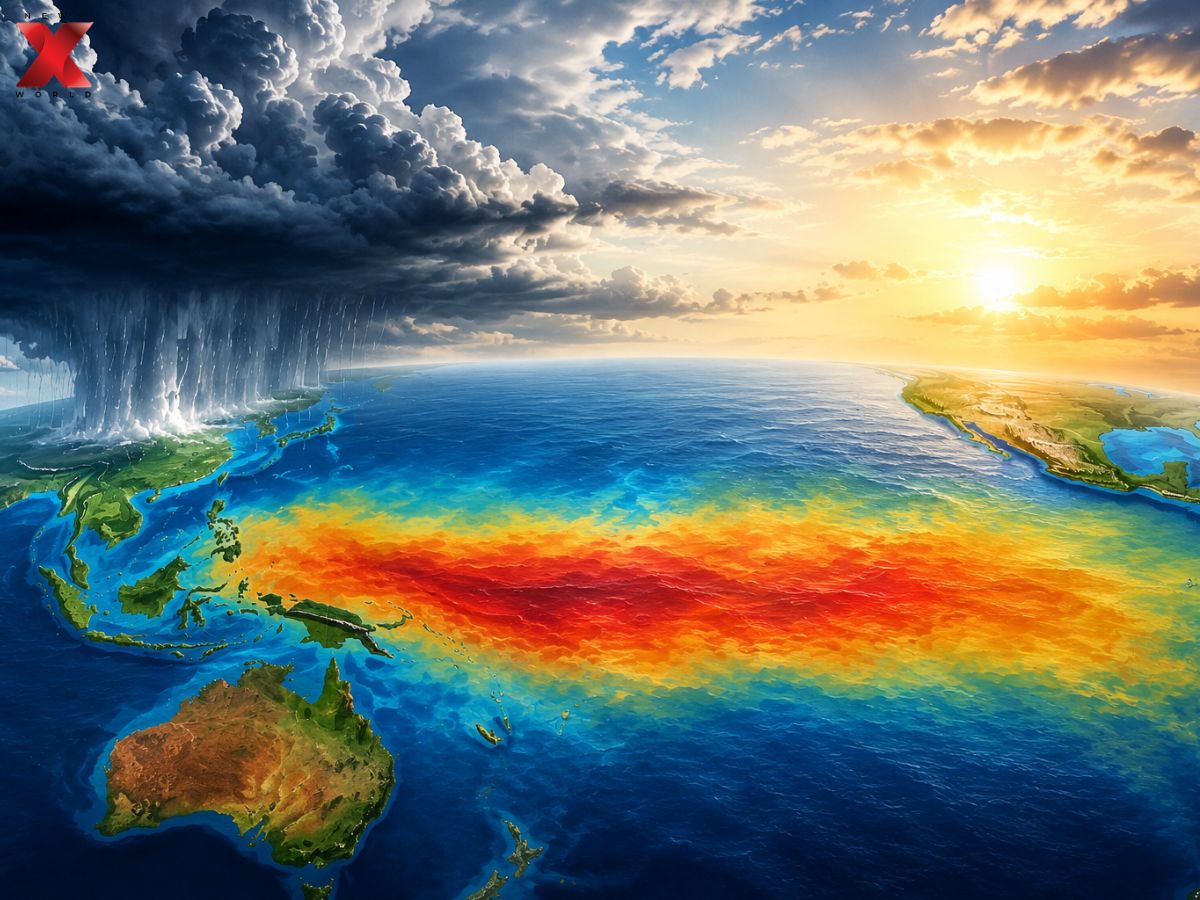
EL NINO UPDATE: El Nino is officially underway, and forecasters say it’s gearing up to become a powerhouse maybe even a “Super” El nset to shake up global weather and turn up the world’s heat even more, as reported by the National Oceanic and Atmospheric Administration. NOAA’s Climate Prediction Centre isn’t shy about this year’s forecast. They put the odds at 63% that we’ll see a very strong event, what most people call a Super El Niño. This one could go down as one of the most intense since they started tracking El Niños back in 1950. And just to underscore their confidence, NOAA says there’s a 100% chance El Niño sticks around through the fall, and odds stay sky-high as it rolls into winter.
El Niño conditions are present and expected to strengthen into the Northern Hemisphere winter 2026-27. An #ElNino Advisory is now in effect. #ENSO https://t.co/5zlzaZ1aZx pic.twitter.com/BvS1EMdZu8
— NWS Climate Prediction Center (@NWSCPC) June 11, 2026
All that extra Pacific warmth isn’t just a blip. It’s expected to push global temperatures higher, layering on top of heat driven by fossil fuels and that combo could really crank up extreme weather everywhere. Think back to the legendary 1997 event, which hammered the planet with heatwaves, floods, droughts, tornadoes, and wildfires that racked up billions in damage. The new El Niño might match or outdo that record.
What is El Nino?
El Nino basically flips the world’s weather script. Here’s how it works: for reasons scientists are still untangling, the surface waters in the central and eastern Pacific heat up a lot more than usual. This shift throws the planet’s usual patterns out of whack. Rain pours down where it’s often dry, and dry spells hit places that count on steady rain. It happens every few years, usually lasting close to a year, but sometimes stretching longer. In countries like India, El Niño has a habit of weakening the all-important monsoon, which messes with crops and drains water supplies. Big picture: El Niño is just one side of the climate coin called ENSO. The other side is La Niña, which pushes things in the opposite direction.
El Niño is born! Destined to be the biggest in 150 years +??
NOAA declares: El Niño Advisory
This morning conditions in the Eastern Pacific met the criteria for El Niño. This means Sea Surface Temps reached a certain level above normal, and the ocean and atmosphere “coupled”… pic.twitter.com/PVEznho0KR— Jeff Berardelli (@WeatherProf) June 11, 2026
When does El Nino form?
Most years, El Nino gets rolling during summer, hits its stride in late fall or early winter, and fades out by spring. But not everything follows the script. Right now, Ehsan’s team points to early signals that this El Niño could hit its peak a month or two sooner than usual. Some climate scientists, like Gabriel Vecchi from Princeton, say the really big El Niño events tend to hang around longer.
What is a Super El Nino?
Now, imagine El Nino cranked up to the max-that’s a Super El Niño. The ocean isn’t just a bit warmer; it rockets two or three degrees above normal, and the impacts punch way above their weight. In South America, it can trigger catastrophic floods. In Australia, the land dries out and wildfires rage. Coral reefs take a beating as the heat bleaches them out, and the planet’s average temperature can hit new records. Super El Niños don’t come around often; think 1997–98, 2015–16, and 1982–83 but when they do, they leave scars. Back in 1997–98, this powerhouse caused about $45 billion in damage and led to over 23,000 deaths around the world. Experts warn that thanks to climate change, these massive events are only getting more likely.
El Nino sends a surge of heat from the ocean into the atmosphere, and that really shakes up our global climate. It stacks more warming on top of what we’re already dealing with from fossil fuel pollution. Basically, it makes it almost certain that 2027 will break the records set in 2024, marking another hottest year for our planet.
How to stay safe from El Nino?
Preparation matters more than anything. Keep an eye on weather updates from official sources, and don’t ignore warnings about floods or droughts in your area. Build up your stash of emergency supplies; think clean water, non-perishable food, any meds you need, and flashlights.
For those living where floods happen often, move valuables to higher spots, keep drains clear, and make sure you know the quickest way out if you need to evacuate. Farmers should mix up their crops and plant varieties that can handle dry spells, especially if the monsoon looks weak. Start saving water. On a bigger scale, governments and communities need to put money into better warning systems and tougher, climate-smart infrastructure.
ALSO READ: Donald Trump Threatens to Hit Iran ‘Very Hard Tonight’, Vows To Take Control of Kharg Island
With 13 years on the line, Ashish Kumar Singh loves everything when it comes to movies, music, travel and pop culture. Formerly employed at ANI, Pinkvilla, India Today and HT, Ashish has interviewed some of the top celebrities of India, including Shah Rukh Khan, Aamir Khan, Ranveer Singh, Ranbir Kapoor and Hrithik Roshan, among others. Breaking news excites him and deadlines are what he chases. Interviewing comes naturally to him. Hit him up at ashish.kumar02singh@gmail.com.





