

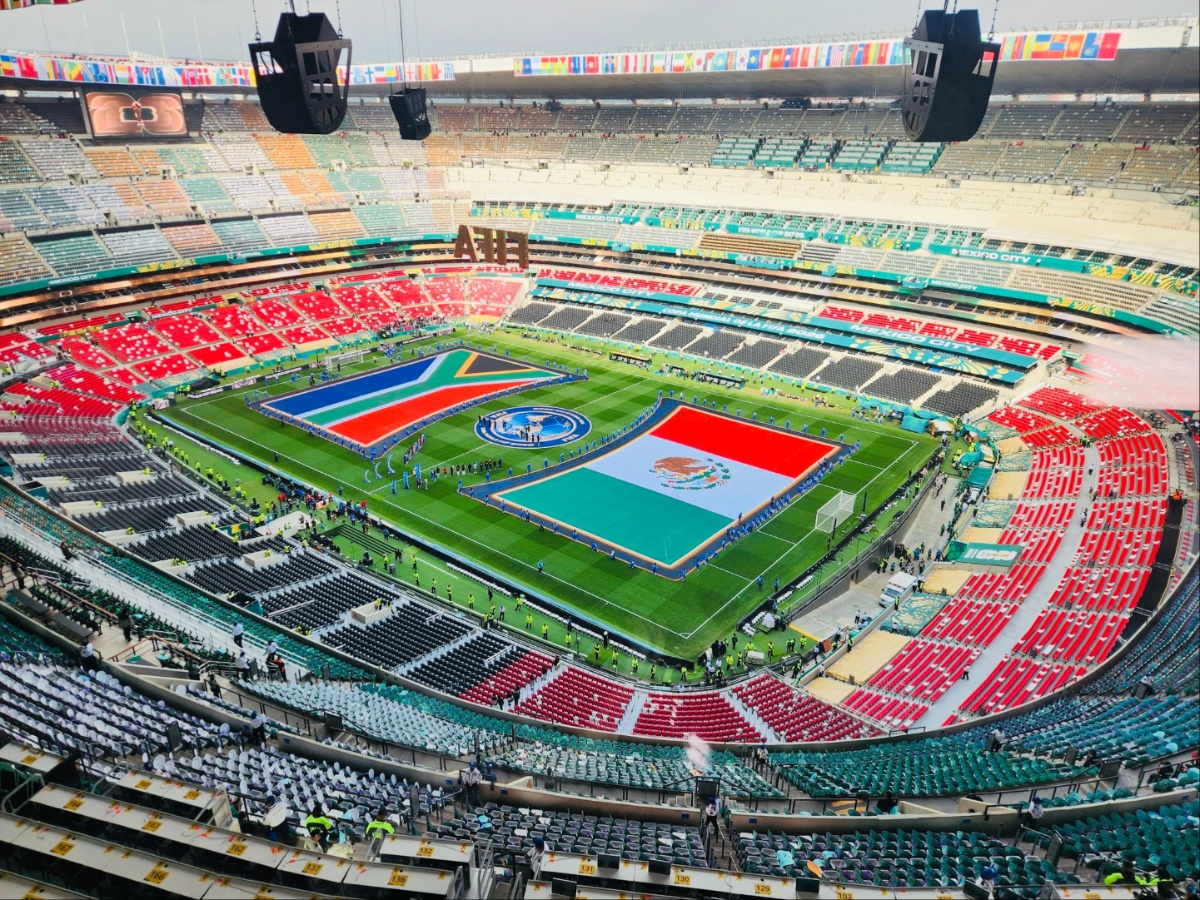
FIFA World Cup 2026: The much-anticipated opening match of the FIFA World Cup 2026 provides an instant nostalgia fix as co-hosts Mexico face South Africa. This fixture has strong echoes of their explosive opening encounter in Johannesburg in 2010. But as fans around the world look over official tournament brackets, ticketing guides and matchday schedules, many have spotted one glaring change: the legendary Estadio Azteca is nowhere to be found.
Instead, the opening game is officially to be played at the “Mexico City Stadium”. The abrupt change in name for a stadium where Pelé was crowned in 1970 and Diego Maradona’s “Hand of God” genius in 1986 has left many a football fan scratching their heads as to why the tournament’s historic name has been struck from the books.
FIFA’s Strict “Clean Stadium” Policy
The rationale behind the short-term rebranding is entirely dictated by FIFA’s strict commercial guidelines. The global governing body of football has a strict “clean stadium” and “venue neutralisation” policy for all World Cup tournaments.
The tournament venues have to follow these strict rules and are not allowed to display any corporate or commercial brands that are not official, tier-one FIFA sponsors. This includes stadium signage, broadcast graphics, ticketing copy and large architectural logos. FIFA is aggressive about keeping outside brands from getting free global broadcast because big corporations pay hundreds of millions of dollars for exclusive World Cup partnership exposure.
The Banorte Naming Rights Conflict
The venue is known to all as the Azteca, but it has officially signed a huge corporate naming rights deal with Mexican banking giant Banorte. The bank provided a multi-million dollar financing package for the stadium’s extensive two-year pre-World Cup renovation.
Banorte is not a FIFA global sponsor, so the corporate identity had to be completely neutralised. As soon as they were formally in charge of the venue, tournament organisers covered up all corporate lettering on the turnstiles and along the roof. Had the stadium not agreed to the deal, FIFA would have continued to recognise the standalone name “Estadio Azteca” as a pre-existing commercial brand rather than a location-neutral marker, and would have had to switch to Mexico City Stadium.
A Temporary Name for a Permanent Legacy
This commercial regulation isn’t exclusive to Mexico’s crown jewel. Similar, localised name changes have taken place at famous arenas across the U.S. and Canada. For example, the NFL’s AT&T Stadium has been renamed “Dallas Stadium,” and MetLife Stadium is now “New York New Jersey Stadium.”
Debayan Bhattacharyya is a seasoned sports journalist and digital media professional, currently serving as the Chief Sub Editor at ITV Digital (NewsX). A true Football-Fanatic Bong, his professional journey began at Zee Media, where he kicked off his career as a Sub-Editor for the sports team at India.com and CricketCountry. His ability to blend insightful analysis with rapid-fire news delivery soon led him to Times Network, where he served as a Senior Copy Editor for Times Now. Before his current role at NewsX, Debayan spent a significant tenure at OneIndia’s MyKhel as a Senior Sub Editor.





