
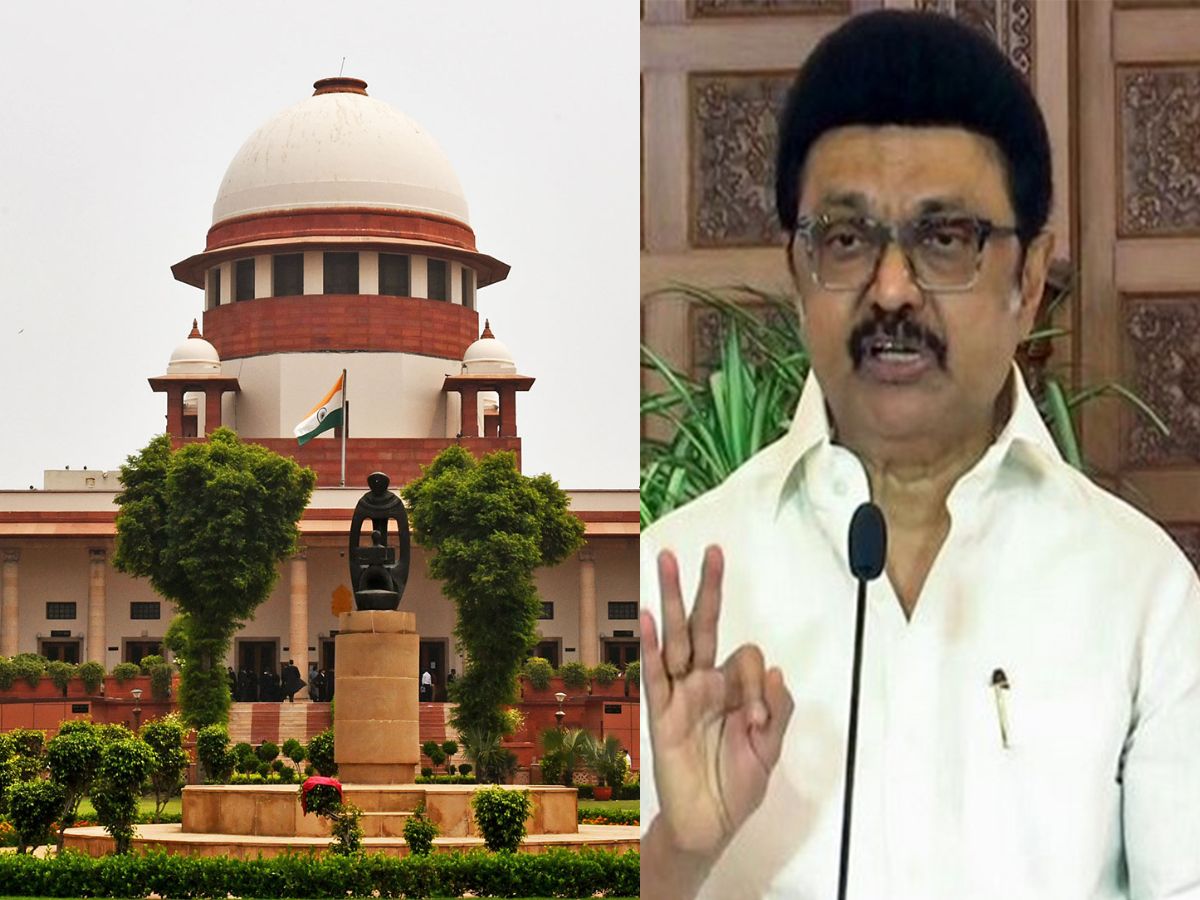

The Tamil Nadu government has challenged the President Droupadi Murmu’s withholding of consent regarding its NEET exemption bill, which is formally named the Tamil Nadu Admission to Undergraduate Medical Degree Courses Bill, 2021, by filing a petition to the Supreme Court. The state claims this move is ‘clearly unconstitutional,’ since it not only interferes with legislative authority but also goes against the constitutional provisions that enable state laws to prevail on certain concurrent matters.
Tamil Nadu Government vs State
The appeal requests that the bill be die as having been granted presidential assent already under Article 254(2) of the Constitution or that it be put before the President once more for new consideration. In its plea, Tamil Nadu asserts that the President’s ruling was made in a routine manner, following the Union government’s advice, and without giving any substantive reasons, even though the state had countered all the objections raised by the central ministries. The state further relies on the report of Justice AK Rajan Committee, which pointed out how NEET disproportionately puts students from rural, socio economically backward, and Tamil medium school backgrounds at a disadvantage. The President, by refusing assent, is according to the state, nullifying a bill passed unanimously and violating both Articles 201 and 254(2) of the Constitution.
NEET Exemption Bill
The legal argument is one aspect, but in fact the whole situation is a power struggle and a tug of war of rights between the two levels of government. For the local government, the NEET exam indeed blocks poor students from getting equal opportunities in medical education, and therefore it is a matter of states’ rights, the federal government should not interfere in the individual states’ admission policies. The case might have far reaching consequences as the state is trying to claim its right to decide on the education policy by relying on the constitution to fight against what it considers an overstepping by the Centre.
Also Read: Maharashtra Shocker: 6 Year Old Girl Student Dies After Forced To Do 100 Sit Ups




