
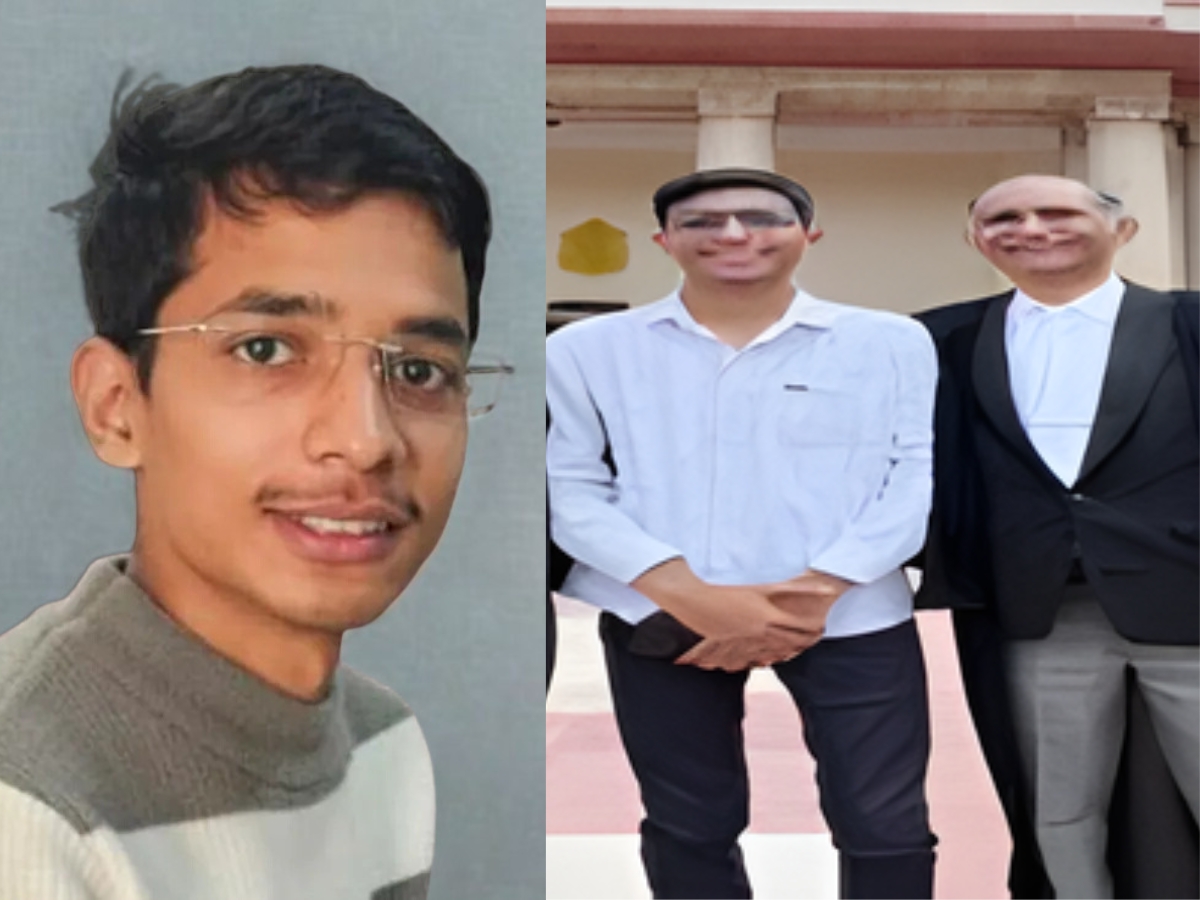

Atharva Chaturvedi, a student of medicine from Jabalpur, has left a lesson for seasoned lawyers. 19-year-old student has successfully argued his own case before the Supreme Court of India and secured relief that revived his dream of becoming a doctor.
On a February afternoon, as a bench led by Chief Justice Surya Kant was about to rise, Atharva Chaturvedi requested ten additional minutes to present his arguments. Within ten minutes of his oral submissions, the court ruled in his favour, invoking Article 142 and directing the National Medical Commission and the Madhya Pradesh government to grant provisional MBBS admission to NEET-qualified candidates under the Economically Weaker Section (EWS) category, according to a report by NDTV.
Why Atharva Chaturvedi Approacehd Supreme Court
Atharva Chaturvedi cleared the NEET examination twice, scoring 530 marks. Despite qualifying, he could not secure an MBBS seat under the EWS quota in private colleges because the state’s reservation framework did not extend the EWS policy to private institutions.
The court noted that the petitioner, a young man from an economically weaker background, had qualified twice but was denied admission due to policy gaps. It held that admission could not be refused merely because the state had failed to notify EWS reservations in private colleges. The bench subsequently directed authorities to grant provisional admission for the 2025–26 academic session, subject to payment of fees.
Before approaching the apex court, Atharva Chaturvedi had argued his case personally before the Jabalpur High Court. During that hearing, the judge reportedly remarked, “You should become a lawyer, not a doctor. You’re in the wrong field,” as per reports.
Who is Atharva Chaturvedi?
Atharva is a Taarak Mehta Ka Ooltah Chashma fan. He cleared both engineering and medical entrance examinations before ultimately choosing biology.
His father, Manoj Chaturvedi, is a lawyer. During the COVID-19 lockdown, Atharva observed virtual court proceedings and learned courtroom discipline.
“My son never studied law,” his father said, as quoted by NDTV. “But he saw everything. How much to speak, when to stay silent. In fact, he taught me how to scan petitions and upload them.”
Atharva downloaded the Special Leave Petition format from the Supreme Court website, studied past judgments, drafted his own plea, and filed it online on January 6 after addressing registry objections.
His father credited teachers Mitra Madam and Bharti Madam for strengthening his confidence. “It was a turning point,” he said. “From an English perspective, that changed everything.”
Zubair Amin is a Senior Journalist at NewsX with over seven years of experience in reporting and editorial work. He has written for leading national and international publications, including Foreign Policy Magazine, Al Jazeera, The Economic Times, The Indian Express, The Wire, Article 14, Mongabay, News9, among others. His primary focus is on international affairs, with a strong interest in US politics and policy. He also writes on West Asia, Indian polity, and constitutional issues. Zubair tweets at zubaiyr.amin




