
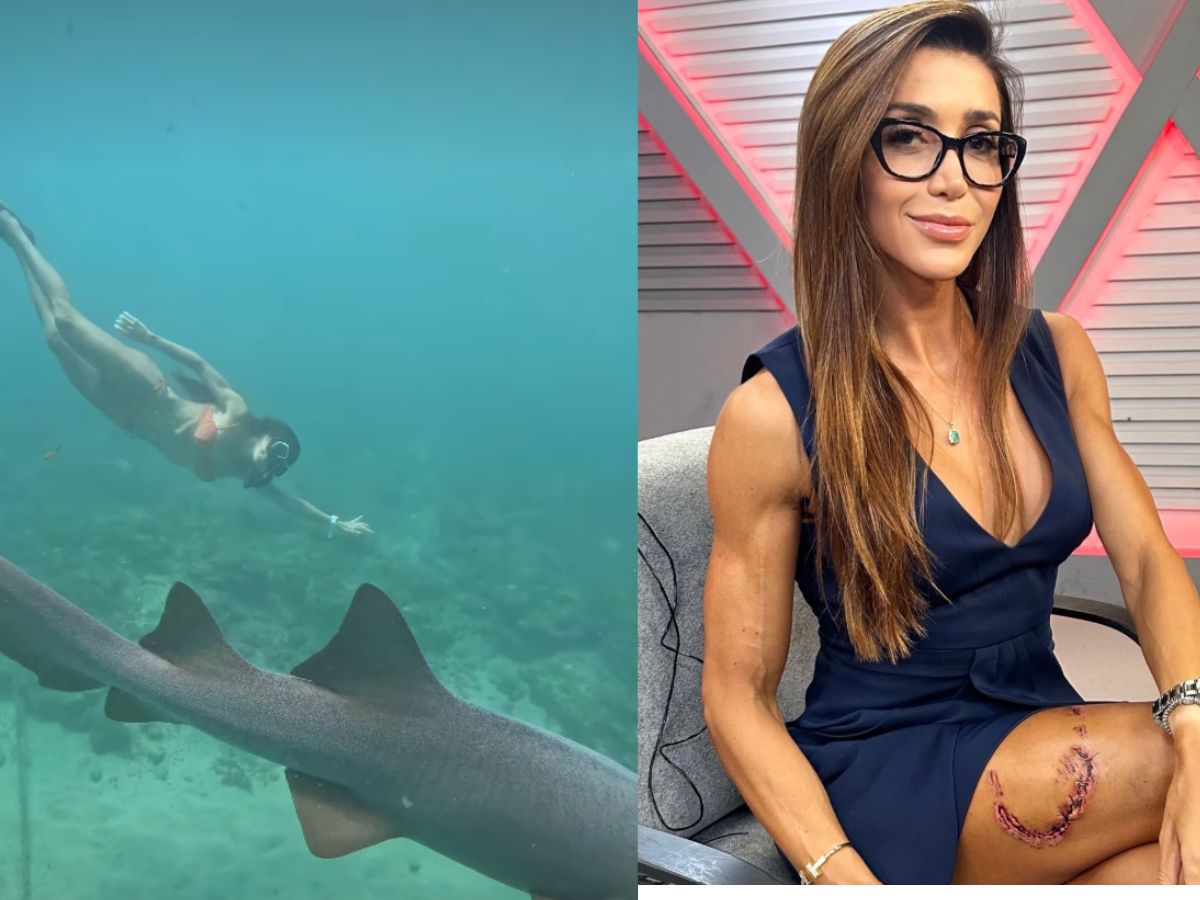

Tayane Cachoeira Dalazen, who works as a Brazilian attorney and practices surfing, survived a shark attack while she was freediving at Fernando de Noronha. The incident, which became widely known after high-definition video footage was released, shows the 36-year-old woman floating when a nurse shark attacked her by biting her right thigh. The predator attempted to drag Dalazen toward the seabed, which resulted in her desperate attempt to escape from its grasp. The tour guide thought quickly and struck the shark to make it release its grip on the victim.
Miraculous Recovery After Shark Bite
Dalazen experienced a miraculous recovery despite her initial shock and her mangled leg injury. She received immediate first aid from a dermatologist friend before she went to the local hospital, where she received treatment for her minor puncture wounds. She displayed incredible strength and humor when she posted on social media that the shark must be missing a tooth, which showed her complete recovery and her strong determination to return to the ocean.
Marine Wildlife Interaction Risks and Coastal Safety
The recent event involving Tayane Dalazen serves as a clear example of the unpredictable nature of marine life, even when dealing with species typically labeled as “docile.” The Fernando de Noronha archipelago operates as a top surfing and diving destination, while its conservation area protection is enforced through the Chico Mendes Institute for Biodiversity Conservation (ICMBio) regulations.
Human Impact and Shark Safety Awareness
Experts believe that environmental conditions together with illegal wildlife feeding areas which make animals lose their natural fear of humans and associate humans with food created the conditions that led to the shark showing aggressive behavior. The incident demonstrates that people must keep their distance from wild animals while following the local environmental regulations because this will stop wild animals from approaching them with danger. The surfing community has learned that surfers must observe local shark behavior because it protects them from the risk of interacting with sharks which their presence creates in these tropical locations.
Nurse Shark Behavioral Patterns and Suction Mechanics
The attack on Dalazen shows its uniqueness because of the specialized biological functioning found in Ginglymostoma cirratum, its nurse shark. A nurse shark uses its special “buccal pump” system to breathe while it stays still because this system creates a powerful suction that helps the shark catch its prey from hidden spots. When a nurse shark bites, it often uses a “vice-like” grip that combines its many small crushing teeth to create a secure hold, which prevents it from losing its grip. In Dalazen’s case, she correctly noted that the shark seemed to be “suctioning” her leg, which is a behavior that sharks use to feed on crustaceans and mollusks.
Nurse Shark Behavior and Defensive Bites
These sharks display their nocturnal behavior because they stay inactive during daytime hours yet their defensive power reaches its strongest level when they perceive danger or think that a human limb represents food because of how people move in the water. The special suction mechanics are important for first responders and divers because shark grip injuries worsen when people try to pull away from the shark instead of waiting for the animal to stop holding on or using proper deterrent methods.
A recent media graduate, Bhumi Vashisht is currently making a significant contribution as a committed content writer. She brings new ideas to the media sector and is an expert at creating strategic content and captivating tales, having working in the field from past four months.




