
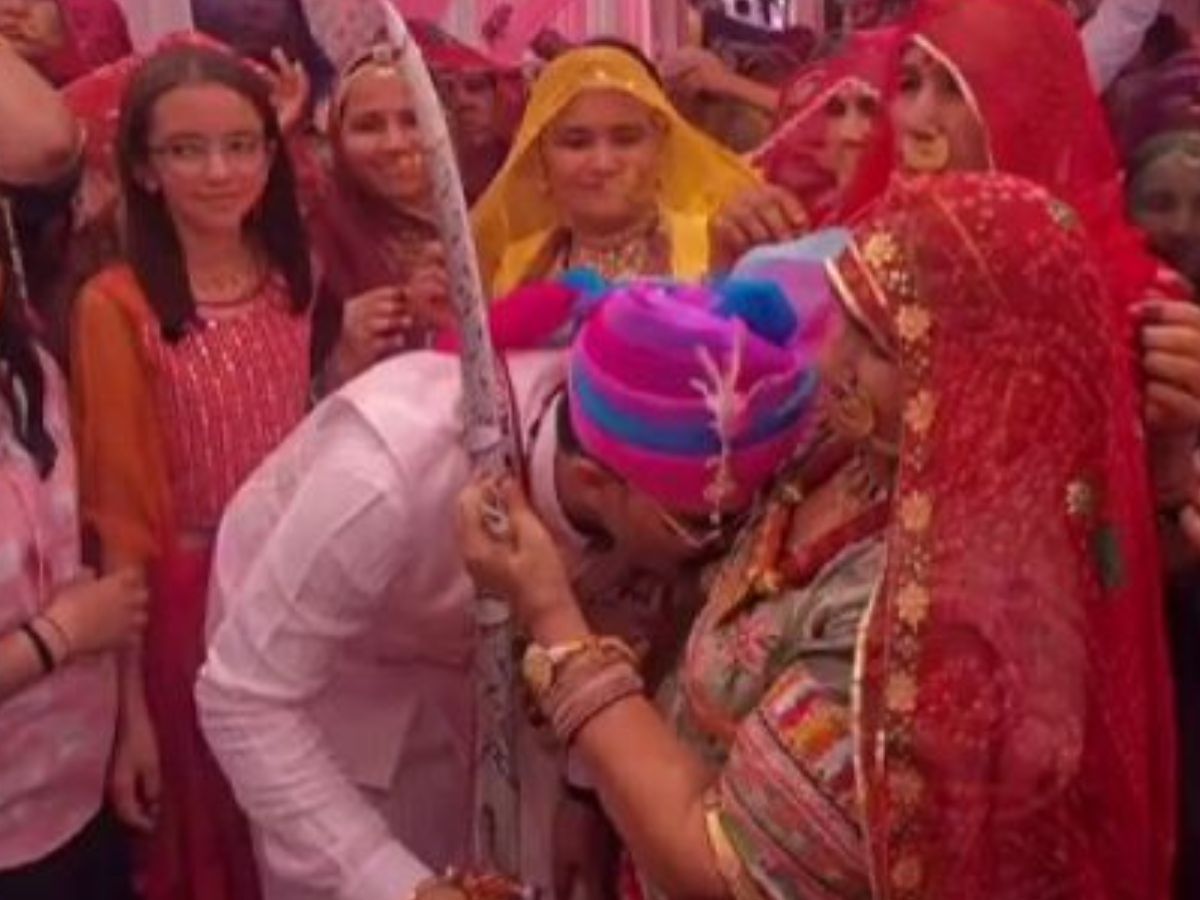

The wedding of IPS officer KK Bishnoi has attracted attention of many people online following an emotional and impressive incident that took place at the ceremony which went viral in social media. In the video, the mother of the groom is seen breastfeeding her adult son which is a normal Rajasthani tradition that is done before the baraat procession. Although the act has shocked a lot of viewers, it is based on a symbolic tradition in some communities, which is a last act of a mother as she tries to nurture her son before he starts a new life.
IPS KK Bishnoi Wedding: Mother ‘Breastfeeds’ Son In Rajasthani Ritual Before Baraat, Grabs Attention
The viral video has elicited strong emotions in the social media platforms, with users generating various emotions of curiosity, disbelief, and cultural curiosity. The nature and the origins of the ritual were asked by many, with people asking, ‘what sort of tradition is this?’ However, others justified the practice, stating that there is not one set of customs in India and that it is necessary to comprehend them in their cultural context and not judge them in a modern way. This act has in effect introduced a wider debate on how the digital age views traditional practices.
He is IPS Bishnoi .
He got married recently.
This is the video of him glorifying some shitty tradition .
He has the power to dismantle all this shit.
Imagine wearing a uniform to uphold patriarchy.You don’t get to wear a uniform and then defend misogyny as culture.If… pic.twitter.com/AzZys33Uvg
— aree_shuklajii (@th_anonymouse) March 29, 2026
Social Media Divided
Cultural observers observe that though these rituals are rare they are symbolic and not literal and can be described as emotional attachment and parental blessings between parent and son. Since the image has been spreading, not only the wedding of KK Bishnoi but also other poorly known traditions that otherwise do not come into the limelight are being highlighted. The event is a reminder that India is very diverse culturally, and in many instances customs can differ greatly in different parts of the country and community and that it is often very emotionally and symbolically charged although may seem bizarre to the outsider.




