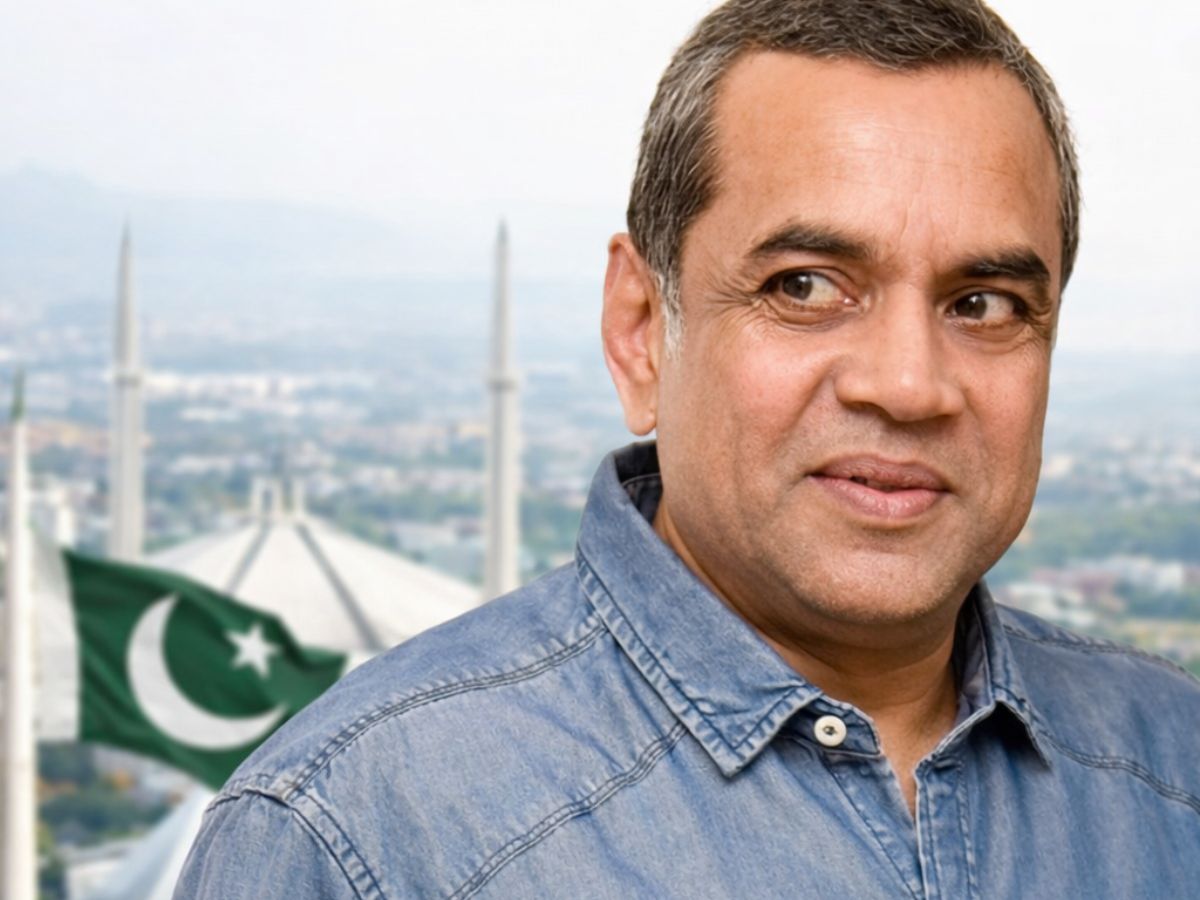

The political moment of the year is here; with a sharp one-word response by Paresh Rawal, Pakistan was hosting a pricey diplomatic exercise. Political satire took an international turn with this one. As the high-level Iran-US talks went on in Pakistan’s capital, Islamabad, a social media user wondered who will cover the hotel bill. The response? Rawal’s one-word “IMF” put the focus on Pakistan’s economic woes and its need for international assistance. The comment went viral in Pakistan and, on social media, was called a “brutal roast”. The joke started when a social media user posted on X, saying who will cover the expensive hotel bill for hosting the leaders of Iran and the United States in Islamabad. The response? Rawal’s one-word
The “IMF” response was a direct reference to the International Monetary Fund, which has repeatedly played host to Pakistan’s financial woes. The one-word comment was widely interpreted as a sharp jibe at Pakistan’s economy, which has long been in need of help. This most obviously came on the heels of the country hosting major international talks at the Serena Hotel in Islamabad.
What Was Pakistan Hosting in These High-Stakes Talks?
Pakistan was hosting a high-level Iran-US talks aimed at diffusing tensions that have been rising in the Middle East for quite some time. The talks were being held at the high-security Serena Hotel in Islamabad.
IMF . https://t.co/7lawC16oGa
— Paresh Rawal (@SirPareshRawal) April 12, 2026
Reports Say The City Was Turned Into A Fortified Zone. Hundreds Of Shops And Offices Were Shut Down As Thousands Of Security Forces Were Deployed In Key Areas, Including The Red Zone, Which Hosts Major Government And Diplomatic Offices.
US Vice President JD Vance And High Ranking Iranian Delegates Took Part In The Marathon Conference Which Ran For Over 21 Hours.
Did The Iran-US Talks Produce A Breakthrough?
The Talks Didn’t Produce A Final Deal After All.
The US Appears to Have Offered What It Called Its “Final And Best Offer.” But No Deal Was Reached On Key Issues, Including Whether Iran Will Commit Not To Build Nuclear Weapons.
Pakistan, Acting As A Mediator, Had Hopes That Talks Would Continue And Urged Both Sides To Keep A Temporary Ceasefire.
But The Lack Of A Breakthrough Highlights The Deep Mistrust And Geopolitical Stakes At Play In The Talks.
How Did Iran And The US Respond After The Talks Collapsed?
Iranian Foreign Minister Abbas Araghchi Said Tehran Had Negotiated In Good Faith And Claimed The Two Sides Were Just “Inches” Away From Reaching An Agreement. He Accused The US Of “Maximalism” And Of Moving Its Goalposts.
Iran’s Masoud Pezeshkian repeated some similar words, saying that a diplomatic resolution was still on the table if Washington upheld Iran’s rights.
In contrast, Donald Trump insisted that the US already enjoyed strategic benefits, and threatened stronger measures, even a naval blockade of Iranian ports.
Why did the IMF reference sting so hard?
The “IMF” jab by Rawal struck a chord because it was grounded in a fact that most Pakistanis would agree with Pakistan has repeatedly sought financial assistance from the IMF, and has approached it several times over the years to stabilise its economy during recurring fiscal crises.
The IMF had approved a $7 billion Extended Fund Facility in 2024 to help the country implement economic reforms and tackle its balance-of-payments issues. Ongoing debt servicing and foreign exchange reserves have been other practices.
Given this context, it was not just a joke but a scathing critique of Pakistan’s economic vulnerabilities, especially at the time when the country was hosting a world-class diplomatic event.
What does this viral moment tell us about politics and pop culture?
It shows how celebrity voices can influence public opinion on serious geopolitical issues. The comment by Rawal blurred the lines between humour and political commentary, and showed how social media can amplify such narratives. In a time when global diplomacy is under intense scrutiny, even a brief remark can trigger widespread debate, reflecting public sentiment and geopolitical realities in equal measure.
Sofia Babu Chacko is a journalist with over five years of experience reporting on Indian politics, crime, human rights, gender issues, and stories about marginalized communities. She believes journalism plays a crucial role in amplifying unheard voices and bringing attention to issues that truly matter. Sofia has contributed articles to The New Indian Express, Youth Ki Awaaz, and Maktoob Media. She is also a recipient of the 2025 Laadli Media Awards for gender sensitivity. Beyond the newsroom, she is a music enthusiast who enjoys singing. Connect with Sofia on X: https://x.com/SBCism