
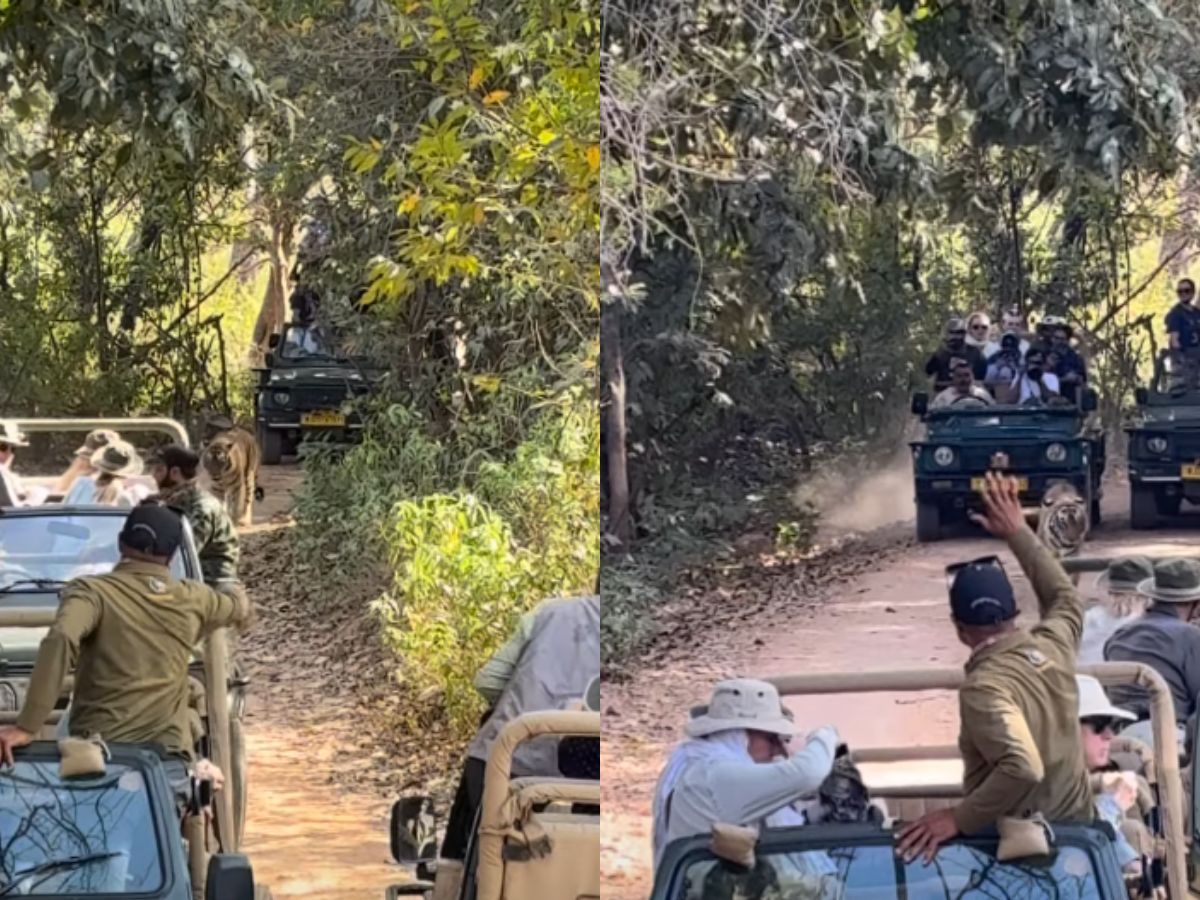

The video shows a tiger in Ranthambore National Park who got caught in a real “traffic jam,” which started a strong argument about the ethical problems that modern wildlife tourism creates.
The video that Instagram user Monty Bhatt shared shows a magnificent tiger who stands on a small forest path that safari jeeps have built a barrier around. The apex predator cannot escape because drivers compete to find the ideal viewing position while tourists extend their smartphones outside their vehicles.
The practice of “jeep-locked” wildlife viewing has progressed beyond basic animal observation to become a major instance of operational failure that prioritizes viral content creation and ticket revenue over essential conservation practices and animal protection measures.
Wildlife Displacement and Stress Factors
The Ranthambore footage shows physical encroachment, which violates the “flight-to-fight” distance rule for wild cats. The dual internal combustion engines that operate close to the tiger create acoustic pollution with exhaust fumes, which produce sensory overload that disrupts the tiger’s natural patterns of hunting and mating.
The continuous presence of high-density vehicle clusters forces animals to change their home ranges because they must move toward “buffer zones” where they face increased dangers from human-wildlife interactions.
According to wildlife biologists, the tiger in the video showed a “calm” appearance, which reflects habituation, a dangerous state that occurs when animals stop fearing humans and then develop unpredictable behavior that may lead to fatal situations.
Ethical Tourism and Regulatory Reform
The government needs to establish better rules that control vehicle numbers and direct vehicle operation to protect national reserves. The organization needs to apply its “zero-tolerance” rule for proximity violations, which should include real-time GPS tracking of safari vehicles to ensure compliance with distance regulations.
The industry needs to adopt an ethical tourism model that values the natural environment more than its visual attractions to solve its operational problems. This process requires visitors to understand that a successful safari experience depends on ecosystem health instead of obtaining close-up photographs.
The tiger reserves, which represent India’s most important wildlife areas, will become crowded outdoor exhibits if authorities do not set strict vehicle entry limits and drivers do not complete required sensitivity training.
A recent media graduate, Bhumi Vashisht is currently making a significant contribution as a committed content writer. She brings new ideas to the media sector and is an expert at creating strategic content and captivating tales, having working in the field from past four months.




