
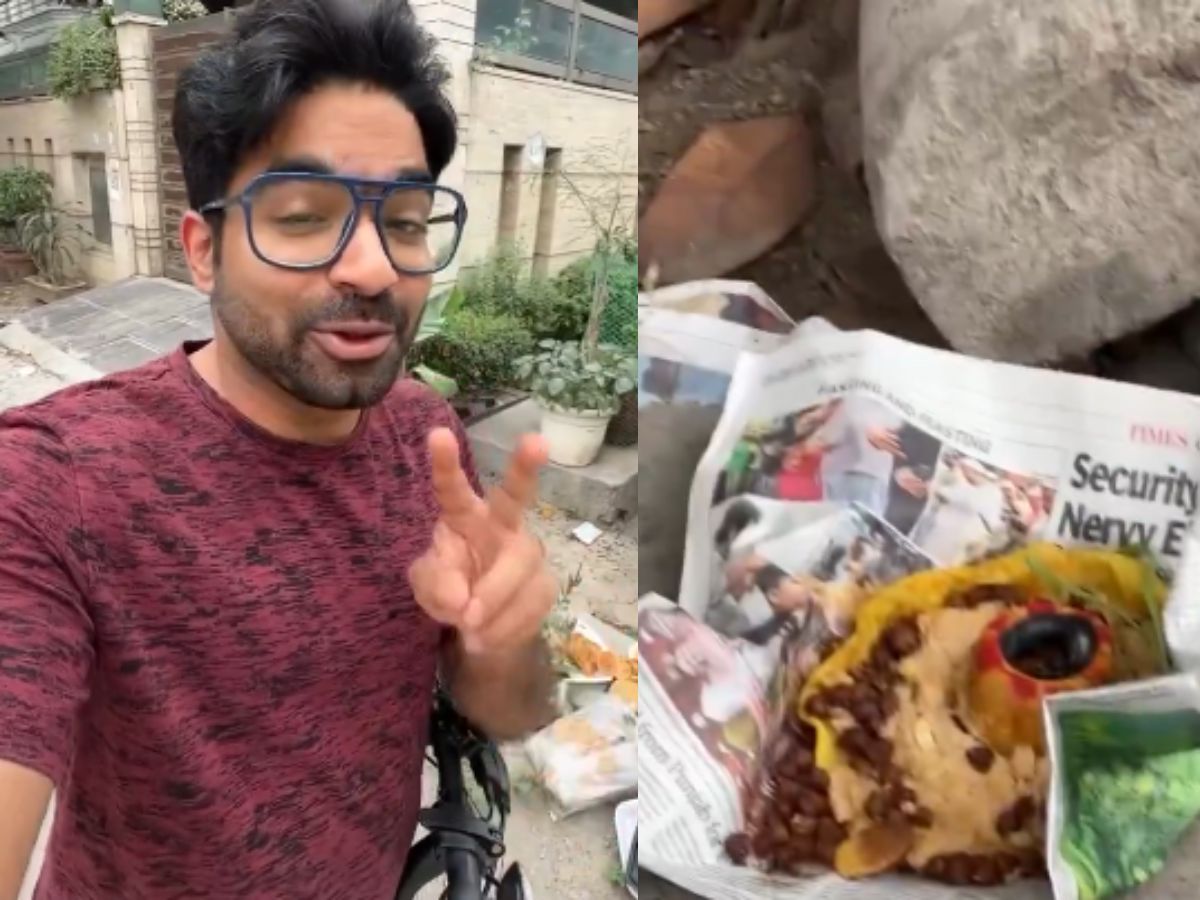

The Kanjak tradition, which people observe during Navratri and Ram Navami, requires worshippers to treat young girls as living embodiments of Goddess Durga. The devotees prepare a sacred meal that includes halwa, puri, and chana through their dedicated cooking efforts.
A woman became concerned about a viral video, which she shared to show how people currently practice this custom. The video shows how children who attend the ritual to receive cash and gifts discard the prasad, which people prepared with care, on the streets and in trash bins.
Tradition Versus Kanjak Food Wastage
The core of the Kanjak ceremony is the “bhog,” which is considered a blessing from the deity. When this sanctified food becomes part of Kanjak food wastage, it creates a significant spiritual disconnect.
It’s honestly heartbreaking.
During Navratri, people wake up early, cook with devotion, prepare prasad with love for little kids who come as Kanjaks.
It’s not just food… it’s faith, emotion, and respect.
But what do we see now?
Some children come only for the money,… pic.twitter.com/xngjLBVeVK
— Divya Gandotra Tandon (@divya_gandotra) March 27, 2026
Facts suggest that during peak festival hours, children visit dozens of households within a single housing complex. Physiologically, it is impossible for a child to consume fifteen to twenty meals in one morning. Consequently, the surplus food is often dumped once the child moves out of the donor’s sight.
This lack of “sanskar” or values regarding the sanctity of prasad indicates a shift from a ritual of reverence to one of mere collection, where the monetary gift outweighs the spiritual meal.
Navratri Devotion Amidst Ritual Misuse
The strict fasting requirements and early morning work needed to maintain pure offerings during Navratri celebrations create a major emotional burden for devotees. The social tension arises when particular communities use their decision-making authority to determine who they will let join their activities based on their understanding of others’ motivations.
Observers suggest that to preserve the sanctity of the festival, givers should pivot toward offering dry snacks, fruits, or donating the bulk of the cooked food to those in genuine hunger. People must keep the tradition intact because it requires both proper evolution and essential elements of its original identity.
The “wrath of Annapurna” will occur, and the goddess’s blessing will lose its sacredness if people fail to protect the tradition through their unauthorized changes.
A recent media graduate, Bhumi Vashisht is currently making a significant contribution as a committed content writer. She brings new ideas to the media sector and is an expert at creating strategic content and captivating tales, having working in the field from past four months.




