
7 Toxic Habits You Should Quit in Your 20s to Build a Happier and More Successful Life
Your 20s are a time of growth, self discovery, and important life decisions. The habits you build during this phase can shape your future in many ways. While learning and experimenting is natural, some toxic habits can slowly affect your mental health, relationships, and career progress. Recognizing and leaving these habits early can help you build a healthier and more balanced lifestyle.
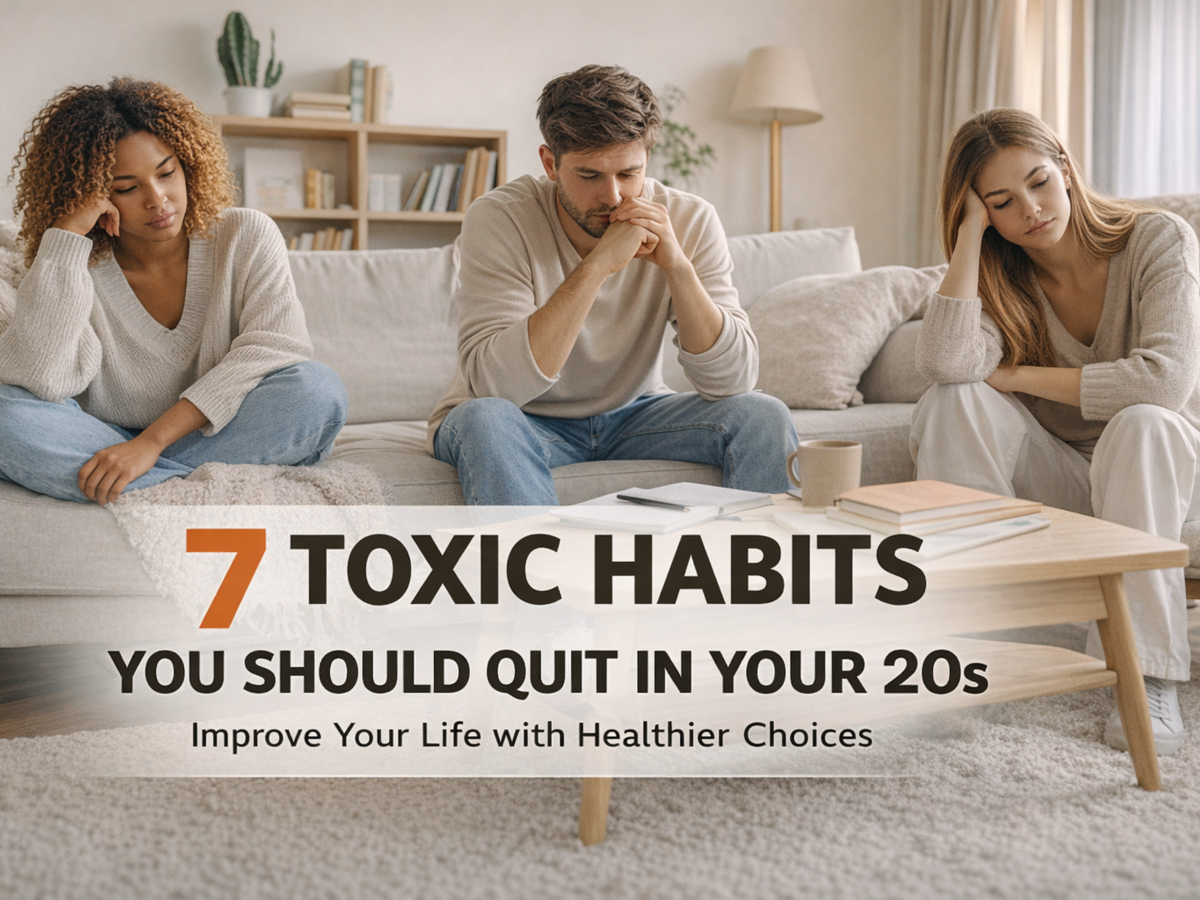
Constantly Comparing Yourself to Others
Social media often shows only the highlights of people’s lives. Comparing your journey to someone else's success can lead to self doubt and anxiety. Everyone moves at a different pace, so focusing on your own progress is far more productive.

Procrastinating Important Goals
Delaying work, career plans, or personal goals can become a pattern that holds you back. Your 20s are a valuable time to learn skills, explore opportunities, and build a strong foundation for the future.

Ignoring Mental Health
Many young adults focus heavily on career or studies while neglecting emotional wellbeing. Stress, anxiety, and burnout can grow if mental health is ignored. Taking time to rest, talk to loved ones, or seek support when needed is essential.

Staying in Toxic Relationships
Friendships or romantic relationships that constantly drain your energy can affect your confidence and happiness. Surrounding yourself with supportive and positive people helps create a healthier environment.

Poor Money Management
Spending impulsively and avoiding financial planning can lead to stress later in life. Learning basic budgeting, saving habits, and financial discipline early can make a huge difference.

Not Taking Care of Your Health
Skipping sleep, eating unhealthy food regularly, and avoiding exercise can harm long term health. Small habits like regular movement, balanced meals, and proper sleep can greatly improve your overall wellbeing.

Fear of Failure
Many people in their 20s avoid trying new things because they are afraid of failing. In reality, this is the best time to experiment, learn from mistakes, and build confidence through experience.

Disclaimer
This article is intended for informational and lifestyle purposes only. It should not be considered professional psychological, medical, or financial advice. Individuals should consult qualified professionals for personalized guidance.




