

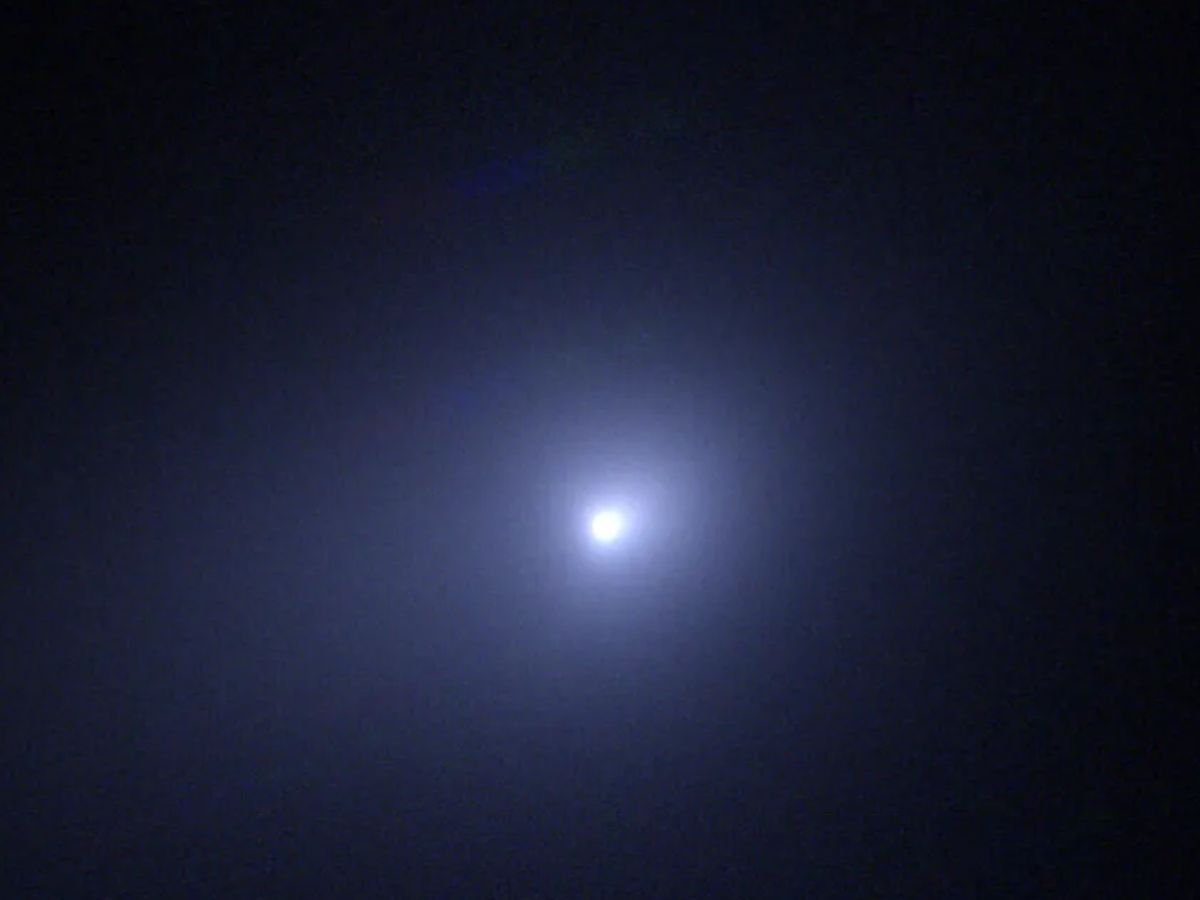
Interstellar Comet 3i Atlas: Astronomers have spotted a surprising shift in the behaviour of interstellar comet 3I/ATLAS as it passed close to the Sun, offering fresh clues about how such rare space visitors evolve.
Observations from the Subaru Telescope show that the comet’s glowing outer cloud, known as the coma, did not remain chemically stable. Instead, its composition changed noticeably as it heated up during its solar approach.
Coma Chemistry Shift Surprises Scientists
Scientists tracked the ratio of gases in the coma, especially carbon dioxide and water. Earlier observations had suggested a high carbon dioxide content, but newer data revealed a much lower ratio after the comet moved closer to the Sun.
This sharp shift indicates that the comet is not uniform inside. Instead, different layers may be releasing different materials at different stages of its journey.
Heat From Sun Triggers Hidden Activity
The change is largely driven by solar heat. As the comet approaches the Sun, its icy surface warms up, causing frozen gases to vaporise and escape into space, forming the coma.
This process can expose deeper layers of the comet, releasing new chemicals that were previously trapped beneath the surface. Scientists believe this is why the composition appears to evolve rather than stay constant.





