
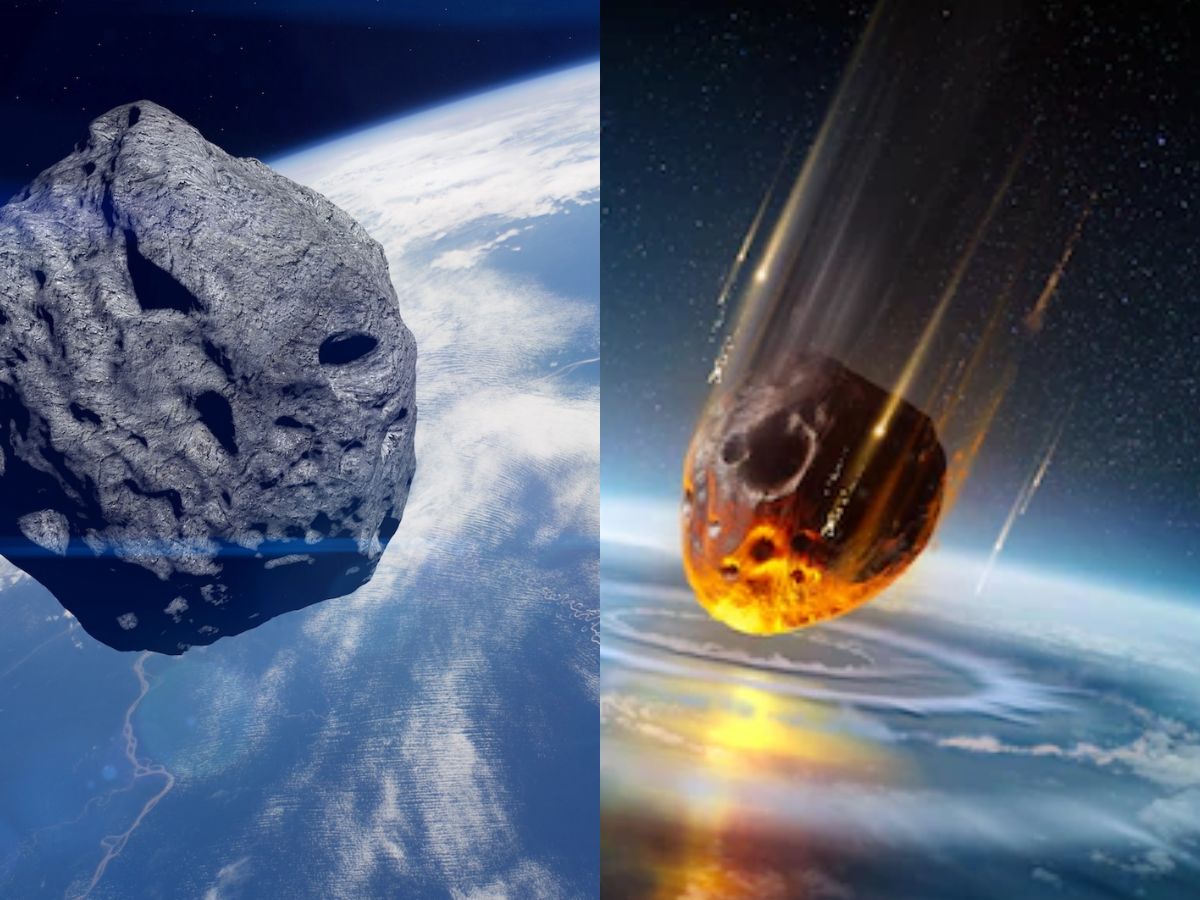

Scientists have just begun to study the hidden dangers that exist throughout the universe. At a recent science summit, NASA’s planetary defense experts issued a sobering reminder: our current technology is blind to thousands of “city-killer” asteroids.
The space rocks, which measure 140 meters or more, possess enough kinetic energy to destroy complete cities, but many of them remain hidden because regular telescopes cannot detect them.
While DART missions have successfully demonstrated our ability to move asteroids, we face a problem because we cannot redirect objects that remain hidden from our view.
Detection Gaps
The main obstacle to planetary defense operations exists because ground observation systems fail to detect incoming threats without standby interception systems.
Current telescopes base their observations on visible light, which fails to detect dark carbon-rich asteroids that absorb all sunlight. Many of these dangerous objects move through Earth-like orbits while they remain hidden within the sun’s bright light. NASA uses infrared technology for its Near-Earth Object (NEO) Surveyor mission to fill this detection gap.
The space-based telescope operates by detecting heat signatures to identify the mid-sized objects that currently exist in our satellite “blind spots.”
Defense Infrastructure
The world does not have any instant defense systems that can function without visual observation. The 2022 DART mission achieved historic success through its controlled testing program, which functioned as an operational testing project.
The process of asteroid deflection demands multiple years of preparation time before launching either a kinetic impactor or a gravity tractor. At this moment, no spacecraft exists that has been prepared with fuel to launch and capture unexpected discoveries.
Our planetary defense system exists as a theoretical concept until international partnerships establish operational ties between the Vera C. Rubin Observatory and the International Asteroid Warning Network (IAWN) and their asteroid deflection system.
A recent media graduate, Bhumi Vashisht is currently making a significant contribution as a committed content writer. She brings new ideas to the media sector and is an expert at creating strategic content and captivating tales, having working in the field from past four months.




