
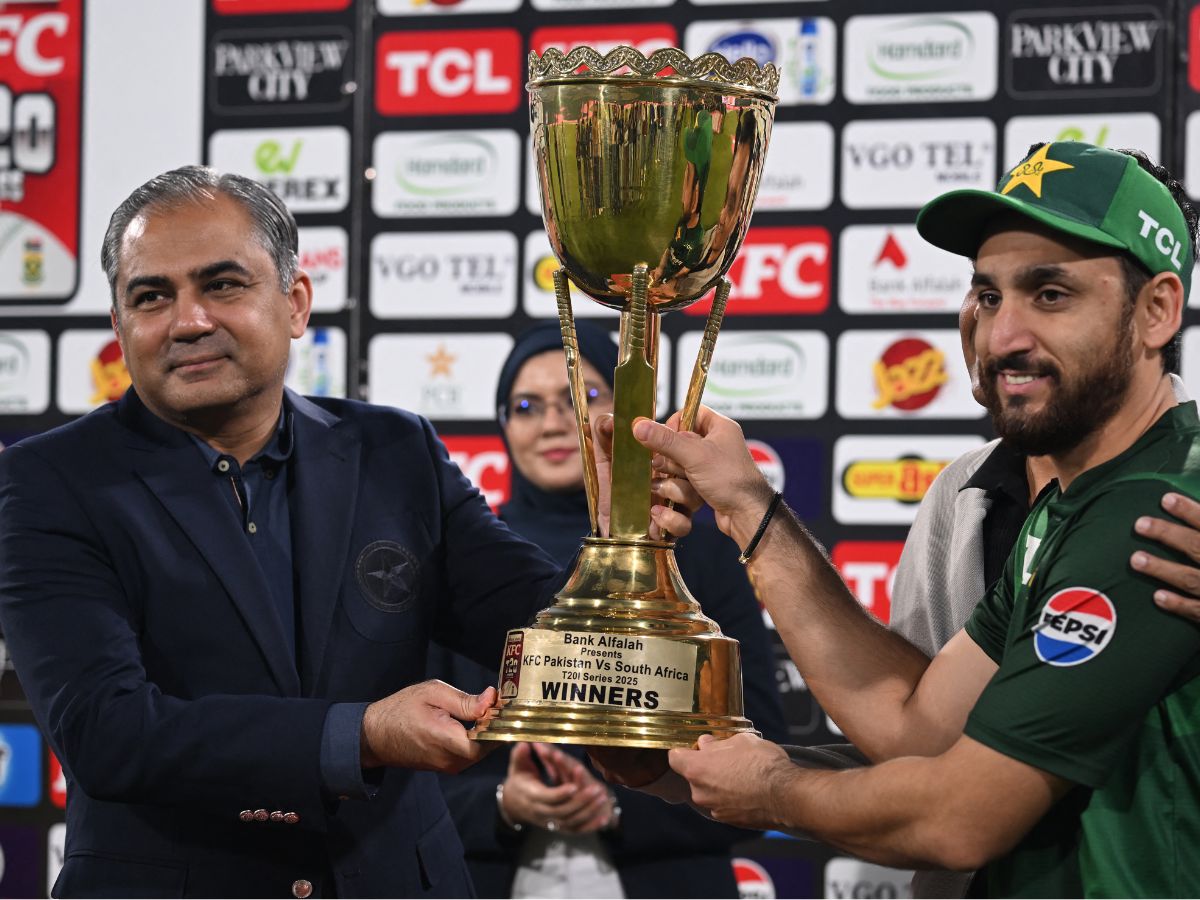

Cricket, as a sport, runs as much on diplomacy as it does on deliveries. The most disruptive figure is not always a fast bowler or a spinner who produces sharp turn. Sometimes, it is an administrator. And in this case, it is Pakistan Cricket Board (PCB) chairman Mohsin Naqvi — who is also Pakistan’s Interior Minister — now at the centre of a controversy that has clouded the T20 World Cup 2026 for over a month.
In recent months, the PCB chief has increasingly been labelled “troublemaker-in-chief.” This tag is not based on his personality alone, but on the growing belief that Pakistan cricket has been using pressure tactics as a negotiating tool.
For his supporters, Naqvi is simply doing his job. They believe he is protecting Pakistan’s interests in a system where power is not shared equally. For his critics, however, he represents a more aggressive approach — one that turns global cricket into a high-stakes bargaining game, where schedules, participation, and bilateral series are used as leverage.
The issue began when the world cricket body, the International Cricket Council (ICC), rejected Bangladesh’s concerns about security while playing matches in India. Pakistan publicly called this decision “unfair” and openly supported Bangladesh. What started as a technical and logistical matter soon turned into a political dispute, with different boards taking sides.
Faheem Ashraf’s sensational cameo guides Pakistan to a win in the #T20WorldCup 2026 opener 👊
He wins the @aramco POTM award 🥇 pic.twitter.com/BeTMbzOgJk
— ICC (@ICC) February 7, 2026
As tensions grew, reports suggested that Pakistan might boycott the tournament if Bangladesh decided to withdraw. Soon after, those fears became reality. When Bangladesh failed to confirm its participation by the ICC’s deadline, it was dropped from the tournament and replaced by Scotland.
However, Bangladesh’s exit did not end the uncertainty. Instead, it raised fresh questions about whether Pakistan would continue in the tournament. Last week, PCB chairman Naqvi added to the confusion by saying there was no guarantee Pakistan would take part.
His statement caused concern across the cricketing world, especially because matches between India and Pakistan attract huge audiences, major sponsorships, and generate significant revenue.
The PCB later tried to calm the situation by confirming that the Pakistan team would participate in the tournament. At the same time, it announced that the side would boycott its high-profile match against India on February 15 in Colombo.
Rather than easing worries, this move strengthened the belief that Pakistan was using pressure tactics to influence decisions. Naqvi’s remarks triggered a strong reaction from former Indian cricketer Atul Wassan, who accused the PCB chief of trying to pressure international cricket authorities.
Speaking to ANI, Wassan strongly criticised Naqvi’s approach and warned that such actions could harm the sport. The former India pacer accused Naqvi, Pakistan’s Interior Minister, of attempting to “blackmail” the global cricketing establishment.
Wassan warned that such political posturing would ultimately harm players rather than administrators.
“This is nothing but bravado — foolish bravado at best — trying to eyeball the ICC and blackmail the entire cricketing world order,” Wassan said. “Cricket is being used, and the players will become collateral damage. Administrators will continue with their political agendas, but it is the players who will suffer.”
Wassan also suggested that Pakistan’s support for Bangladesh was driven more by optics than principle.
“They believe it will earn them brownie points — ‘see, we stood by Bangladesh’ — but in reality, it achieves nothing,” he added.
Despite the off-field controversy, Pakistan had already begun their T20 World Cup 2026 campaign. In their opening match, they edged past the Netherlands by three wickets to register a winning start in Colombo.
Also Read: IND vs PAK At T20 World Cup 2026? Pakistan Likely to Drop India Boycott After Sri Lanka Warning




