
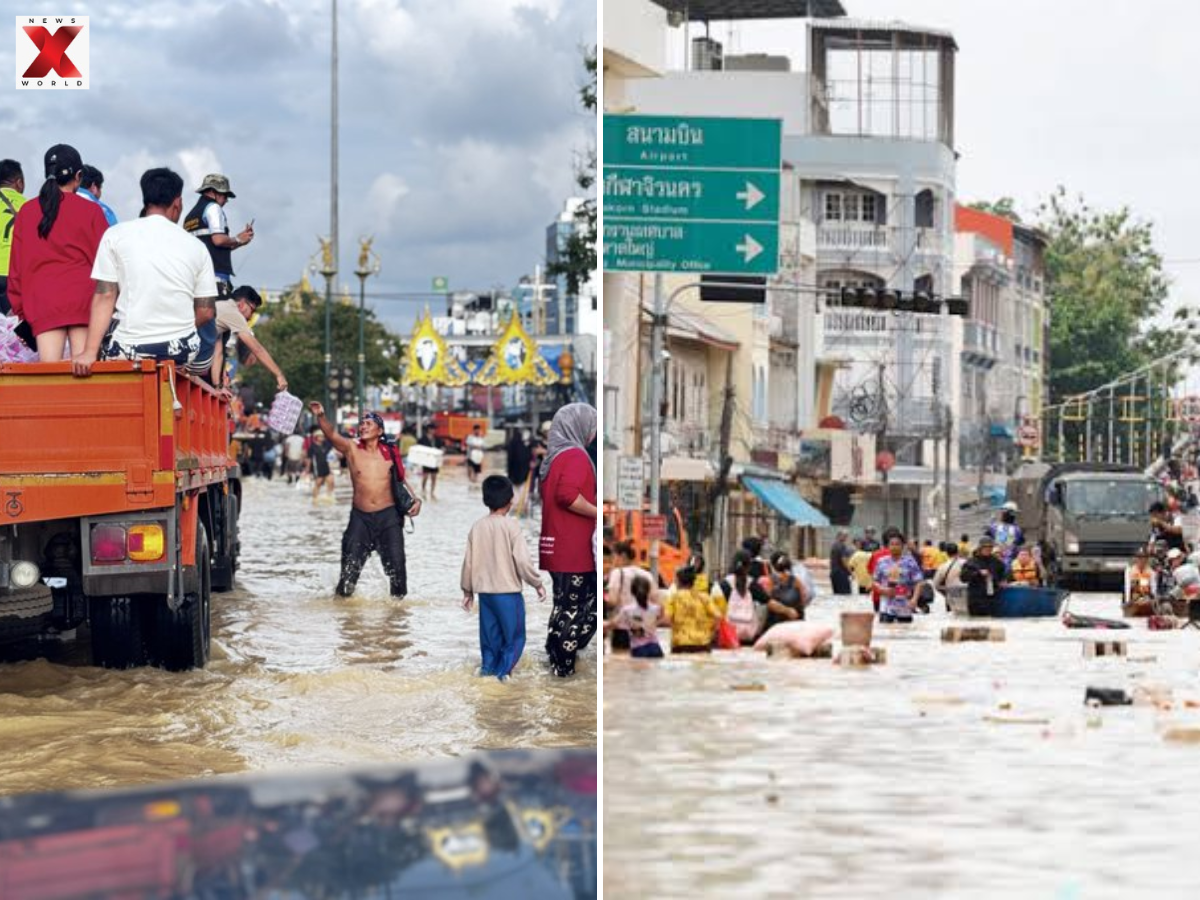

The death toll from flooding and landslides in Thailand shot up on Friday, piling more trouble onto a country already struggling with a shaky economy. People are frustrated, and they’re not shy about blaming the government which, by the way, has only been in power for about ten weeks.
Thailand Floods Turn Deadly: 145 dead
In Songkhla province, things look especially grim. Government spokesman Siripong Angkasakulkiat said 110 people have died there, out of 145 total deaths across southern Thailand. That number almost doubled in just one day.
Over 1.25 million households and 3.6 million people have been hit by the disaster, according to the Department of Disaster Prevention and Mitigation.
This flood is just the latest blow for Thailand. Earlier this year, a major earthquake struck next door in Myanmar. Then, in July, deadly border clashes with Cambodia broke out.
This is the new normal: South East Asia is currently drowning because of the “unusual alignment of two climate forces behind record-breaking rain”
>Hundreds killed in Thailand, the Philippines, Vietnam and Malaysia
>Millions (millions!) displaced
>Exceptionally severe floods,… pic.twitter.com/XfEylIYJYQ— Assaad Razzouk (@AssaadRazzouk) November 26, 2025
The economy’s been shrinking down 0.6% last quarter and tourism is barely hanging on. Now, with the floods, the south faces even steeper challenges.
People are demanding answers. Siripong told reporters, “The government can’t deny its responsibility,” admitting there have been mistakes in the disaster response.
Prime Minister Anutin Charnvirakul, who’s gearing up for elections next year, tried to speed up relief by invoking emergency laws.
But the criticism hasn’t let up. At a press conference, the official in charge of flood response, Paradon Prissanananthakul, actually walked out when reporters pressed him about government missteps that may have cost lives. Still, Paradon promised a big cleanup effort as water levels start to go down.
The past week’s heavy rain hasn’t just hit Thailand, Malaysia, the Philippines, and Vietnam are all dealing with floods too. In Indonesia, Cyclone Senyar brought flash floods and landslides to Sumatra, leaving at least 72 people dead and many more missing.
What lies ahead?
Back in Thailand, forecasters say the worst of the monsoon rain should let up soon, with only scattered storms expected. From November 30 to December 4, there shouldn’t be much rain.
The floods have already disrupted daily life and business. Pranee Sutthasri from the Bank of Thailand said Songkhla and Nakhon Sri Thammarat make up about 2.6% of the country’s GDP and have been hit hard. She also pointed out that cross-border tourism is down—normally about 10,000 Malaysians come through the southern provinces every day.
The overall hit to the economy? That depends a lot on how much gets spent on rebuilding. The central bank will review the situation at its next meeting on December 17, and some analysts think the damage is bad enough that the Bank of Thailand might cut interest rates.
Krungsri Research estimates the floods could cost up to 23.6 billion baht (about $734 million), with hotels and restaurants taking a big share of the losses. The University of the Thai Chamber of Commerce puts daily losses at as much as 1.5 billion baht. The impact on factories isn’t fully clear yet, but with 3,500 manufacturers across nine provinces, the numbers could climb.
What Tourists Need To Know
Travel is a mess. Airlines like Thai AirAsia and Bangkok Airways are letting passengers change their travel plans or get credits, but it all depends on the airline’s own rules. Travelers have been warned to double-check flight schedules before heading out.
The floods have put huge pressure on roads and airports, disrupted tourism, and made it tough for visitors to get around in southern Thailand.
People planning to visit are being told to avoid flooded areas, stay in touch with airlines and local operators, and keep an eye on official news. If you’re already there, stay careful and keep in contact with authorities while relief crews work to get things under control.




