
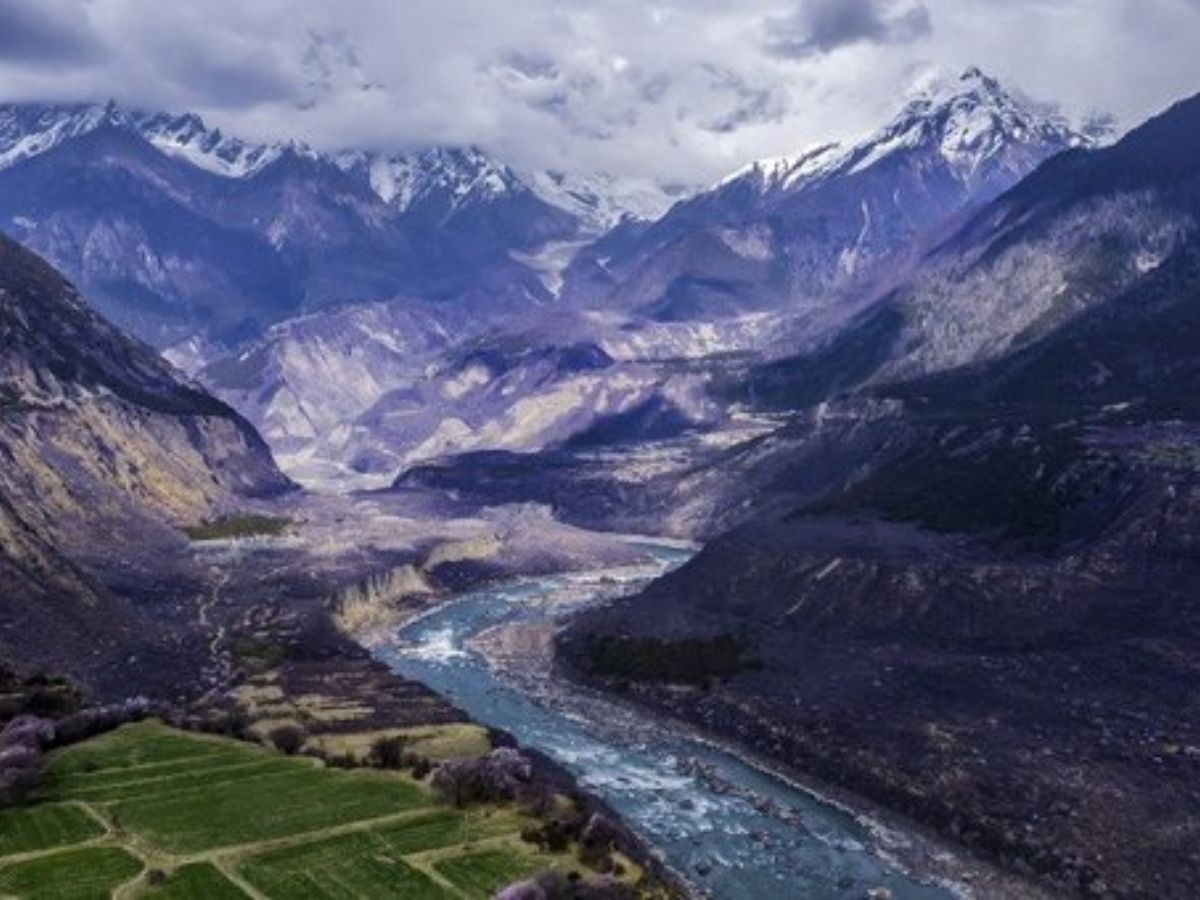

China has begun construction on a massive hydropower dam on the Brahmaputra River (Yarlung Tsangpo in Tibet), near Arunachal Pradesh, with Chinese Premier Li Qiang attending the groundbreaking ceremony in Nyingchi region on Saturday, Xinhua.
Here is what we know so far about the scale of the project, why it has invited criticism and what could be the potential implications in the region.
Project Kickoff and Scale
- Approved in December 2023, the dam will consist of five cascade hydropower stations, with a total investment of 1.2 trillion yuan ($167.8 billion), according to AFP report.
- Once completed, it is expected to generate over 300 billion kilowatt-hours of electricity annually, which is approximately three times that of the Three Gorges Dam, a South China Morning Post report stated.
Concerns Galore Over Downstream Impact of the Dam
- The river flows into India and Bangladesh, supporting millions of people who depend on it for agriculture and drinking water.
- New Delhi had raised the issue with Beijing in January, reportedly saying it will “monitor and take necessary measures to protect our interests.”
- According to Ministry of External Affairs, China has been urged to ensure that the interests of the downstream states of the Brahmaputra are not harmed by activities in upstream areas.
‘Water Bomb’ Warnings from Arunachal Pradesh
Arunachal Pradesh CM Pema Khandu has called the dam an existential threat, reportedly saying, “It is quite serious because China could even use this as a sort of ‘ticking water bomb’.
“Suppose the dam is built and they suddenly release water, our entire Siang belt would be destroyed,” Khandu had warned at the time.
What Are the Risks Involved?
- The dam, which is being built in one of the rainiest and most earthquake-prone areas of the Himalayas, has raised environmental and geological concerns.
- Critics worry about displacement, ecosystem disruption and potential weaponisation of water by China.
- Environmentalists, on the other hand, have warned of irreversible damage to the ecologically-fragile Tibetan plateau.
How Has China Responded?
China claims the dam won’t hurt downstream regions and says that Beijing would maintain communication. “It will not have any negative impact,” the country’s Foreign Ministry had said last year.
What Is India’s Stance?
- Reports suggest the government is fast-tracking India’s own Siang Upper Multipurpose Project in Arunachal Pradesh to secure water rights and balance the equation.
- The Expert Level Mechanism (ELM), set up in 2006, facilitates dialogue on transboundary rivers and data-sharing during flood seasons.
ALSO READ: Flights Grounded, Trains Halted As Typhoon Wipha Hits Southern China & Hong Kong




