
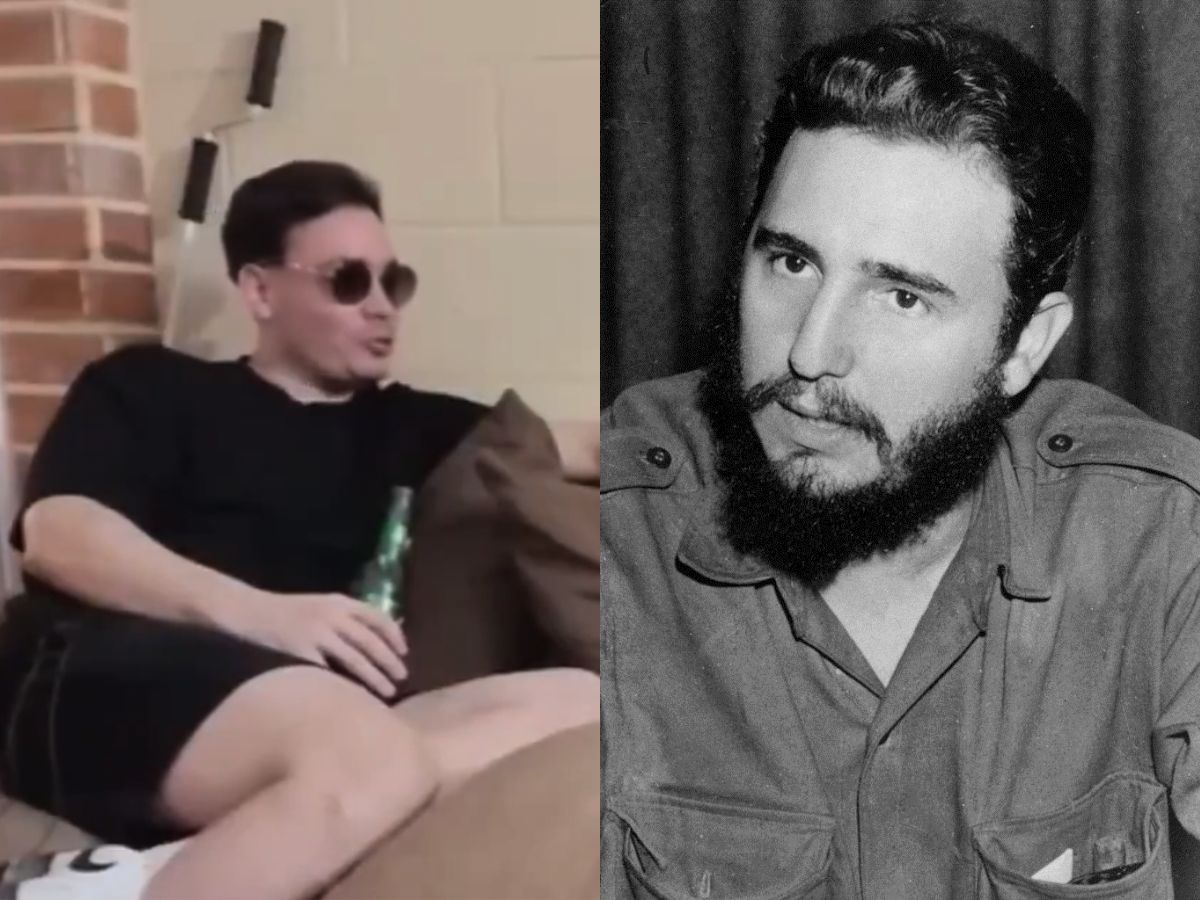

A fresh political debate has erupted in Cuba after Sandro Castro, the grandson of revolutionary leader Fidel Castro, claimed that most Cubans “want to be capitalist, not communist.” His remarks, coupled with a suggestion of a possible deal with Donald Trump, have triggered sharp reactions online, with many netizens calling him a “sinister liar.”
‘Cubans Want Capitalism,’ Says Sandro Castro
Speaking in an interview from Havana, Sandro Castro described life in Cuba as “so hard,” pointing to worsening living conditions amid an ongoing economic crisis.
“I think the majority of Cubans want to be capitalist, not communist,” the 33-year-old said, adding that many people desire “capitalism with sovereignty.”
US blockade my ass. His grandfather is an evil doer and he has enjoyed privileges forever. Sandro does not live in that neighborhood lol
— Magacuban (@rawlperales2424) March 31, 2026
Despite being part of Cuba’s most influential political family, Castro holds no official position in the government.
Crisis Deepens in Cuba
Cuba has been grappling with a severe economic downturn marked by frequent blackouts, food shortages, and disruptions in healthcare and transportation. The crisis has been exacerbated by restrictions on Venezuelan oil supplies, pushing daily life on the island to a breaking point.
The current administration led by Miguel Díaz-Canel has faced mounting criticism over its handling of the situation, including from Castro himself, who said the president is “not doing a good job.”
A Break From the Castro Legacy?
Sandro Castro’s comments are particularly striking given his lineage. His grandfather, Fidel Castro, led Cuba for nearly five decades after the 1959 revolution, establishing a communist state and aligning the island with the Soviet Union. Power was later transferred to his brother Raúl Castro.
This kid is privileged. The apartment he has is very rare in Cuba, and he’s the grandson of Fidel Castro; that’s why he has it.
— ReP (@cubalovesusa) March 31, 2026
While the Castro family is revered by some as revolutionary heroes, critics have long accused the regime of repression and economic mismanagement. Waves of migration from Cuba to the United States over decades reflect persistent dissatisfaction among sections of the population.
Sandro’s apparent endorsement of capitalism and openness to engagement with Trump signals a notable shift from the ideological foundations laid by his grandfather.
Social Media Persona and Controversy
Unlike his famously private relatives, Sandro Castro has cultivated a public persona as a nightclub owner and social media influencer, amassing a large following with provocative and often controversial content.
In one viral video, he mocked geopolitical tensions by featuring an actor portraying Donald Trump attempting to “buy Cuba,” highlighting his tendency to blur satire and political commentary.
However, critics argue that his lifestyle marked by visible privilege in a country where the average monthly salary is under $20 undermines his claims of shared struggle.
Netizens React: ‘Sinister Liar’ or Sign of Change?
Sandro Castro’s remarks have sparked intense debate online.
One user wrote, “This clown is a sinister liar who thinks the Cuban people are ignorant. He is part of the problem.”
Others, however, viewed his comments as reflective of changing attitudes. “It’s fascinating to see how the next generation is questioning old ideologies,” another user noted.
Some also pointed to his privileged background, arguing that his views do not represent the realities faced by ordinary Cubans.
A Nation at an Ideological Crossroads?
As Cuba navigates one of its most severe crises in recent years, Sandro Castro’s controversial statements have reignited questions about the country’s political and economic future.
Whether his remarks reflect a broader public sentiment or remain an isolated voice of dissent within an influential family, they have undeniably stirred a fresh conversation: Is Cuba slowly reconsidering its long-standing commitment to communism?
ALSO READ: After Spain, Italy Denies US Aircraft Access To Military Base For Iran Operations As War Escalates
Sofia Babu Chacko is a journalist with over five years of experience reporting on Indian politics, crime, human rights, gender issues, and stories about marginalized communities. She believes journalism plays a crucial role in amplifying unheard voices and bringing attention to issues that truly matter. Sofia has contributed articles to The New Indian Express, Youth Ki Awaaz, and Maktoob Media. She is also a recipient of the 2025 Laadli Media Awards for gender sensitivity. Beyond the newsroom, she is a music enthusiast who enjoys singing. Connect with Sofia on X: https://x.com/SBCism




