
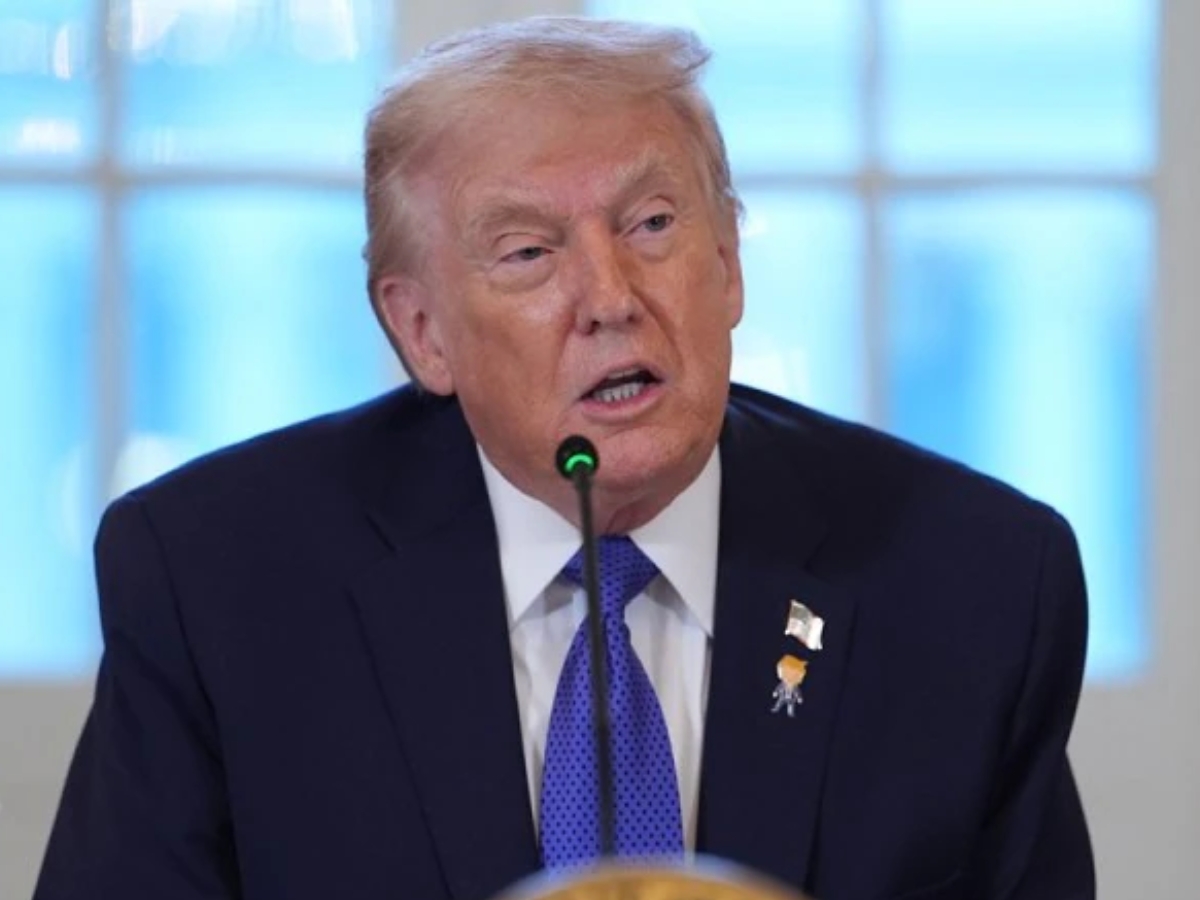

US President Donald Trump on Thursday issued a strong warning to Iran, urging Tehran to reach a nuclear agreement with Washington in the coming weeks or face serious consequences.
Speaking to reporters at the White House, Trump said, “We have to make a deal, otherwise it’s going to be very traumatic. I don’t want that to happen, but we have to make a deal.” He added that failure to secure an agreement would be “very traumatic for Iran,” stressing that negotiations remain the preferred path for now.
His remarks came shortly after a high-level meeting with Israeli Prime Minister Benjamin Netanyahu.
Talks With Netanyahu Highlight Strategic Differences
Trump revealed that he held a three-hour discussion with Netanyahu at the White House, describing it as productive. While reaffirming his preference for continued negotiations with Iran, he signaled that other outcomes remain possible if diplomacy does not succeed.
U.S. President Donald Trump on Iran:
“We have to make a deal, otherwise it is going to be very traumatic.” pic.twitter.com/iBJKzmEC97
— Open Source Intel (@Osint613) February 12, 2026
In a post on Truth Social, Trump said he had insisted that negotiations continue to determine whether a deal could be finalized. “If it can, that will be a preference. If it cannot, we will just have to see what the outcome will be,” he wrote.
Netanyahu’s office released a brief statement emphasizing Israel’s security concerns in the context of the Iran talks. The two leaders agreed to maintain close coordination, though their public comments suggested differences in tone. Netanyahu has historically taken a tougher stance on Iran’s nuclear ambitions, often favoring stronger measures.
Diplomacy Resumes Amid Military Preparations
Fresh negotiations between US and Iranian officials resumed last week in Oman, the first such engagement in months. Trump has indicated that further talks are expected soon.
At the same time, the US has increased its military presence in the Gulf region. Reports indicate that Washington is considering deploying a second aircraft carrier strike group to the Middle East. The move is being viewed as a signal that while diplomatic efforts are underway, military options remain on the table if negotiations collapse.
The parallel track of diplomacy and military positioning underscores the high stakes involved. A renewed agreement could curb Iran’s nuclear activities and ease regional tensions. Failure, however, risks escalating into a broader confrontation in an already volatile region.




