
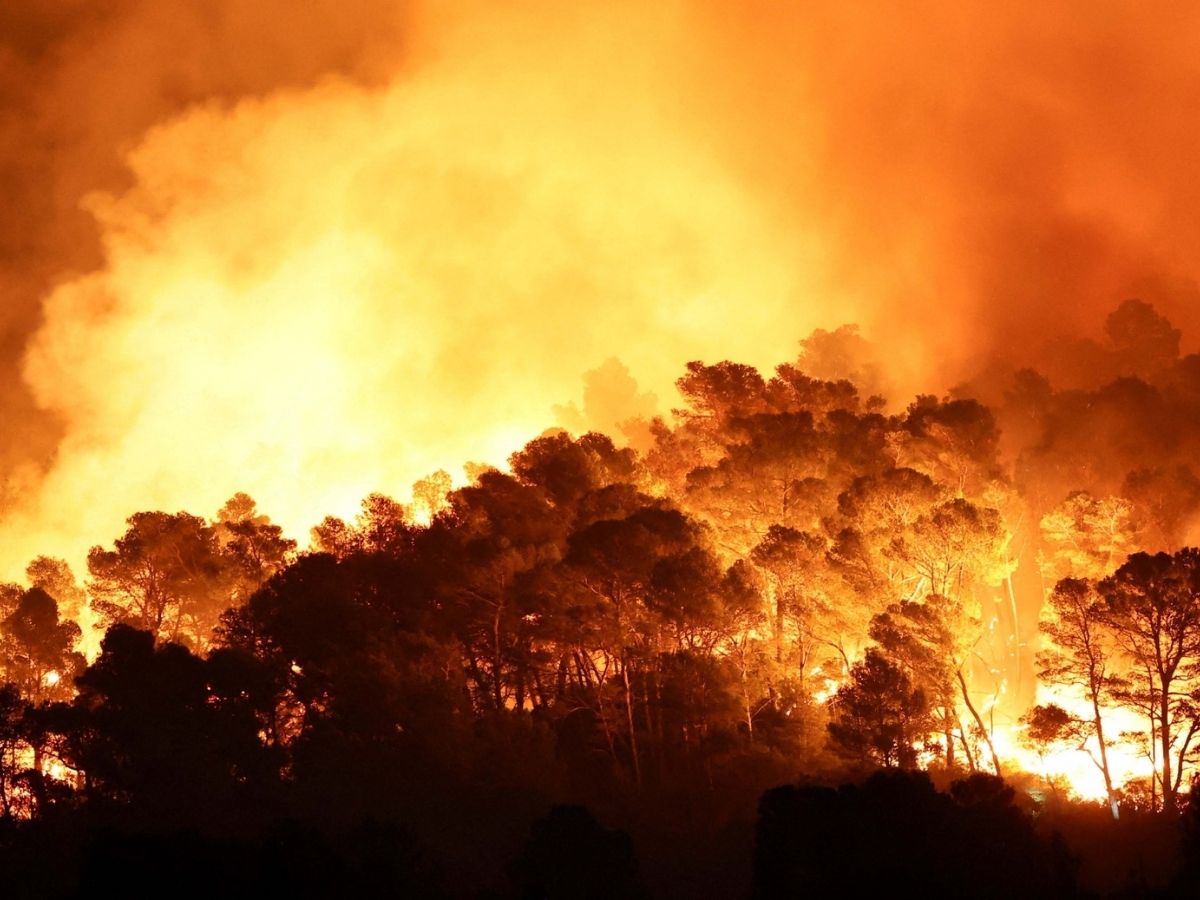

France is battling its biggest wildfire in decades after a blaze ripped through more than 160 square kilometers (62 square miles) in the Corbieres massif, located in the Aude region in the south, according to a report published by The Associated Press on Thursday. Starting on Tuesday, the fire claimed the of at least one individual and forced a massive firefighting effort reportedly involving over 2,100 firefighters and several water bomber planes.
According to the report, the fire spread rapidly due to weeks of hot, dry weather but slowed on Thursday as cooler temperatures and calmer winds gave firefighters some relief. “We have a fire that has not yet been contained and is no longer spreading,” AP quoted regional administrator Christian Pouget as saying.
Damage and Human Impact
So far, the fire has affected 15 communes, destroying or damaging at least 36 homes, the report said, adding that one person died in their home and 13 others were injured, including 11 firefighters. Three people previously reported missing were found safe, local authorities said, adding that the full extent of the damage is still being assessed.
“It’s very sad to think about the image we are going to give of our Corbières region, with its devastated landscapes and desperate women and men, not just today or tomorrow, but for weeks and months to come. It will take years to rebuild,” Xavier de Volontat, mayor of Saint-Laurent-de-la-Cabrerisse, told BFMTV.
Meanwhile, residents and tourists nearby were advised to stay indoors unless evacuation orders were issued.
What Caused It?
The fire initially started in Ribaute, a rural area known for its vineyards, with eight to nine square kilometers (over 3 square miles) of vineyards reported destroyed. “It is a fire that is clearly a consequence of climate change and drought in this region,” France’s minister for ecological transition Agnès Pannier-Runacher said at the time.
This blaze, the report said, is the largest France has faced since 1949, and the biggest since a national fire database began in 2006. Southern Europe has seen numerous large fires this summer, with experts warning that climate change is increasing the frequency and intensity of such events.




