

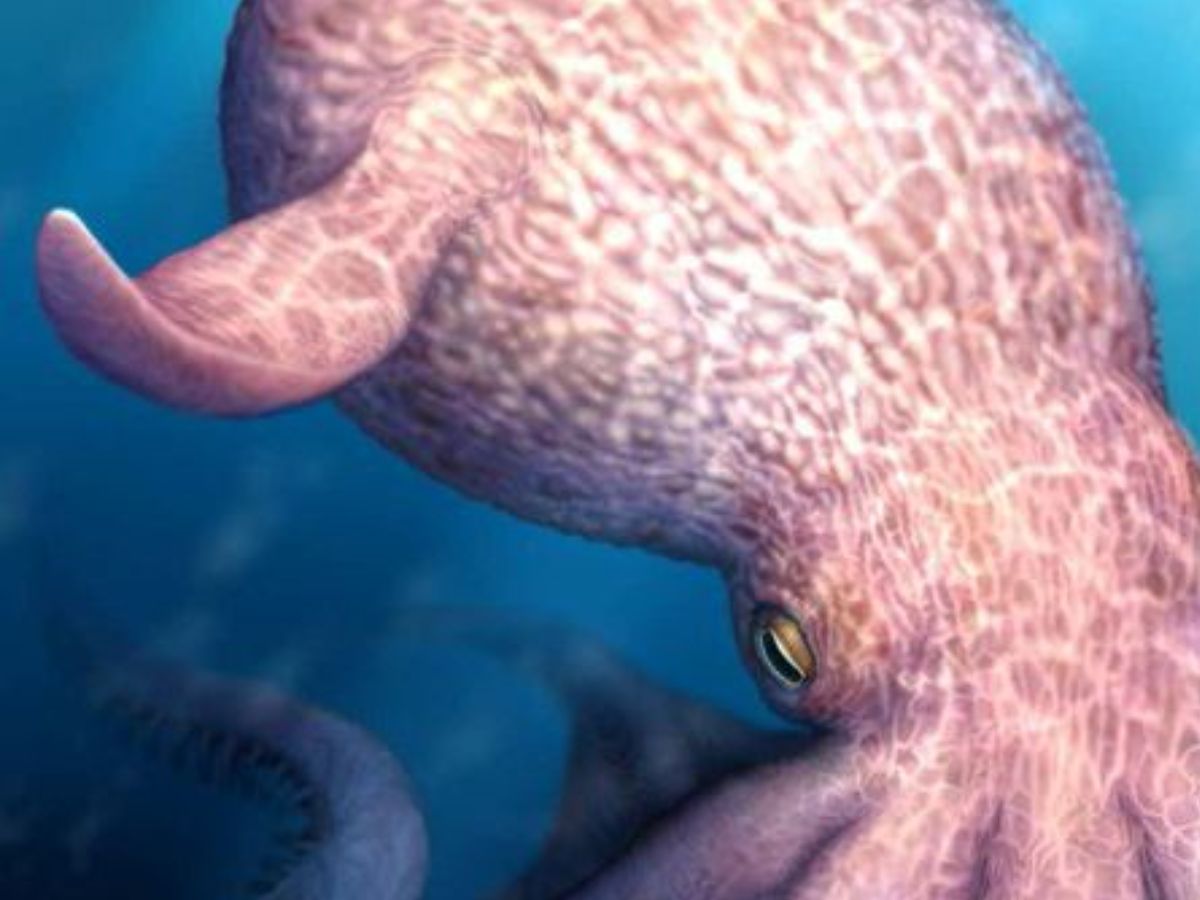
Giant Octopus Fossil: New research shows that octopus like creatures existed in Earth’s oceans about 100 million years ago during the dinosaur period. Researchers studying ancient octopus fossils which exist as some of the world’s oldest specimens discovered that these octopuses reached much larger sizes than common people believe. The creatures used their strong muscular arms to catch prey while their beak-like jaws possessed the ability to break through shell and bone material.
Giant Octopus Fossil: What Did New Research Find?
Giant Octopus Fossil: According to a report by BBC, the Hokkaido University scientists discovered exceptionally preserved fossil jaws which reveal information about the giant size of these ancient creatures. Their research suggests that these animals may have ranged in size from 1.5 to 4.5 metres in length but when their long arms are taken into account their overall length could have reached between 7 and an impressive 19 metres. The existence of these creatures as the largest invertebrates to have existed proves that prehistoric seas contained both invertebrate and vertebrate species which included fish and marine reptiles.
Giant Octopus Fossil: What Are the Patterns Of These Creatures?
Giant Octopus Fossil: The fossils provide evidence about their behavioral patterns. The prehistoric octopus showed a preference for feeding on its left side because its jaw wear patterns matched this pattern which scientists observe in animals that possess advanced cognitive abilities. The intelligence of octopuses includes their ability to learn and they use advanced techniques for hunting. The Giant Pacific Octopus stands as the heaviest existing octopus species which normally achieves massive dimensions and scientists have documented it using its powerful arms and suction cups to capture large animals like sharks.
Giant Octopus Fossil: New Opportunities As New Research Is Underway
Giant Octopus Fossil: Modern research understands several aspects of these ancient reptiles but scientists still need to uncover additional information. The complete look of the animal, its swimming technique, and its eating habits remain unknown because researchers have not discovered any fossils that contain stomach contents. These creatures probably hunted ammonites extensively but they ate whatever food sources became available. The increasing discovery of these rare fossils provides scientists with an exciting opportunity to study a previously unknown and dangerous predator that once existed in our oceans.





