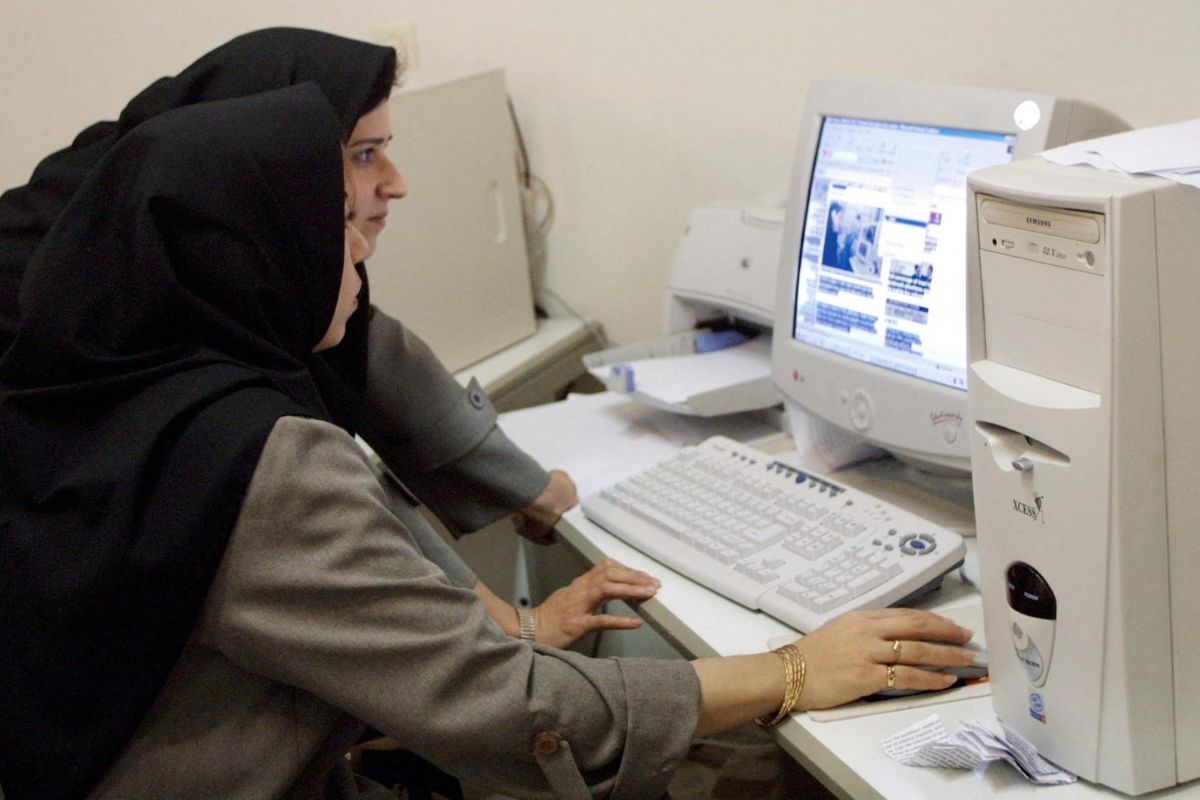

Iranian authorities continue its comprehensive internet shutdown, which is currently in its 45th day, severely limiting access to the internet throughout the nation.
A “near blackout on the country’s internet services” has resulted from the state-imposed restrictions, according to cybersecurity group NetBlocks. The organization stated that the blackout lasted for six weeks “with international connectivity severed for over 1,056 hours” in a study outlining the extent of the damage.
This digital isolation was initiated by the Iranian regime shortly after the first military strikes by the United States and Israel against the country. Since the onset of that kinetic conflict, authorities have maintained a near-total block on external digital access for the population.
This current period of enforced offline status follows a similar pattern of digital suppression seen earlier this year. In January, the country was subjected to a weeks-long internet blackout implemented by the government in response to a wave of nationwide anti-regime protests.
While the domestic population remains digitally isolated, the geopolitical situation has escalated further. On Monday, Iran strongly criticised US plans to impose a blockade on its ports, warning that maritime security across the Persian Gulf region would be jeopardised if its own security is threatened.
According to the Iranian state media Islamic Republic of Iran Broadcasting (IRIB), citing a statement from the spokesperson for Iran’s Khatam al-Anbiya Central Headquarters, maritime security in the Persian Gulf and the Sea of Oman must be upheld collectively. The spokesperson added that the armed forces consider safeguarding the country’s rights and sovereignty in its territorial waters as a “natural and legal duty.”
“The Armed Forces of the Islamic Republic of Iran consider defending the legal rights of our country a natural and legal duty, and accordingly, exercising the sovereignty of the Islamic Republic of Iran in the territorial waters of our country is the natural right of the Iranian nation,” the statement read, as quoted by IRIB.
Issuing a direct counter-threat, the headquarters declared that the security of regional ports is “either for everyone or for no one.” The statement warned that if the security of Iranian ports is compromised, no other port in the Persian Gulf or the Sea of Oman will remain safe.
In line with this stance, the statement emphasised that Iran would continue to enforce security in its waters, reiterating that vessels linked to hostile entities would not be permitted to pass through the strategic Strait of Hormuz. Conversely, other vessels would be allowed transit in accordance with regulations set by Iranian authorities.
Describing US actions as unlawful, the spokesperson stated that restrictions on ship movement in international waters amount to “piracy” and violate international norms. Tehran further warned of a long-term mechanism to maintain control over the Strait of Hormuz, citing ongoing national security threats even after any cessation of hostilities.
“The criminal US’s imposition of restrictions on the movement of ships in international waters is an illegal act,” the statement added, according to IRIB.
This warning from Iran’s highest operational command unit comes after the US Central Command (CENTCOM) announced it would begin enforcing a blockade on all maritime traffic entering and exiting Iranian ports, starting April 13 at 10 am ET, under a directive from President Donald Trump.
According to a statement issued by CENTCOM on X, the blockade will be applied uniformly to vessels of all nations operating in and out of Iranian ports along the Persian Gulf and Gulf of Oman.
However, CENTCOM clarified that freedom of navigation through the Strait of Hormuz for vessels heading to and from non-Iranian ports will not be disrupted. The command added that further guidance will be issued to commercial shipping through formal notices, advising mariners to maintain communication with US naval forces while operating in the region. (ANI)
Syed Ziyauddin is a media and international relations enthusiast with a strong academic and professional foundation. He holds a Bachelor’s degree in Mass Media from Jamia Millia Islamia and a Master’s in International Relations (West Asia) from the same institution.
He has work with organizations like ANN Media, TV9 Bharatvarsh, NDTV and Centre for Discourse, Fusion, and Analysis (CDFA) his core interest includes Tech, Auto and global affairs.
Tweets @ZiyaIbnHameed