

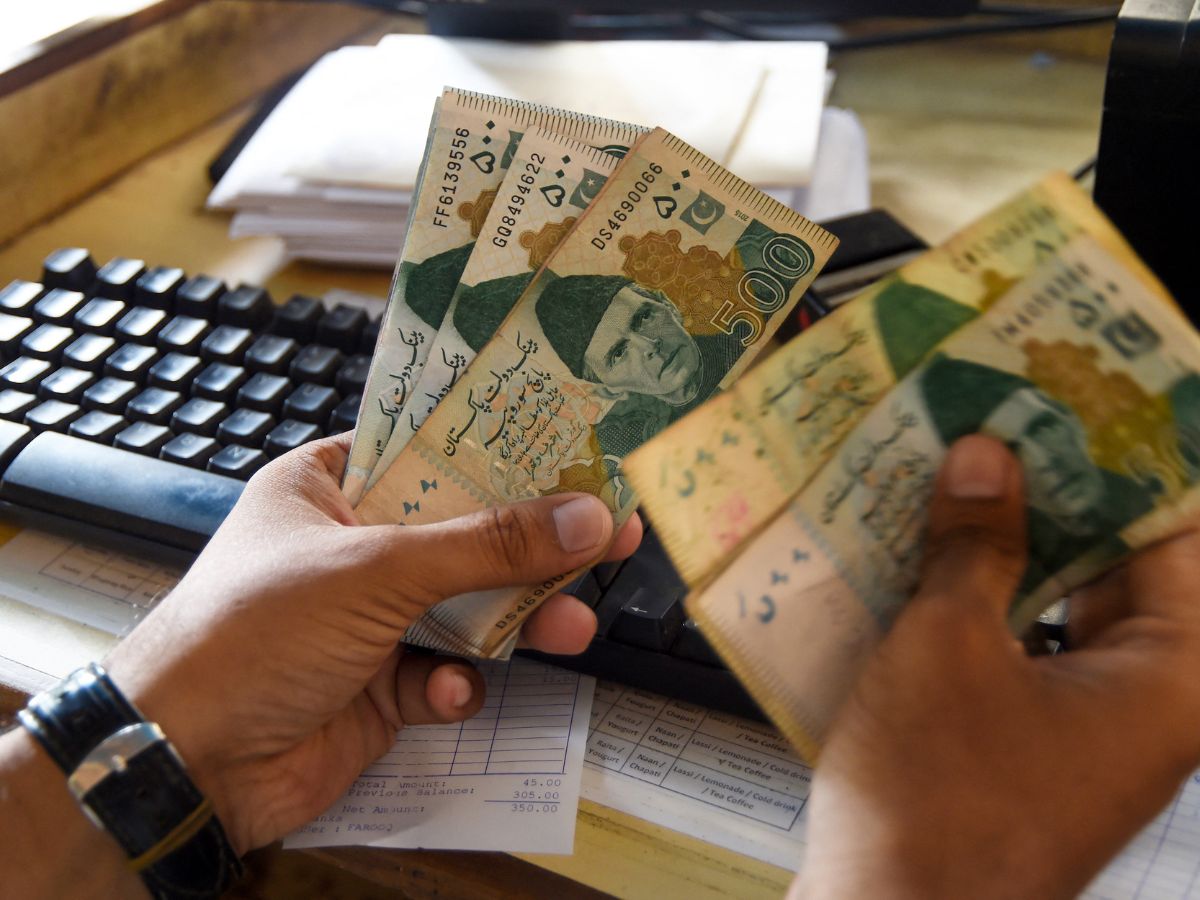
The State Bank of Pakistan (SBP) has confirmed that it has received USD 1 billion from Saudi Arabia’s Finance Ministry.
This money, dated 20 April 2026, is the second and final part of a USD 3 billion support package promised by Saudi Arabia to help Pakistan’s struggling economy.
This latest transfer is a crucial milestone for the nation’s fragile external financial standing, following the initial receipt of USD 2 billion under the same package on 15 April 2026.
By securing this final instalment, the “State Bank of Pakistan has received funds of US$ 1 billion from Ministry of Finance, Kingdom of Saudi Arabia in the value date of 20 April 2026,” effectively completing the USD 3 billion commitment designed to temporarily prop up depleted foreign exchange reserves.
The timing of this liquidity arrival is particularly desperate as the country continues to struggle with its mounting international financial commitments.
The Pakistani government has been forced into diligently adhering to debt settlement timelines, which involve considerable payouts to global partners that continue to drain the national exchequer.
While these funds are now secured, the central bank remains in a precarious position to handle balance of payment challenges.
The reinforcement of the national reserves is a reactive measure to ensure that Pakistan remains aligned with the strict fiscal benchmarks established under its current engagement with the International Monetary Fund.
As per official data reported by Dawn, the foreign exchange reserves of Pakistan were recorded at USD 16.4 billion as of March 27, a level considered “sufficient to cover close to three months of imports.”
Despite this cushion, the national economy is facing renewed strain on its “external buffers” due to an urgent “repayment requirement from the UAE.”
The financial situation became significantly more complex in March when Islamabad was unable to reach a settlement with the UAE regarding the extension of a USD 3.5 billion facility.
Dawn highlights that this development represents the “first such failure in seven years,” a move that has sparked significant “concerns about near-term financing gaps” within the country’s unstable economic circles.
While the “foreign exchange position” remains “under pressure,” it continues to be a central component of the government’s “broader stabilisation effort” conducted “under IMF-supported reforms.”
These measures are intended to provide a basic safety net as the state navigates its overwhelming international financial obligations.
Furthermore, a report by Dawn notes that market experts view “external financing risks” as a “key vulnerability” for the nation.
This assessment comes at a time when Pakistan is grappling with “volatile energy prices and constrained global capital markets,” which further complicate the path toward long-term fiscal health. (ANI)
(Inputs from ANI)





