
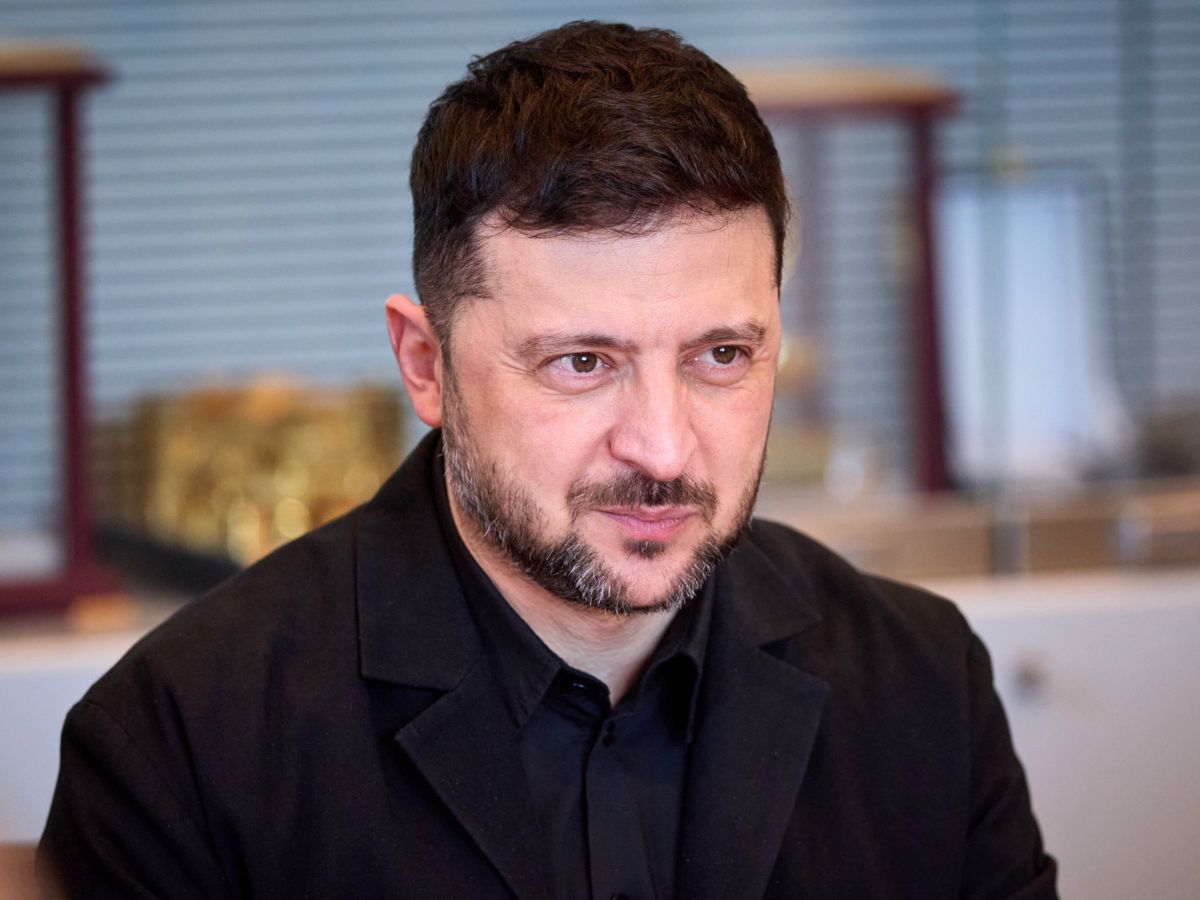

US President Donald Trump’s meeting with Ukrainian President Volodymyr Zelenskiy has raised cautious hopes of a possible end to the Ukraine war, with Trump saying the two leaders were “maybe very close” to a deal.
However, major hurdles remain, especially over territorial concessions and security guarantees for Kyiv. At the heart of the dispute is land: Russia, which invaded Ukraine in February 2022, currently controls around 116,000 square kilometres about 19.2% of Ukrainian territory roughly 1.2% more than it held three years ago, according to pro-Ukrainian maps.
Moscow’s forces have also advanced in 2025 at their fastest pace since 2022, underscoring why territorial control remains one of the most contentious and difficult issues in any potential peace agreement.
Russia says Crimea, which Moscow annexed in 2014, the regions of Donetsk and Luhansk – together known as Donbas – plus Zaporizhzhia and Kherson are now legally part of Russia. Most of the international community says they were annexed illegally.
But Russia has not achieved its main aim of taking the whole of Donbas and on Monday it repeated demands that Ukraine withdraw from the area of Donetsk it still holds – about 5,000 square km – if it wants peace.
The Kremlin added that if Kyiv did not strike a deal it would lose more territory.
Kyiv rejects the idea of ceding territory it has been defending for nearly four years, saying it wants the fighting to be halted along current front lines.
Both Trump and Zelenskiy said on Sunday the future of Donbas had not been settled, although the U.S. president said discussions were “moving in the right direction.”
Under its initial 28-point peace plan, the United States, seeking compromise, proposed a free economic zone if Ukraine left the area, although it remains unclear how any such zone would function in practice.
Russia also does not control all of Zaporizhzhia and Kherson regions, while it has taken small parts of Kharkiv, Sumy, Mykolaiv and Dnipropetrovsk regions.
Russia’s Kommersant newspaper reported that Putin said he might be open to swapping some territory controlled by Russian forces elsewhere in Ukraine in exchange for all of Donbas.
HOW WOULD SECURITY GUARANTEES WORK?
Ukraine, wary of failed assurances from allies in the past, says it needs robust security guarantees to prevent another Russian attack.
Zelenskiy said on Monday a draft peace framework to end Russia’s war envisages U.S. security guarantees for Ukraine for 15 years. He added he had asked Trump to provide guarantees of up to 50 years.
Trump wants Europe to take on the lion’s share of providing any guarantees, albeit with U.S. backing, although what form they take remains unclear. Russia, for example, has stated that any foreign troop deployment in Ukraine would be unacceptable.
Russia has also demanded caps on the size of Ukraine’s army and protection for Russian speakers and Orthodox believers in Ukraine, and says Ukraine should be neutral.
Kyiv says Russian speakers are protected and that Ukraine adheres to EU legislation. Under a Ukrainian 20-point peace proposal, Ukraine would maintain its armed forces at their present strength of 800,000 personnel.
WHAT ABOUT NATO?
One of Putin’s central demands for ending the war is that Western leaders pledge in writing to stop enlarging the U.S.-led military alliance NATO eastwards.
The initial U.S. peace proposals included a clause that NATO would not expand further, that Ukraine would enshrine in its constitution that it will not join NATO and that NATO would include in its statutes a provision that Ukraine will not be admitted in the future.
Ukraine would get short-term preferential access to the European market while its bid to join the European Union was being considered.
Under Ukraine’s framework peace proposal, the United States, NATO and European countries would provide Ukraine with security guarantees that mirror Article 5, the mutual-defence clause of NATO’s founding treaty.
WHAT ABOUT MONEY AND RUSSIAN FROZEN ASSETS?
The initial U.S. proposals state that Russia, under Western sanctions over the war, would be reintegrated into the global economy and invited to be part of the G8.
The United States said in its initial proposals that it will strike a long-term agreement with Russia to develop “energy, natural resources, infrastructure, artificial intelligence, data centres, rare-earth metal extraction projects in the Arctic, and other mutually beneficial corporate opportunities.”
European Union leaders decided in December to borrow cash to loan 90 billion euros ($105 billion) to Ukraine to fund its defence against Russia for the next two years.
They decided not to use frozen Russian assets, sidestepping divisions over an unprecedented plan to finance Kyiv with Russian sovereign cash.
NUCLEAR ISSUES, ELECTIONS AND BUSINESS
Peace moves could possibly entail Russia and the United States agreeing to resume talks on strategic nuclear arms control.
The future of the Zaporizhzhia nuclear power station, which is in Ukrainian territory controlled by Russia, is unclear.
There has been media speculation that Russia might offer U.S. companies stakes in its vast natural resources sector.
Washington has floated the idea of holding elections in Ukraine. Putin says the Kyiv leadership lost legitimacy after refusing to hold elections when Zelenskiy’s elected term expired. Kyiv says it cannot hold elections while under martial law and defending its territory against Russia.
(With Reuters Inputs)
Sofia Babu Chacko is a journalist with over five years of experience covering Indian politics, crime, human rights, gender issues, and stories about marginalized communities. She believes that every voice matters, and journalism has a vital role to play in amplifying those voices. Sofia is committed to creating impact and shedding light on stories that truly matter. Beyond her work in the newsroom, she is also a music enthusiast who enjoys singing.




