
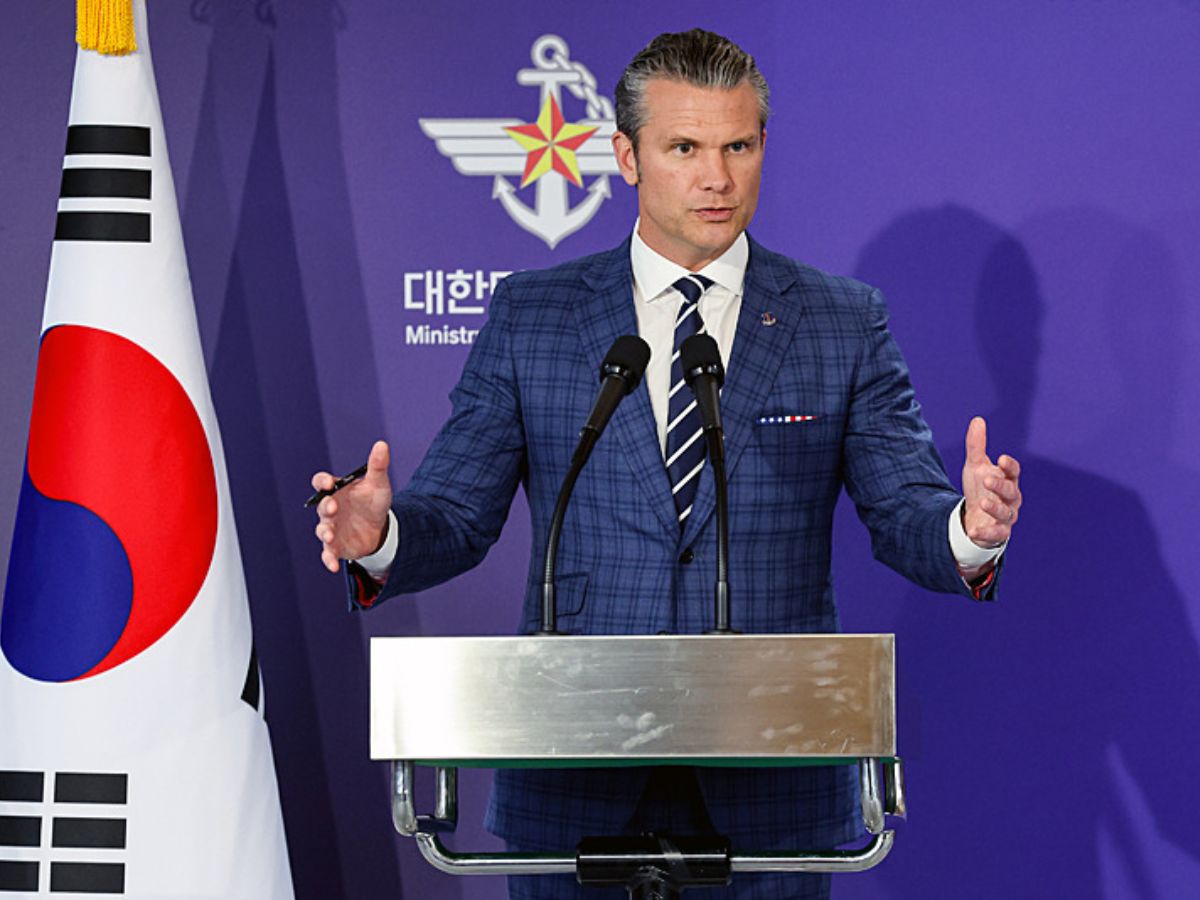

SEOUL, Nov 4, 2025 – The strong emphasis of maintaining a deterrent posture against North Korea remains, but U.S. Defense Secretary Hegseth insisted he was putting some degree of “flexibility” into the response of U.S. Forces to the defense of the U.S. continent – outside of responding to any potential issues that may arise in the region, in a press conference on Tuesday.
Hegseth made the comments, of course, with Koreas Defense Minister Ahn Gyu-back during his visit to South Korea, including a visit to the demilitarized zone along the North Korea – South Korea border.
U.S. Troops May Operate Beyond Korean Peninsula
In a press conference, Hegseth noted the 28,500 U.S. troops stationed in South Korea are primarily for the protection of the U.S. and its allies against nuclear-capable North Korea.
“But there’s no doubt that flexibility for regional contingency is something we would take a look at,” Hegseth referenced when indicating that U.S. forces may operate outside of the Korean Peninsula if so determined, as well as potential scenarios with China or other regional threats.
South Korea’s Growing Defense Role
Defense Minister Ahn joined Hegseth at the DMZ Monday to see military displays. Over the last 20 years, South Korea has bolstered its own defense capabilities and has approximately 450,000 active troops, as well as plans to be in command of combined wartime efforts with the Americans.
Even as U.S. talk of broader troop flexibility gains traction, South Korea has consistently refused to change the role of the American forces in South Korea.
Ship Maintenance and Regional Readiness
Hegseth stated that the two agreed on South Korea maintaining and repairing U.S. ships. This is a significant step that will allow the ships to remain in the region, prepared for rapid redeployment if necessary.
Expansion of Nuclear-Powered Submarines and Defense Spending
The U.S. has expressed support for South Korea’s nuclear-powered submarine initiative, Hegseth remarked: “President Trump wants our allies to have the best capabilities. Korea has been a model ally, and he is open to discussions regarding opportunities to make sure they have the best capabilities, both for their own defenses and in conjunction with us.”
South Korea has indicated it could have a nuclear-powered submarine by the mid 2030s with fuel from the U.S., though the defense secretary did not comment about Trump’s approvals.
No Plans for Nuclear Weapons from South Korea
Hegseth asked if he is worried about South Korea potentially developing its own nuclear weapons.
In response, Ahn reiterated that South Korea is a nation that has signed the Nuclear Non-Proliferation Treaty.
“So there will be no weapons in the Korean Peninsula .” He restarted.
Allies Talk About Ongoing Summary Communique
Hegseth stated that the U.S. and South Korea are still working on a joint communique about things like defense spending and other military matters including early discussions to encourage South Korea to begin spending more on defensive capability.
INPUTS FROM REUTERS.
Vani Verma is a content writer with over 2 years of experience in lifestyle, entertainment, health and digital media. She has a knack for creating engaging and research-driven content that resonates with readers, blending creativity with clarity. Passionate about media trends, culture, and storytelling, she strives to craft content that informs, inspires, and connects.




