
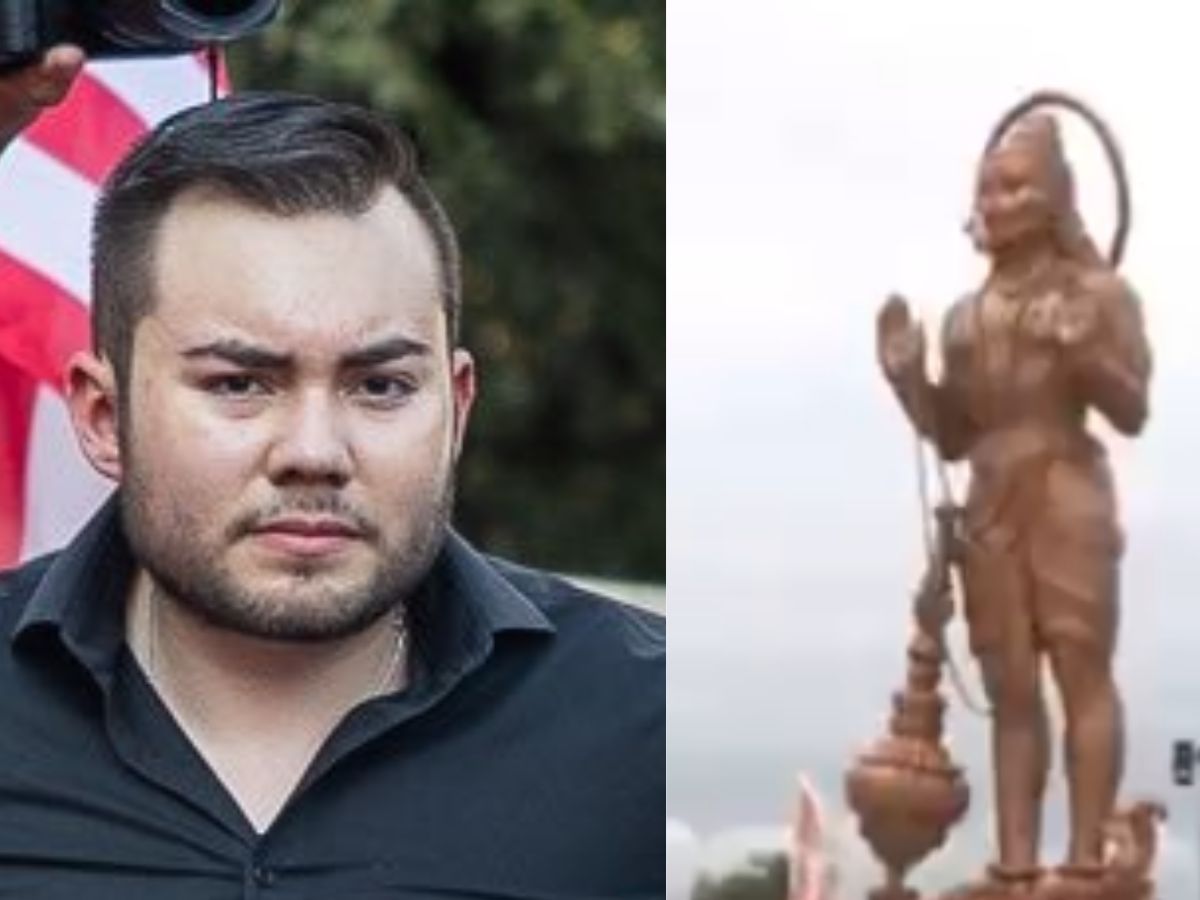

In Texas, a controversy arose when conservative activist Carlos Turcios filmed a video of a 90 foot statue of the Hindu deity Lord Hanuman in the Shri Ashtalakshmi Temple in Sugar Land and condemned it as the manifestation of a cultural invasion.
Check The Post Of Carlos Turcios On Lord Hanuman
Turcios posted to his social media that the statue, which is the tallest monument to Hanuman in North America, was making the area look more like Islamabad or New Delhi than Texas, and that the Third World Aliens were gradually subjugating Texas and America, and that people should prevent the invasion. His comments played into a bigger anti immigrant rhetoric and immediately received criticism on the internet, as most of them deemed him xenophobic and lacking an understanding of the true meaning of religious freedom in the United States.
🚨SUGAR LAND, TEXAS🚨This is not Islamabad, Pakistan, or New Delhi, India. This is Sugar Land, Texas. Third World Aliens are slowly taking over Texas and America. Why is the third-largest statue in the US this??!
Stop the INVASION!
Follow:@Carlos__Turcios pic.twitter.com/hzNIunlyQ4
— Carlos Turcios (@Carlos__Turcios) February 16, 2026
The proponents of the statue, both in the local Indian American society and in the social media circles, highlighted the fact that the Panchaloha Abhaya Hanuman statue was constructed on a personal estate by Hindu followers and was financed by the community entirely. They noted that the temple and the statue portray the religious and cultural identity of Hindu Americans, who have constitutional rights of freedom of religion and expression.
Questioning The Multicultural Nature of the Nation
Opponents of Turcios also pointed to huge religious monuments, ranging between crosses and statues, that permeate the landscape of the US and that his remarks failed to acknowledge the multicultural nature of the nation, and were an unwarranted and unfair attack on a non violent religious icon. The event has led to a wider discourse on immigration, religion, and cultural diversity in the US, and many observers remarked that the rhetoric of Turcios is a reflection of the current discussions of demographic change and national identity. The statue of Hanuman is not threatening to them but an illustration of the changing cultural mosaic of America.




