
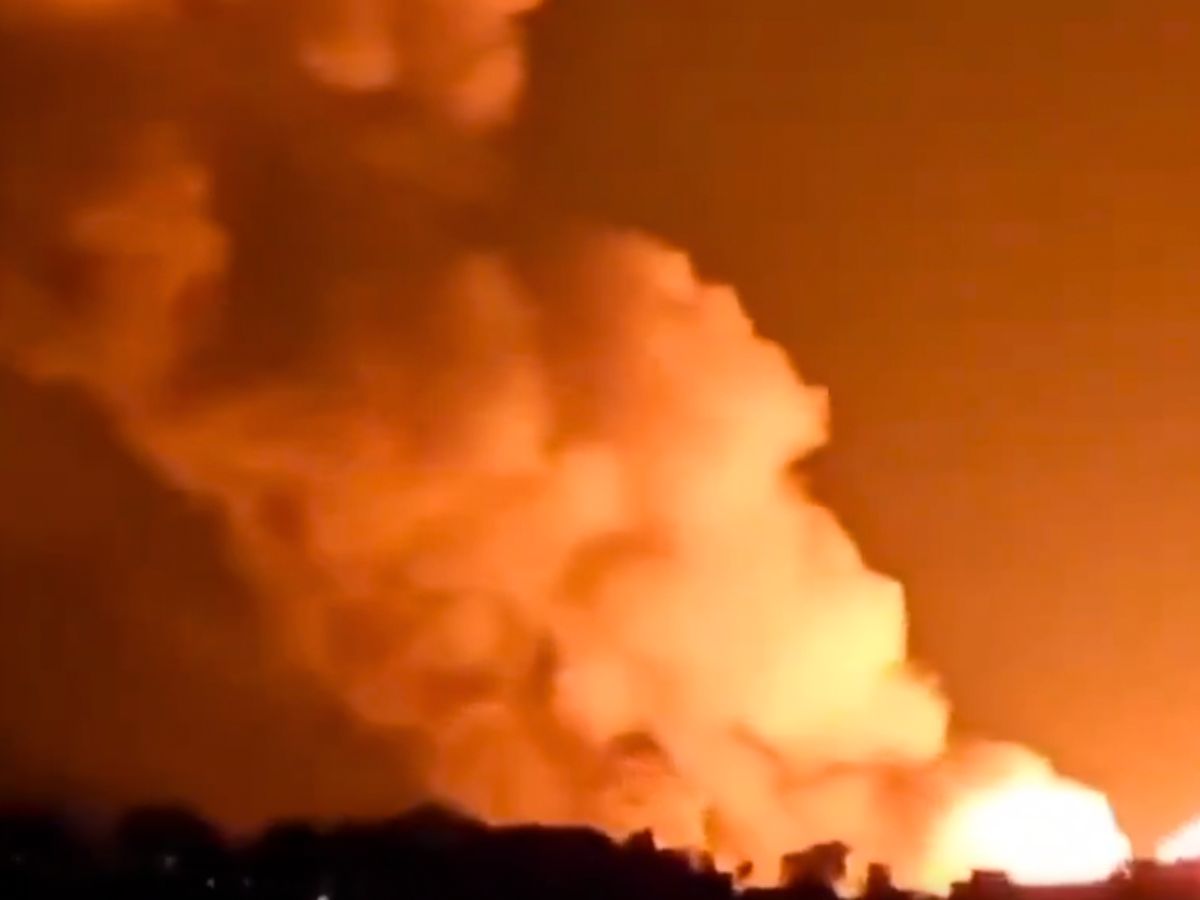

The Afghan government on Friday issued a stern warning to Pakistan, saying Kabul will take “decisive action” if Islamabad continues its military operations. Afghan forces launched retaliatory attacks on Thursday night following Pakistani airstrikes that killed civilians in Afghanistan.
“We have targeted important military targets in Pakistan, and this sends a message that our hand can reach their necks,” said Zabihullah Mujahid, Afghan government spokesperson, in a press conference broadcast by TOLOnews.
Pakistani Planes Still Flying Over Afghanistan
Mujahid confirmed that Pakistani reconnaissance aircraft remain in Afghan airspace, hours after airstrikes hit key cities including Kabul and Kandahar.
“Still, right now, Pakistani planes, reconnaissance aircraft, are flying over Afghanistan’s airspace,” Mujahid said from Kandahar, adding that Afghanistan continues to seek a peaceful solution through dialogue.
“Our Good Relations with India Are Not Against Pakistan”
Addressing regional dynamics, Mujahid emphasized that Afghanistan maintains strong ties with India, but these relations are not directed against Pakistan.
“We have good relations with India, but these are never against Pakistan, and the Islamic Emirate is never in anyone’s power or hand,” he stated.
“We Will Respond to a Finger with a Fist”
Fasihuddin Fitrat, Chief of General Staff of the Afghan Armed Forces, warned that any violation of Afghan territory by Pakistan will be met with a stronger response.
“We will respond to a finger with a fist,” Fitrat said, underscoring Afghanistan’s capability to defend its territorial integrity. He added that Islamabad would not be safe in major cities if it attempts to destabilize Afghanistan.
Tensions Between Afghanistan and Pakistan
The current escalation marks one of the heaviest conflicts between Afghanistan and Pakistan in years. Islamabad accuses the Afghan Taliban of supporting militant groups like the Tehreek-e-Taliban Pakistan (TTP), a charge denied by the Afghan Taliban.
Analysts note that decades of Pakistan’s support for the Taliban created expectations of compliance, but the Taliban has resisted Islamabad’s influence. Jennifer Brick Murtazashvili, an Afghanistan expert from the University of Pittsburgh, called the misunderstanding “the seed of everything that followed.”
Strategic Implications and Regional Risks
The fighting signals instability across South Asia. Pakistan, with a large military and nuclear arsenal, faces the challenge of a battle-hardened Taliban supported by groups like the TTP and Baloch Liberation Army (BLA). Experts warn the conflict could fuel more violence and strengthen extremist groups exploiting the chaos.
“This is a recipe for instability, with more violence and tension likely,” said Abdul Basit from Singapore’s S. Rajaratnam School of International Studies.
Sofia Babu Chacko is a journalist with over five years of experience covering Indian politics, crime, human rights, gender issues, and stories about marginalized communities. She believes that every voice matters, and journalism has a vital role to play in amplifying those voices. Sofia is committed to creating impact and shedding light on stories that truly matter. Beyond her work in the newsroom, she is also a music enthusiast who enjoys singing.




