

China’s Industrial Ambitions Are Reshaping Global Technology
Over the past decade, China’s expansive industrial strategy has fundamentally altered the global technology and manufacturing landscape. A study by the US-China Economic and Security Review Commission, submitted to the US Congress, describes China’s approach as “interlocking innovation flywheels,” where progress in one high-tech sector accelerates advancements in multiple adjacent industries.
Massive State Support Fuels Innovation
Since 2015, Beijing has aggressively expanded industrial, science, and innovation policies, deploying substantial state funding, coordinated strategic planning, and nationwide execution. According to the report, this coordinated approach has allowed China to overcome earlier industrial policy failures, creating a dense “industrial commons” that combines talent, supply chains, scientific infrastructure, and manufacturing capabilities. This ecosystem enables Chinese companies to innovate faster and compete more aggressively in global markets.
Innovation Follows Manufacturing
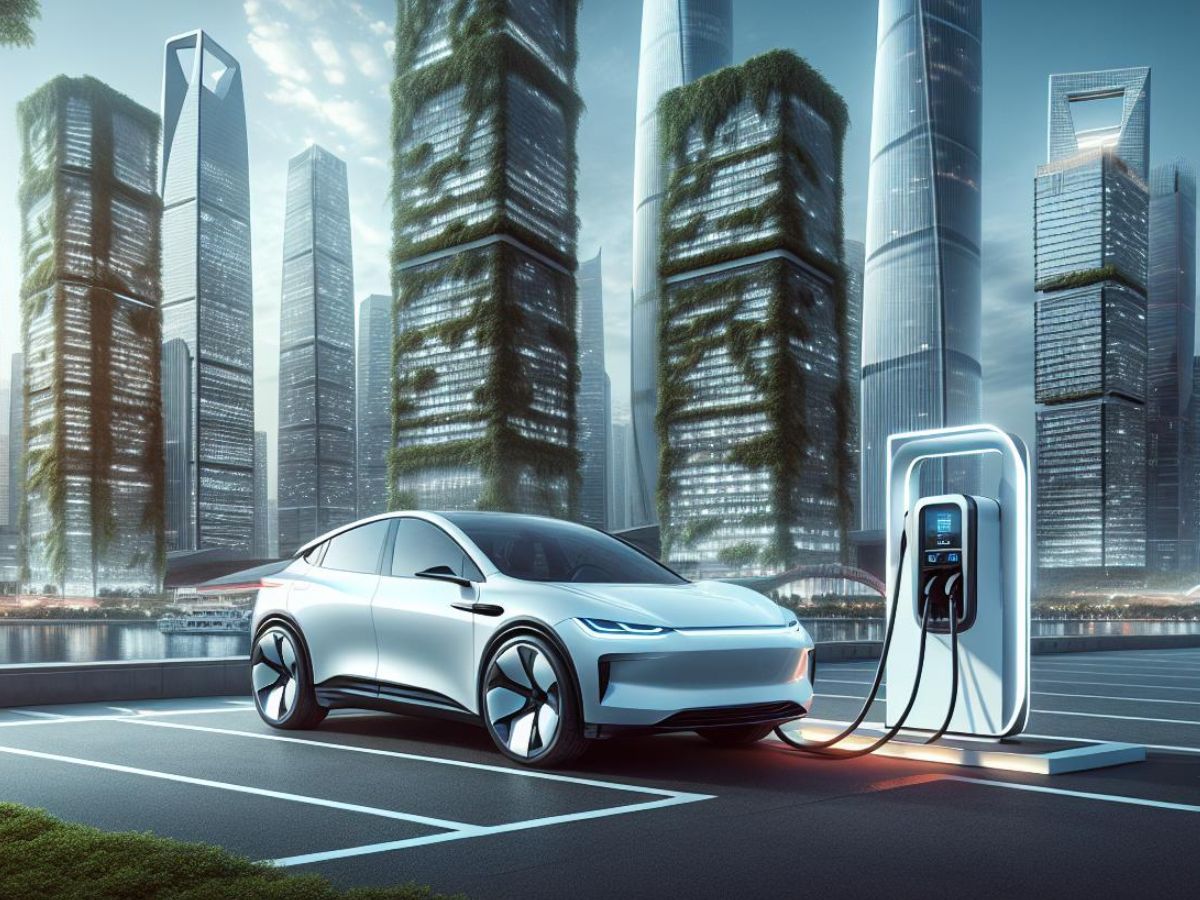
The report emphasizes the principle that “innovation follows manufacturing.” Advances in sectors like batteries, AI, and robotics now catalyze growth across connected industries. China’s electric vehicle (EV) sector exemplifies this trend: building on expertise in lithium batteries and large-scale automotive production, EVs have become a platform for innovations in LiDAR sensors, industrial automation, and autonomous driving technologies.
Tech Giants Move Into Robotics
Companies like BYD, XPeng, and Li Auto are leveraging their expertise to enter humanoid robotics, benefiting from shared knowledge in motors, sensors, AI, and thermal management, potentially producing robots at lower costs than traditional competitors.
Robot Density And Smart Factories
China’s robot density has surged from 19 units per 10,000 workers in 2015 to 470 in 2023, the third-highest globally. This shift has fueled efficiency gains and accelerated the country’s transition toward smart factories, many operating with minimal human oversight.
China’s Edge In Synthetic Biology
Beyond hardware, China is also advancing rapidly in synthetic biology, controlling around 70% of global fermentation capacity-a critical input for biotechnology scaling. Research clusters, like Shanghai’s Zhangjiang Hi-Tech Park, strengthen its dominance in this field, with implications for pharmaceuticals, food security, and national defense.
Overcoming Inefficiencies And Competition
While inefficiencies, duplicated investments, and occasional overcapacity persist in EVs, batteries, and solar panels, the report notes that the most competitive firms survive intense domestic competition and emerge as global leaders.
- Geopolitical and Economic Implications: Despite slowing growth and rising local debt, China is expected to continue prioritizing industrial policy, viewing technological dominance as central to national security, economic resilience, and geopolitical influence.
- A Warning to the World: The study concludes with a cautionary note: without a coordinated strategy, the U.S. and other nations risk losing ground in critical sectors such as robotics, quantum technology, biotechnology, and advanced manufacturing.
(With Inputs From ANI)
Also Read: Anil Ambani Under ED Radar: Rs 9,000 Crore Empire Frozen Across India!
Aishwarya is a journalism graduate with over three years of experience thriving in the buzzing corporate media world. She’s got a knack for decoding business news, tracking the twists and turns of the stock market, covering the masala of the entertainment world, and sometimes her stories come with just the right sprinkle of political commentary. She has worked with several organizations, interned at ZEE and gained professional skills at TV9 and News24, And now is learning and writing at NewsX, she’s no stranger to the newsroom hustle. Her storytelling style is fast-paced, creative, and perfectly tailored to connect with both the platform and its audience. Moto: Approaching every story from the reader’s point of view, backing up her insights with solid facts.
Always bold with her opinions, she also never misses the chance to weave in expert voices, keeping things balanced and insightful. In short, Aishwarya brings a fresh, sharp, and fact-driven voice to every story she touches.




