
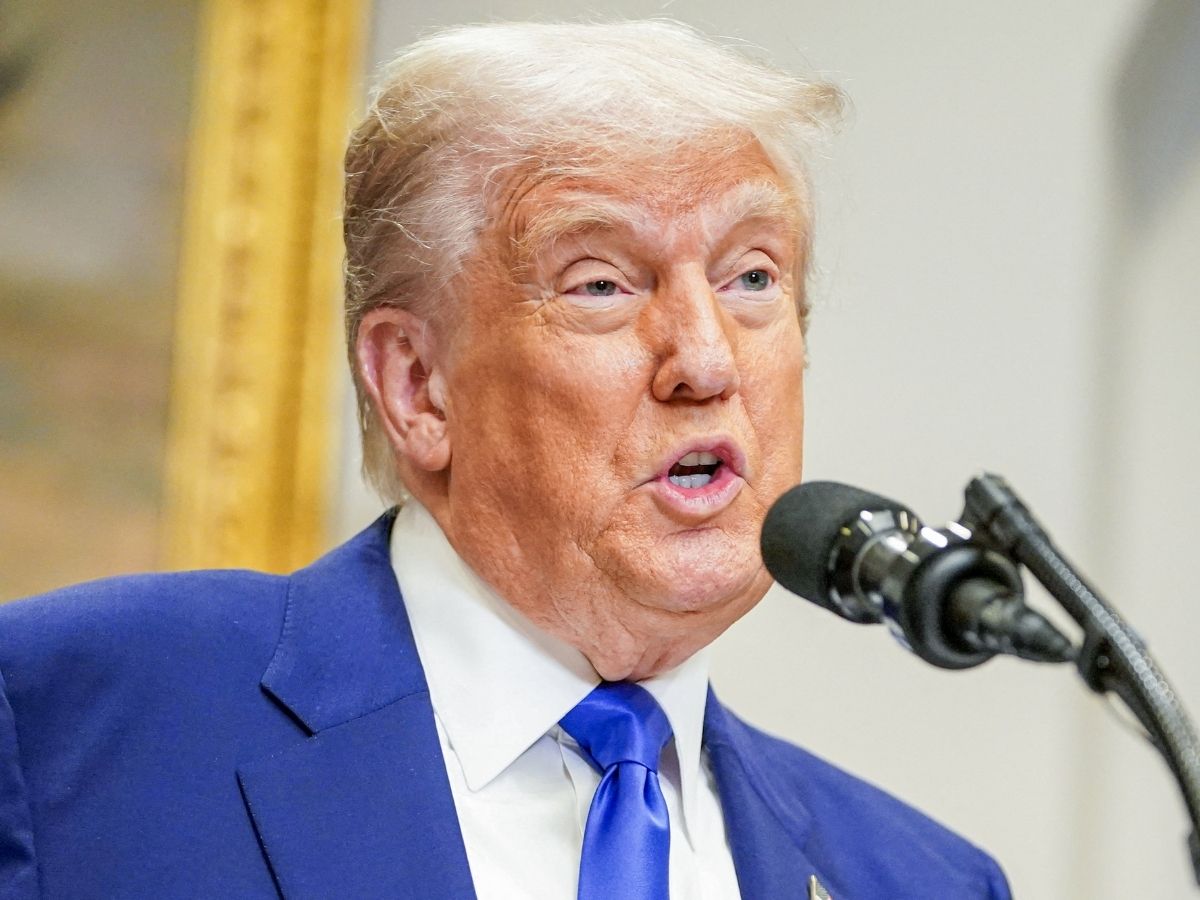

US President Donald Trump on Saturday rattled global markets and angered allies by threatening to impose a hefty 30% tariff on imports from Mexico and the European Union starting August 1. The announcement came after weeks of stalled trade talks failed to produce a comprehensive deal with two of America’s biggest trading partners.
Trump Steps Up Trade War With New Tariff Threats
In a move that marks a sharp escalation in the existing trade tensions between the US and its allies, Trump announced the tariffs in letters addressed to European Commission President Ursula von der Leyen and Mexican President Claudia Sheinbaum, which he posted on his social media platform Truth Social.
‘Unfair and Disruptive’: Mexico and EU Push Back on Fresh Round of US Tariffs
Both Mexico and the EU have condemned the tariffs as “unfair” and harmful to businesses and consumers on both sides of the Atlantic.
“I have always said that in these cases, what you have to do is keep a cool head to face any problem,” Mexican President Claudia Sheinbaum said, according to Reuters.
Stressing that her government was also clear on what it can work with the United States government on, she further said, “And there is something that is never negotiable: the sovereignty of our country.”
Meanwhile, Ursula von der Leyen warned the 30% tariffs “would disrupt essential transatlantic supply chains,” as she vowed that the European bloc would continue engaging in discussions to negotiate a deal and “take all necessary steps to safeguard EU interests, including the adoption of proportionate countermeasures if required,” as reported by Reuters.
ALSO READ: World News Live Updates
Why is the US Imposing These Tariffs Now?
Trump’s letters mention concerns about fentanyl, a deadly opioid reported to be primarily smuggled into the US from Mexico, as well as a desire to reduce American trade deficit.
“Mexico has been helping me secure the border, BUT, what Mexico has done, is not enough,” Trump wrote, adding, “Mexico still has not stopped the Cartels who are trying to turn all of North America into a Narco-Trafficking Playground.”
Interestingly, the tariff rate proposed for Mexico (30%) is lower than Canada’s (35%), although both countries were targetted partly due to the fentanyl issue, even as government data cited by the news agency showed that relatively higher amounts of fentanyl were smuggled across the southern border than the northern one.
Inside the Trump’s Trade War and Its Global Economic Impact
Trump’s fresh tariffs threats are part of his trade stance that the US president adopted earlier this year. He has sent similar letters to 23 other trading partners, imposing tariff rates ranging from 20% to 50% on various products, including a 50% tariff on copper.
He also stressed that these 30% tariffs are “separate from all sectoral tariffs,” effectively meaning steel, aluminum, and auto tariffs at 50% and 25%, respectively, will remain in place.
While the August 1 deadline gives countries some time to negotiate, some experts have pointed out what they call Trump’s history of backing off last-minute tariff threats, even as his tough approach appears to be putting pressure on key allies, for now.
ALSO READ: Trump Announces 30% Tariffs on EU and Mexico Starting August 1
Tensions Rise, Alliances Strained
The EU, Mexico, Canada, Japan and others have also expressed displeasure, with Bernd Lange, head of the European Parliament’s trade committee, recently calling the tariff threat “a slap in the face for the negotiations.”
Jacob Funk Kirkegaard, senior fellow at the Brussels think tank Bruegel, told Reuters that the latest move could trigger retaliatory tariffs similar to the US-China trade dispute that shook markets.
In Japan, Prime Minister Shigeru Ishiba reportedly said the dispute shows the need to “lessen dependence on the US”.
Meanwhile, reports suggest Canada and Europe are reconsidering their security reliance on Washington, with some exploring weapons systems from other countries.
The US Treasury recently claimed that tariffs have generated over $100 billion in customs revenue this fiscal year, showing the financial impact of these trade measures.
As the August 1 deadline approaches, what remains to be seen is whether these new tariffs would give impetus to a wider trade conflict with potentially lasting economic consequences.
ALSO READ: US To Ramp Up Tariffs On EU Goods To 30% Starting August 1: EU Ready To Respond Amid Trade Tensions




