
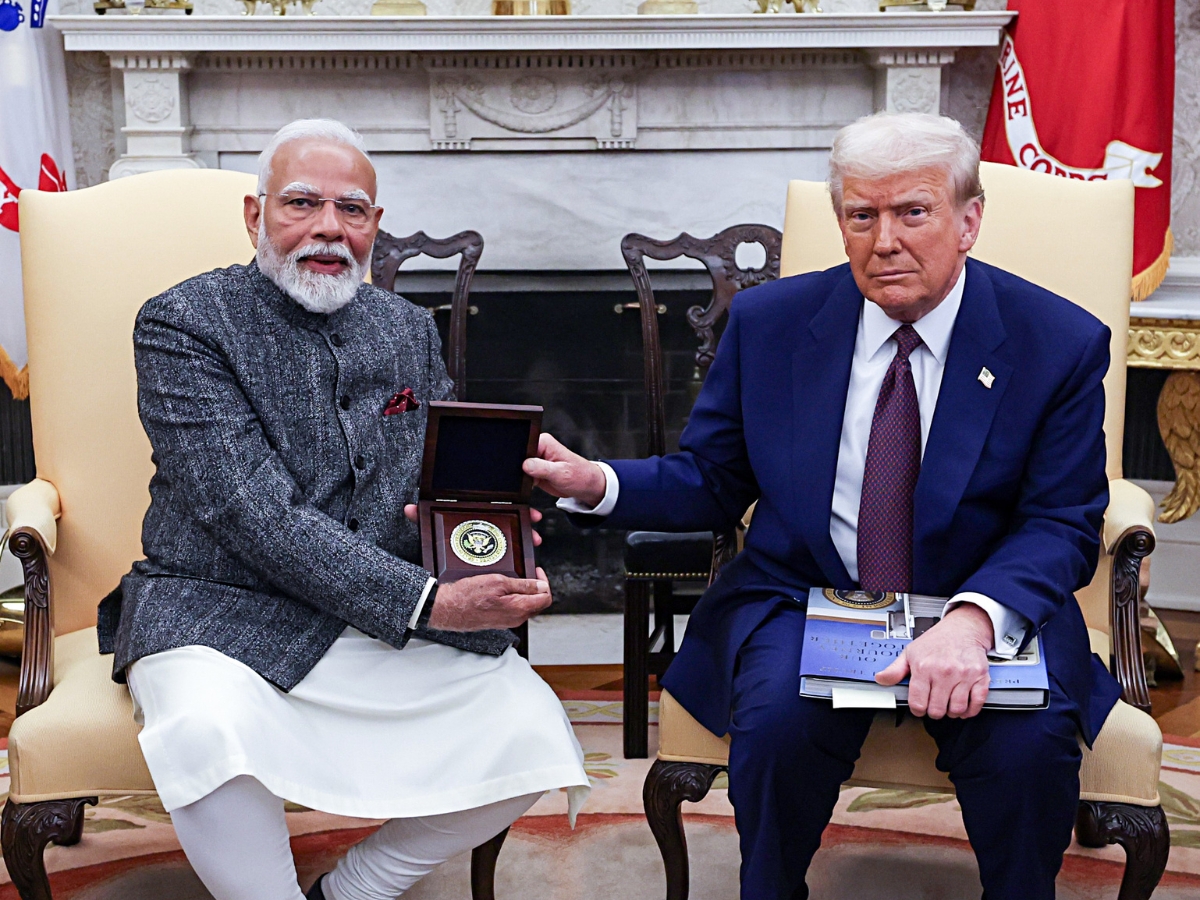

India and the United States have finalized a significant trade agreement that offers immediate relief to Indian exporters. Under the deal, Washington will lower reciprocal tariffs on Indian goods from 25% to 18%, effective immediately.
US President Donald Trump confirmed the development, stating, “we agreed to a Trade Deal between the United States and India, whereby the United States will charge a reduced Reciprocal Tariff, lowering it from 25% to 18%. They will likewise move forward to reduce their Tariffs and non-tariff barriers against the United States to ZERO.” The statement signals swift implementation and mutual market access for both nations.
How India-US Trade Deal Will Bring Relief for Indian Exporters
The announcement comes after a period when tariffs as high as 50% had eroded the competitiveness of Indian goods in the US, creating margin pressures and uncertainty for export-linked sectors. With tariffs now reduced, companies heavily dependent on US markets are expected to benefit from improved order visibility, stronger margins, and enhanced pricing competitiveness.
Also Read: Markets On Fire: Did The India-US Trade Deal Just Trigger An 800-Point GIFT Nifty Explosion?
According to experts, the reduction in reciprocal tariffs is likely to shift investor focus toward export-oriented sectors where earnings had been under pressure due to higher duties.
Which Exports Will Gain After India-US Trade Deal?
Textiles and Apparel
India’s textile and apparel sector is poised to be one of the biggest beneficiaries. The US accounts for nearly 28% of India’s total textile exports, making it the single largest destination. Furthermore, over half of India’s textile and apparel imports rely on US cotton.
After facing prolonged tariff-related cost pressures, the sector is expected to gain through better margins, enhanced competitiveness, and stronger export demand.
Seafood
The seafood industry, particularly shrimp and frozen food exporters, also stands to benefit. Reduced tariffs are likely to improve earnings visibility and drive demand recovery.
Automobiles and Auto Ancillaries
Indian auto component manufacturers supplying the US market may see sustained order inflows from global OEMs. Lower tariffs can protect margins and reinforce India’s position as a cost-efficient manufacturing hub.
Chemicals
Specialty and agrochemical companies with the US as a key market are expected to benefit from improved export competitiveness.
Consumer Goods
Select consumer exporters, particularly in packaged foods and rice products, could also see incremental gains. Better access to the US market and reduced pricing pressure may boost demand and export growth.
Gems and Jewellery
India’s gems and jewellery sector, heavily reliant on the US as a consumer market, is also set to gain.
Zubair Amin is a Senior Journalist at NewsX with over seven years of experience in reporting and editorial work. He has written for leading national and international publications, including Foreign Policy Magazine, Al Jazeera, The Economic Times, The Indian Express, The Wire, Article 14, Mongabay, News9, among others. His primary focus is on international affairs, with a strong interest in US politics and policy. He also writes on West Asia, Indian polity, and constitutional issues. Zubair tweets at zubaiyr.amin




