
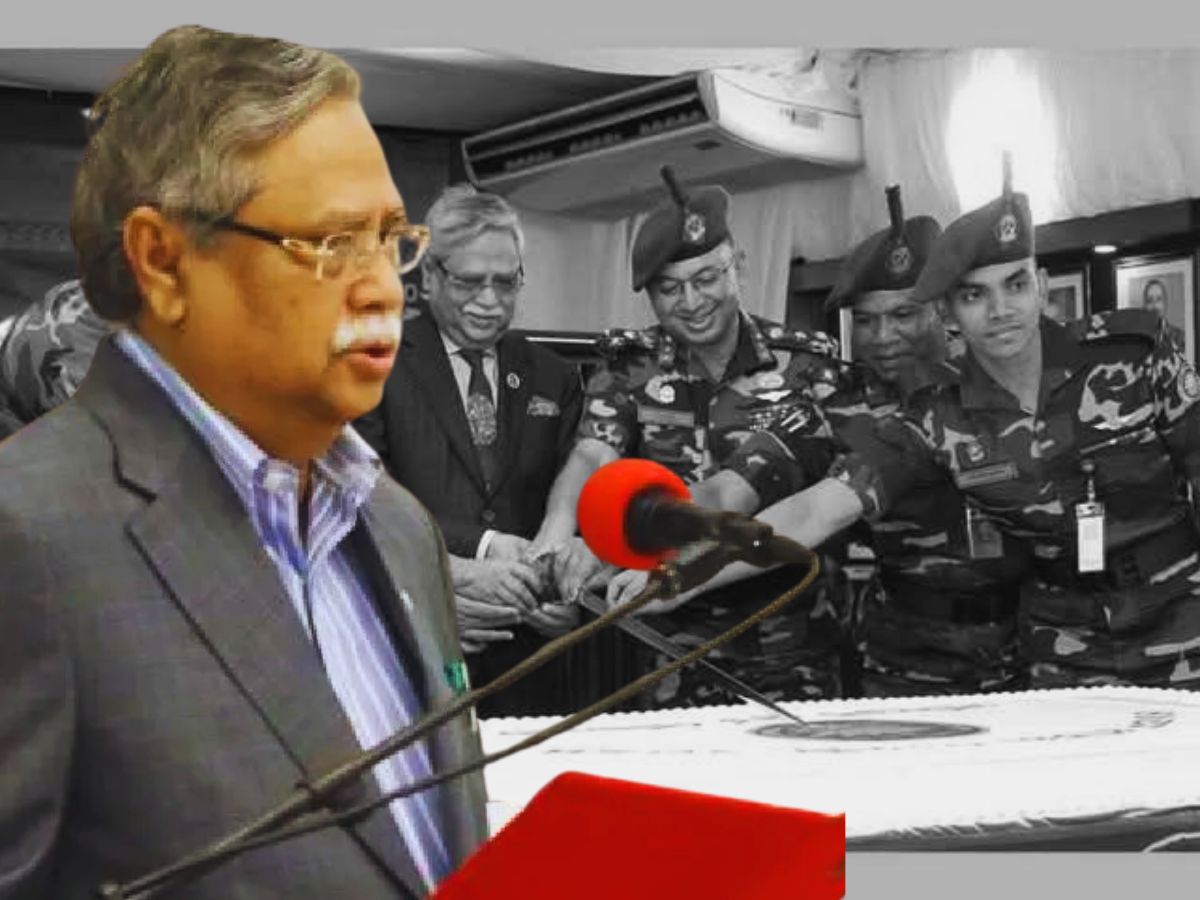

Bangladesh is mired by one of its most volatile political phases in recent memory. Months after the dramatic fall of Sheikh Hasina’s 15-year rule and the rise of a Nobel laureate-led interim administration, the country now faces another huge constitutional disruption. President Mohammed Shahabuddin, elected unopposed in 2023, has declared himself that he wants to resign midway through his term. His revelation in an exclusive interview with Reuters increases the political uncertainty surrounding the 2026 parliamentary elections.
Shahabuddin says he is being humiliated and politically sidelined
The 75-year-old President Mohammed Shahabuddin has spoken about feeling a deep sense of humiliation under the interim government headed by Muhammad Yunus. The presidency in Bangladesh is largely symbolic, but in 2024 Shahabuddin’s office took on unusual prominence when a massive student-led upsurge compelled then Prime Minister Sheikh Hasina to flee into exile in India. Shahabuddin was the sole constitutional functionary remaining after the dissolution of the parliament, and temporary symbolic power vested in him.
However, according to the president, the interim government has systematically marginalised him. He told Reuters that Yunus had not met him for nearly seven months, depriving him of even basic communication with the current governing authority. Shahabuddin also said his press department was removed without explanation, and in a startling move, official portraits of the president were taken down from Bangladeshi embassies, consulates and high commissions worldwide. He described this as a deliberate attempt to diminish the presidency and send the public a message that he was being pushed aside.
In his words, “A wrong message goes to the people that perhaps the president is going to be eliminated. I felt very much humiliated.” Shahabuddin said he wrote to Yunus seeking clarification about the removal of portraits but received no response. Instead, he said his “voice has been stifled,” signaling a breakdown of trust between the ceremonial head of state and the interim executive authority.
Why Shahabuddin Wants to Quit- And Why He’s Staying (For Now)
Shahabuddin said he no longer wants to continue in office because he feels humiliated and isolated. However, he said he would stay in office until the next election as required by the constitution. “I am keen to leave. I am interested to go out,” he said, but added that he must stay until the polls because the presidency cannot be left vacant. His decision reflects both personal frustration and constitutional obligation, underlining how fragile Bangladesh’s political framework has become in this transitional period.
Although student groups had initially demanded Shahabuddin’s resignation during the 2024 unrest, he said that no political party approached him to resign in the recent months. His closeness to the Awami League that nominated him for president has become politically sensitive since Hasina’s fall; yet, he claimed that he acted independently ever since taking the oath of office.
Yunus-Led Interim Government and Its Strained Relationship with the Presidency
The interim government led by Muhammad Yunus came into power under very extraordinary circumstances. The government of Sheikh Hasina fell in August 2024 after mass protests by students, accusing her of ruling autocratically, corruptly, and giving orders to shoot lethal force on protesters. Parliament was dissolved, and the constitution did not have any provisions concerning an interim government, so Yunus took an oath as Chief Adviser, entrusted with the responsibility to stabilize the country and take it towards a new constitutional setup and polls.
Shahabuddin’s statement of being sidelined suggests a growing rift between the head of state and a reformist interim leadership. Analysts feel Yunus may be trying to consolidate authority in order to fast-track sweeping reforms, including constitutional restructuring, before the elections. Withdrawal of portraits of the president and a communication cutoff from the president’s house has been seen as part of the larger game of keeping the interim government farther away from the legacy of Awami League.
Hasina’s death sentence has deepened the crisis
Bangladesh’s political turmoil turned even deadlier when the International Crimes Tribunal sentenced Sheikh Hasina and her former Home Minister Asaduzzaman Khan to death for “crimes against humanity” during the 2024 crackdown on student protesters. It was ruled that lethal force was authorized by Hasina’s government, leading to the deaths of at least 12 protesters, including one allegedly burned alive.
The judgement simply ignited widespread violence across Bangladesh. Schools were torched, vehicles in several districts were burnt down, and Dhaka’s Dhanmondi 32 the historic residence of Hasina’s father Sheikh Mujibur Rahman became the site of violent confrontations: Reports described student protesters attempting a symbolic demolition of the house with bulldozers, prompting heavy deployment of security forces. In another disturbing incident, a masked man torched a branch of Grameen Bank shouting “Joy Bangla.”
The ruling Awami League denounced the tribunal’s verdict as politically motivated and called for a national strike. From India, Hasina rejected the charges, saying the violence during the protests was not premeditated and her government had tried to minimize casualties.
The interim government and the opposition BNP hailed the verdict. Yunus declared it “justice for the thousands harmed in the uprising,” and leaders from the opposition BNP hailed it as the end of dictatorship in Bangladesh.
Regaining regional tensions and internal security concerns add to the overall chaos
The political vacuum has run parallel to the rising instability along Bangladesh’s border with Myanmar. The conflict inside Myanmar has spilled into the Chattogram Hill Tracts and Cox’s Bazar, where armed groups now increasingly target refugee camps in a bid to recruit members. The rise of cross-border violence, drug trafficking, and militant activities puts severe pressure on Bangladesh’s security forces.
President Shahabuddin said he remains in regular communication with Army Chief General Waker-uz-Zaman, who has assured him that the military has no intention to seize power. Bangladesh has a long history of military interventions, which makes these assurances critical at a time when the state appears fractured on several fronts.
What’s Ahead for Bangladesh?
Bangladesh is on the eve of an unprecedentedly volatile election. A president ready to resign, a Nobel laureate seeking to revive national institutions from zero, a former prime minister facing the death penalty, and an increasingly powerful opposition it’s an unusual mix of players at this moment in time. A new constitution to be written by a caretaker government and a path to tranquillity that is still not certain.
In this environment, Bangladesh must now deal with three entities at once: an uncertain election in February 2026; the fragility of institutions; the mistrust of politicians; and disturbances in neighbouring countries and the question, can President Mohammed Shahabuddin continue to be a constitutional anchor, or will he be just another victim of Bangladesh’s continuing turmoil?
Sofia Babu Chacko is a journalist with over five years of experience covering Indian politics, crime, human rights, gender issues, and stories about marginalized communities. She believes that every voice matters, and journalism has a vital role to play in amplifying those voices. Sofia is committed to creating impact and shedding light on stories that truly matter. Beyond her work in the newsroom, she is also a music enthusiast who enjoys singing.




