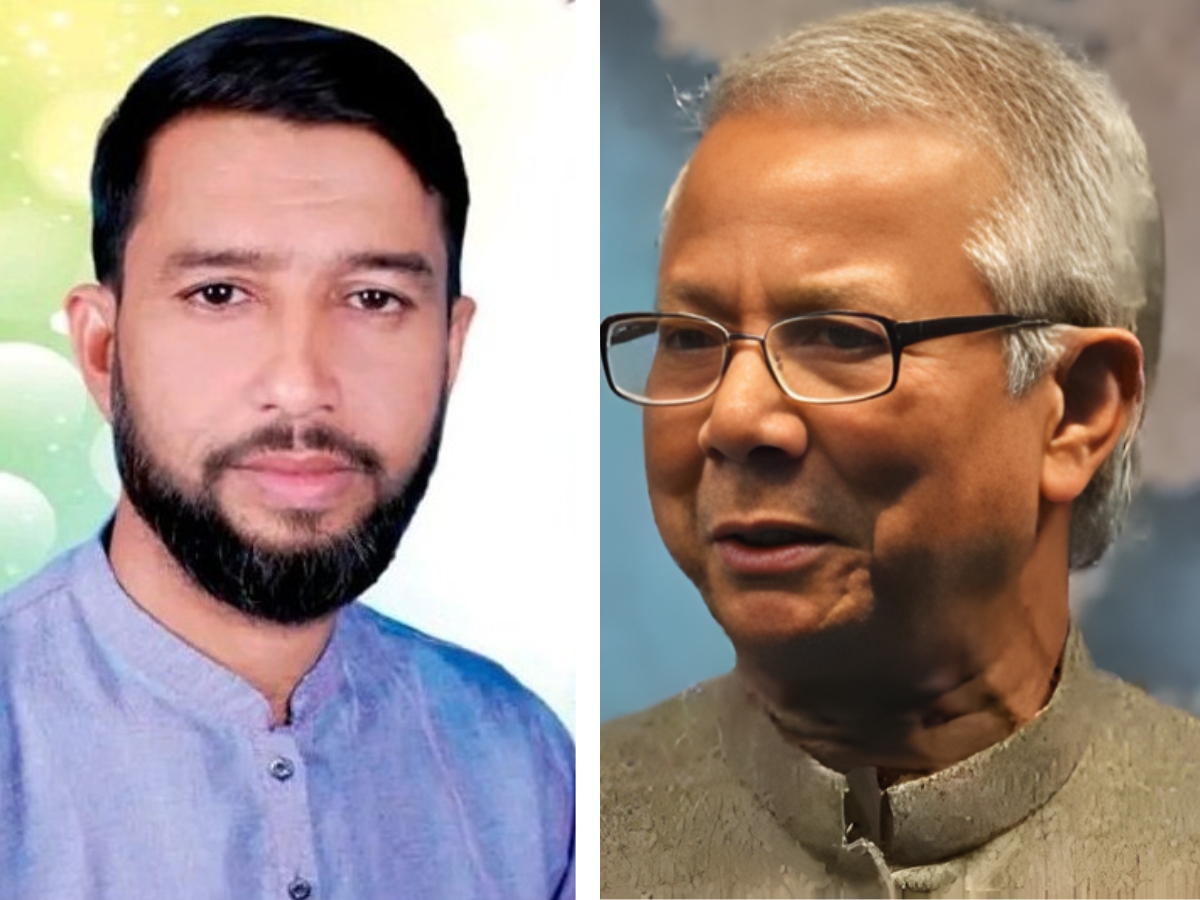

Bangladesh Violence: Days after the death of student leader Osman Hadi, another young political leader was shot in Bangladesh on Monday. The leader, identified as Motaleb Shikder, was attacked in Khulna, where assailants reportedly targeted his head, according to The Daily Star. Shikder is a senior leader of the National Citizen Party (NCP), serving as its Khulna divisional chief and central organiser of NCP Sramik Shakti.
These two back-to-back attacks have deepened concerns over the country’s deteriorating security situation.
Motaleb Shikder In Critical Condition
According to police, the shooting took place around 11:45 am. Shikder was immediately rushed to Khulna Medical College Hospital, where he was admitted in critical condition.
“Miscreants opened fire targeting his head around 11:45 AM, and he was rushed to Khulna Medical College Hospital in critical condition,” The Daily Star quoted Animesh Mondol, officer-in-charge (investigation) of Sonadanga Model Police Station, as saying.
Mondol later confirmed that Shikder was out of danger. He said the bullet entered through one side of Shikder’s ear, pierced the skin, and exited through the other side.
Also Read: When Will Sheikh Hasina Return To Bangladesh? Former PM Says, ‘Will Go Back When…’
Osman Hadi’s Death
The shooting comes just days after Osman Hadi, a prominent Bangladeshi leader from the 2024 student uprising, died after succumbing to bullet injuries.
Hadi had been attacked on December 12 in Dhaka and was later airlifted to Singapore General Hospital (SGH) on December 15 for emergency treatment. He was admitted to the Neurosurgical Intensive Care Unit.
“Despite the best efforts of the doctors from SGH and the National Neuroscience Institute, Mr Hadi succumbed to his injuries on 18 December 2025,” the Singapore Ministry of Foreign Affairs said in an official statement.
Is Muhammad Yunus Sabotaging February Elections?
According to observers, vested interests are deliberately worsening Bangladesh’s security situation to delay elections by promoting a narrative that polls cannot be held safely. Such a delay, analysts say, would provide radical elements more time to consolidate their influence in the country.
The latest wave of violence erupted a week after the Bangladesh Election Commission announced elections and a national referendum on the ‘July Charter’ scheduled for February 12.
Observers say the violence appears to be deliberately encouraged at a time when the Yunus-led regime’s ability to manage law and order and conduct credible elections is already severely compromised.
Muhammad Yunus Delaying Elections With An Aim At Islamist Consolidation
For more than a year, Muhammad Yunus has presided over cyclical attacks by Islamist groups on political opponents and religious minorities, including Hindus, across Bangladesh. Instead of taking strict action, the regime has continued to release Islamist hardliners and reintegrate groups such as Jamaat-e-Islami, which were once considered fringe forces.
According to observers, the broader objective of these developments is to strengthen Islamist influence in Bangladesh. Several factors are cited in this context – the Yunus regime has banned the Awami League, the country’s largest political party; it has taken steps that bolster Jamaat-e-Islami and other hardline Islamist groups; and both Islamists and the Yunus administration have indirectly weakened the Bangladesh Nationalist Party (BNP), a long-time Awami League rival that has traditionally been friendly toward Pakistan.
If elections are delayed, these Islamist forces would gain additional time to consolidate power, further marginalising mainstream political parties such as the BNP and narrowing the possibility of the Awami League’s return to electoral politics.
Is There A Foreign Hand Behind The Bangladesh Violence?
Following Hadi’s death, allegations of a foreign hand have intensified. Former Prime Minister Sheikh Hasina, who is currently living in exile in India, has been blamed for the attack on Hadi. Claims, which remain unfounded, have also emerged that the attackers fled to India and are being sheltered by her.
In the aftermath of the attack, large demonstrations were held outside the Indian Embassy and the Indian Consulate in Chittagong. Protesters reportedly threatened to breach the security wall and enter the diplomatic premises.
The protesters were largely affiliated with Jamaat-e-Islami and other Islamist groups. They demanded that India immediately hand over Sheikh Hasina and Hadi’s alleged assassin to Bangladeshi authorities.
Zubair Amin is a Senior Journalist at NewsX with over seven years of experience in reporting and editorial work. He has written for leading national and international publications, including Foreign Policy Magazine, Al Jazeera, The Economic Times, The Indian Express, The Wire, Article 14, Mongabay, News9, among others. His primary focus is on international affairs, with a strong interest in US politics and policy. He also writes on West Asia, Indian polity, and constitutional issues. Zubair tweets at zubaiyr.amin