
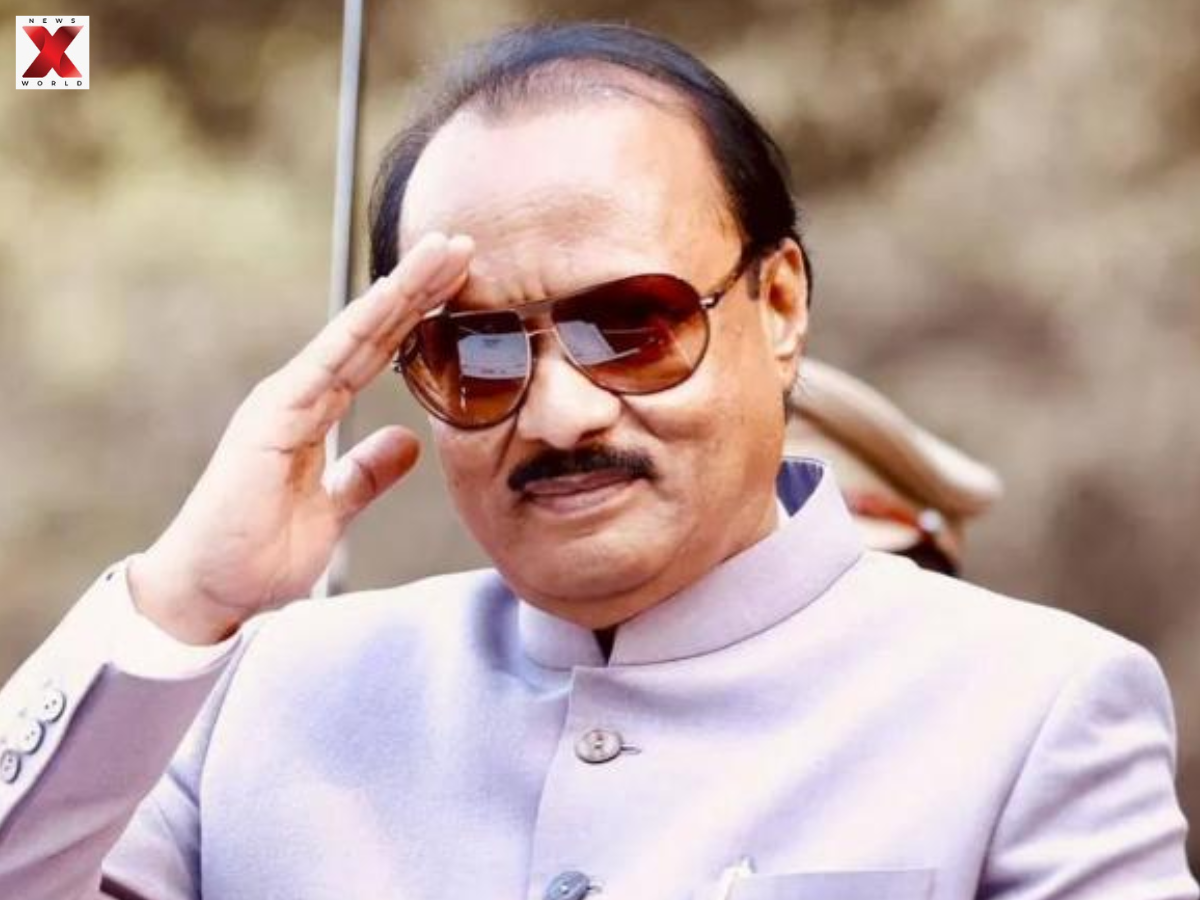

The plane carrying NCP leader and Maharashtra Deputy Chief Minister Ajit Pawar crashed on the morning of January 28, right as it tried to land at Baramati airfield. All five people on board died, the Directorate General of Civil Aviation said.
There’s a strange twist here. The very place that launched Ajit Pawar’s political journey, Baramati, ended up witnessing his final moments.
For decades, the Pawar family turned Baramati into their stronghold. Ajit started shaping the region back in 1991, when he first got elected to the Lok Sabha from Baramati. Back then, he ran on a Congress ticket. Later, when the NCP formed in 1999, he made the switch.
Ajit Pawar: Political Career
Ajit’s political story kicked off in 1991, but he didn’t hold onto that Lok Sabha seat for long. Just a few months in, he stepped aside so his uncle, Sharad Pawar, could enter Parliament and take up the post of Union defence minister.
After that, Ajit shifted his focus to state politics. He won the Maharashtra Legislative Assembly seat from Baramati seven times in a row.
Locals started calling him “Dada,” mostly because he poured energy (and money) into local infrastructure and the cooperative sector. His grip on power came from the Pune District Central Cooperative Bank, he chaired it for 16 years, as well as sugar cooperatives and milk unions.
How Ajit Pawar shaped the Baramati constituency
People credit Ajit with turning Baramati into a model constituency. He pushed hard for irrigation, better schools, and industrial growth.
After the split in the Nationalist Congress Party, Baramati became ground zero for a messy family showdown. Ajit took a bold risk in the 2024 Lok Sabha elections: he put up his wife, Sunetra Pawar, against his cousin, Supriya Sule. Sunetra lost. Ajit admitted afterwards that trying to beat the family in Baramati was a mistake.
But he didn’t step back. In the assembly elections that same year, he went up against his nephew, Yugendra Pawar. Even with Sharad Pawar’s faction fighting him, Ajit held onto his seat. He showed, once again, just how much sway he still had with Baramati voters.
The grassroots campaigns by Ajit Pawar in the constituency led to the popularity that earned him a solid following over the years.
His works paid off when Ajit Pawar was elected in the State Assembly in November 23, 2024, defeating his nephew Yugendra Pawar by a massive margin of 1,00,899 votes at the end of the vote count.
The Baramati region has become a leading agricultural hub in recent decades, producing grapes, sugar cane and pomegranates to the local and foreign markets.
Leaders such as Prime Minister Narendra Modi, Union Finance Minister Arun Jaitley and Chief Minister Devendra Fadnavis have also praised The Hindu has described the Baramati as an example of rural development.
Through years of planning and investment, Baramati has transformed itself into a model of a combined rural and industrial development.
What’s the Baramati Model?
The Baramati model of development is a comprehensive rural development scheme which has transformed what was originally a drought-prone area into a successful agricultural and industrial belt in Maharashtra.
Pawar has worked with global relief agencies like Lutheran World Relief (USA), Christian Aid (London) and Teredes Homes (Germany) where he got financial assurances to construct wells. He also collaborated with Kirloskar Oil Engines, where he supplied local farmers with cheap pump sets.
As a live training facility, Apparsaheb Pawar joined the trust in 1976 and revolutionised it with the introduction of modern irrigation and dryland agriculture, and a 110-acre demonstration farm in Malegaon (Kh) was initiated.
To provide better livelihoods and welfare to the locals, the Trust entered into dairy, poultry, goat farming, agri-processing, mechanised agriculture and healthcare programs.
In the late 1980s, Pawar focused on educating women, and he constructed an insecure residential block within Shardanagar, which is now home to over 6,000 students.
After he died in 2000, Rajendra and Sunanda Pawar expanded the Trust to cultural projects, SHGs, environmental conservation and international relations with prominent institutions.
Ajit Pawar’s Portfolios
Over the years, Ajit Pawar took charge of some of Maharashtra’s most important departments—finance and planning, water resources, energy, rural development, and state excise. He didn’t just hold these posts; he left his mark on each one.
A strategist who shaped governments and outlasted them
Ajit Pawar was not just a senior leader in the Nationalist Congress Party. He was the party’s go-to strategist in Maharashtra, the brain behind the scenes. If there’s an alliance to stitch together, a house to manage, or a government to form, he was right in the thick of it, pulling the strings before the rest of us even see what’s coming.
His career has been anything but dull. He played a central role in the NCP for decades and stands out as the party’s face in western Maharashtra.
In the last few years, as the party split and realigned more than once, Pawar was the one rewiring the state’s political map. His moves didn’t just make headlines; they changed who stayed in power, and who didn’t.




