
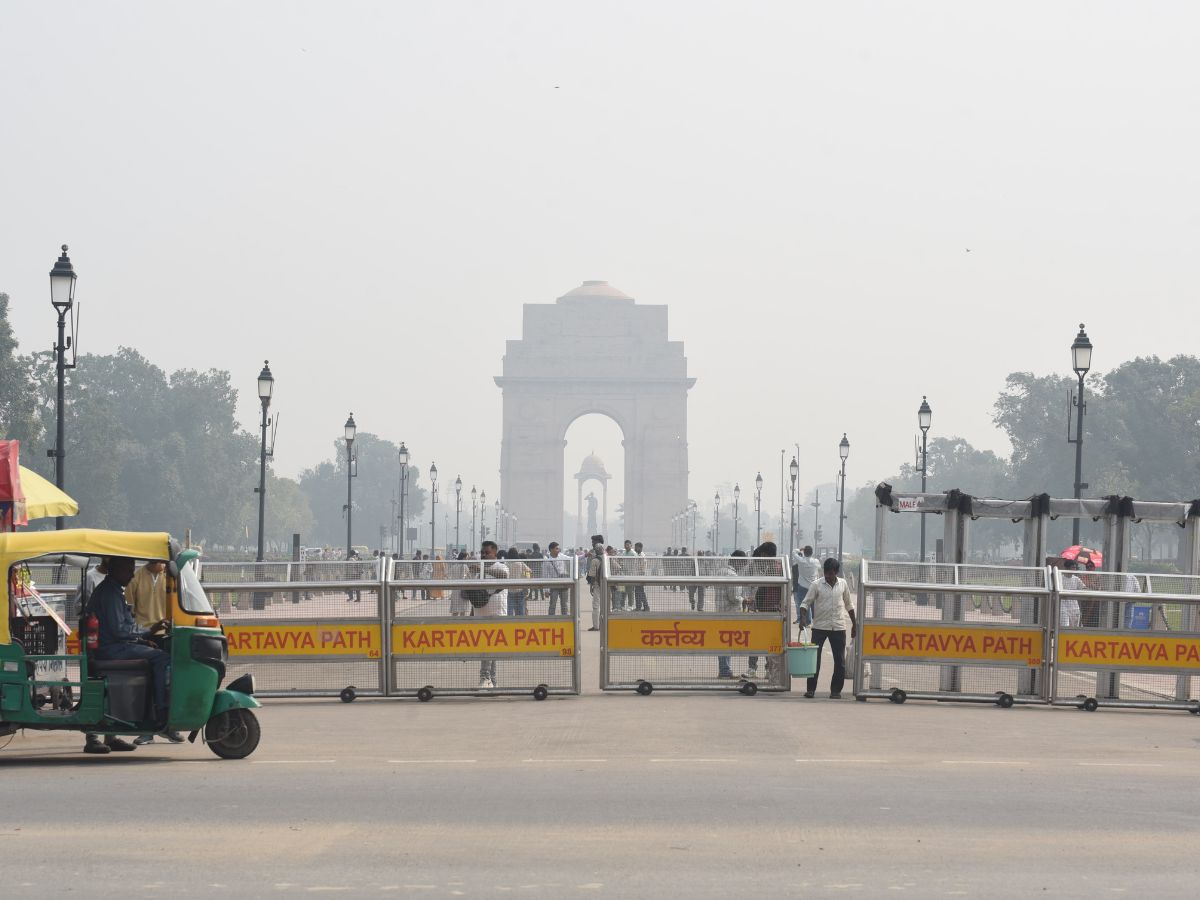

The air quality in the national capital dipped further on Friday morning, slipping into ‘poor’ to ‘very poor’ category, with Delhi’s overall Air Quality Index (AQI) recorded at 312 as of 8 am, according to data from the Central Pollution Control Board (CPCB). A day prior the city’s AQI at the same time stood at 271, categorised as ‘poor’.
Several Areas Record Hazardous Levels
Many monitoring stations across Delhi reported alarming AQI levels. As per CPCB’s live data at 8 am, Anand Vihar (332), Ashok Vihar (332), Bawana (366), Burari Crossing (345), Chandni Chowk (354), Punjabi Bagh (343), RK Puram (321), and Jahangirpuri (342) were among the areas that fell under the ‘very poor’ category.
Other stations such as Dwarka Sector-8 (310), Mundka (335), Narela (335), Patparganj (314), and Sonia Vihar (326) also recorded highly polluted air.
Meanwhile, locations like Aya Nagar (261), IGI Airport (259), JLN Stadium (296), Lodhi Road (224), and Najafgarh (265) were categorised as ‘poor’.
The CPCB defines AQI ranges as follows:
0-50: Good
51-100: Satisfactory
101-200: Moderate
201-300: Poor
301-400: Very Poor
401-500: Severe
As pollution levels rose, Delhi woke up to a thick blanket of haze on Friday, signaling the onset of winter. The Regional Meteorological Centre (RMC) reported a minimum temperature of around 12°C on November 6.
Temperature Readings
Safdarjung: 12.7°C
Palam: 12.5°C
Lodhi Road: 12°C
Ayanagar: 11.4°C
Truck-mounted water sprinklers were deployed at several areas in the national capital to combat air pollution.
Authorities Step Up Measures Under GRAP
Since Diwali, Delhi and the National Capital Region (NCR) have consistently witnessed air quality hovering between the ‘poor’ and ‘very poor’ categories. With Stage II of the Graded Response Action Plan (GRAP) in effect, the New Delhi Municipal Council (NDMC) has announced the doubling of parking fees citywide to discourage the use of private vehicles.
READ MORE: Delhi Airport Issues Travel Advisory, Announces Delay In Flight Operations Due To THIS Issue




